 comparison
Medical Spa vs Salon Services: A Complete Comparison
Table of Contents
- Medical Spa vs Salon: Core Differences
- Understanding Medical Spa Services
- What Salon Services Include
- Medical Spa Provider Qualifications and Credentials
- Medical Spa Safety Questions and Standards
- Service-by-Service Comparison Table
- How to Choose: Medical Spa or Salon
- Frequently Asked Questions
Last Updated: October 12, 2026
Medical Spa vs Salon: Core Differences
A medical spa vs salon comparison comes down to scope, oversight, and treatment intensity. Medical spas operate under medical supervision and deliver advanced aesthetic procedures; salons focus on relaxation and beauty maintenance.
Medical spas combine clinical expertise with aesthetic services, staffed by licensed healthcare professionals and supervised by physicians.
The core difference isn't just credentials, it's what each environment can legally and safely deliver. Medical spa services include laser treatments, injectables, chemical peels, and body contouring that demand clinical training; salon services focus on maintenance and relaxation.
At Bella MedSpa, we know the marketing language around both settings can blur the lines. This guide clarifies what separates them and how to choose based on your goals.
Understanding Medical Spa Services
Medical spa services go beyond traditional beauty treatments, addressing skin concerns and body composition with advanced technology and clinical protocols. They require medical oversight because they involve deeper skin layers, systemic effects, or cosmetic procedures.
Advanced Skincare and Rejuvenation Treatments
Medical-grade skincare treatments work at the dermal level to stimulate collagen, reduce pigmentation, and improve texture. They produce visible results but carry risks and recovery periods that demand professional assessment.
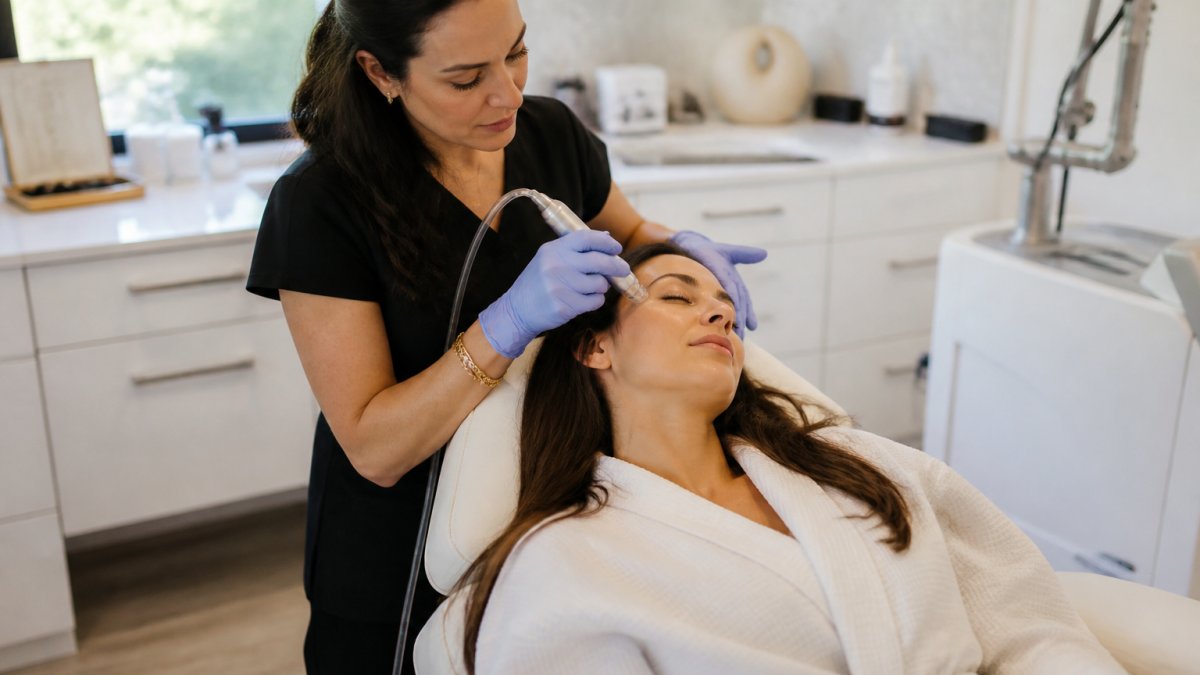
Laser treatments use focused light energy to reduce fine lines, improve tone, minimize pores, and address acne scars. Chemical peels apply controlled acids to dissolve damaged skin layers. Microneedling creates micro-injuries that trigger collagen production.
Each treatment requires a consultation to assess skin type, sensitivity, and realistic outcomes, and to screen for contraindications.

Body Contouring and Cosmetic Procedures
Body contouring treatments reshape and sculpt using energy-based devices or injectables, addressing stubborn fat pockets, loose skin, and volume loss that diet and exercise alone cannot resolve.
Radiofrequency body contouring uses heat to tighten skin and reduce fat; injectable fillers restore volume; botulinum toxin relaxes muscles that create expression lines. Each requires precise anatomical knowledge and injection technique, plus a medical professional to evaluate candidacy and manage complications.
These procedures fall within the medical spa domain because they involve injecting substances or using energy devices that affect tissue structure. Salons don't offer them because estheticians lack the training and legal authority.
What Salon Services Include
Salons provide beauty and relaxation services focused on grooming and self-care, maintaining appearance without addressing deeper skin or body structure concerns.
Salon services include haircuts, styling, manicures, pedicures, massages, and traditional facials. A traditional facial cleanses, exfoliates, and moisturizes, relaxing and beneficial for general skin health, but far less dramatic than medical-grade treatments.
Salons employ trained professionals, hairstylists, nail technicians, massage therapists, and estheticians, who complete formal education in their specialty. Their training is excellent within its scope but doesn't include clinical assessment, medical contraindications, or advanced procedures, so a salon cannot legally offer laser treatments, injectables, chemical peels, or body contouring.
The salon environment emphasizes relaxation and community, and services are generally affordable with no downtime. But if your goal is to address deep wrinkles, acne scars, or stubborn fat, a salon cannot deliver that outcome.
Medical Spa Provider Qualifications and Credentials
The qualifications of the person performing your treatment matter enormously. Medical spa providers operate under stricter credential requirements than salon professionals, and those differences affect safety and results.
A medical spa is supervised by a licensed physician, typically a dermatologist, plastic surgeon, or other medical doctor with aesthetic training, who oversees treatments, reviews assessments, and manages complications. Treatments may be performed by a licensed nurse, physician assistant, nurse practitioner, or licensed medical aesthetician, depending on the procedure and state regulations.
Licensed nurses and physician assistants complete rigorous clinical training and state licensing exams covering pharmacology, anatomy, physiology, and medical protocols.
Salon professionals, estheticians, hairstylists, and massage therapists, complete vocational training specific to their specialty.
The difference is regulatory and educational: medical spa staff can legally assess your skin, recommend treatments based on contraindications, and handle complications; salon staff cannot.
Medical Spa Safety Questions and Standards
Safety in medical aesthetics depends on clinical oversight, proper screening, and evidence-based protocols, which is why medical spas operate under medical supervision.
Before any medical spa treatment, you should receive a thorough consultation covering your medical history, medications, allergies, and previous aesthetic treatments.
This process identifies contraindications: certain medications increase photosensitivity and make laser treatment risky, pregnancy contraindicates some injectables, and active skin infections require treatment before chemical peels.
Salons do not conduct medical consultations. They may ask about preferences and allergies, but they cannot assess medical contraindications or manage complications, a fundamental safety distinction.
Medical spas also maintain clinical standards for equipment maintenance, sterilization, and infection control, with protocols for documenting treatments, managing side effects, and communicating with referring physicians. These standards exist because medical procedures carry inherent risks.
Service-by-Service Comparison Table
Most comparisons stop at yes-or-no availability. The table below maps each service to who performs it, typical sessions, downtime, and when results appear. Use it as a starting checklist, then confirm specifics with your provider.
| Service | Medical Spa | Salon | Who Performs It | Typical Sessions | Downtime | When Results Show |
|---|---|---|---|---|---|---|
| Haircut and styling | Not offered | Yes | Licensed hairstylist or barber | 1 per visit | None | Immediate |
| Hair color and highlights | Not offered | Yes | Licensed colorist | 1 per visit, touch-ups every 4-8 weeks | None | Immediate |
| Manicure and pedicure | Not offered | Yes | Licensed nail technician | 1 per visit | None | Immediate |
| Relaxation massage | Not typical | Yes | Licensed massage therapist | 1 per visit | None | Immediate |
| Traditional facial | Not typical | Yes | Licensed esthetician | 1 per visit, monthly for maintenance | None | Immediate, subtle |
| Medical-grade facial | Yes | No | Licensed medical aesthetician under physician supervision | Series of 3-6, then maintenance | Minimal to 1-2 days of redness | Gradual over 2-4 weeks |
| Chemical peel (superficial) | Yes | No | Licensed medical aesthetician or nurse | Series of 3-6 | 1-3 days of flaking | 1-2 weeks |
| Chemical peel (medium to deep) | Yes | No | Physician or advanced provider | 1, repeated every 6-12 months | 5-10 days of peeling | 2-4 weeks |
| Microneedling | Yes | No | Licensed medical aesthetician or nurse | Series of 3-4 | 1-3 days of redness | 4-6 weeks |
| Laser hair removal | Yes | No | Licensed nurse or medical aesthetician with laser certification | 6-8 sessions spaced 4-6 weeks apart | Hours of redness | Progressive over months |
| Laser skin resurfacing | Yes | No | Physician or nurse under supervision | 1-3 | 3-7 days | 2-6 weeks |
| Botulinum toxin (Botox, Dysport) | Yes | No | Physician, nurse practitioner, physician assistant, or nurse under supervision | 1, repeated every 3-4 months | Possible bruising for a few days | 3-14 days |
| Dermal fillers | Yes | No | Physician or advanced injector | 1, touch-ups as needed | 1-3 days of swelling or bruising | Immediate to 2 weeks |
| Body contouring (radiofrequency, cryolipolysis) | Yes | No | Trained technician under physician supervision | 1-4 depending on device and area | None to mild soreness | 4-12 weeks |
| Skin tightening (ultrasound, RF) | Yes | No | Trained technician under physician supervision | 1-3 | Minimal | 8-12 weeks |
A few patterns stand out: salon services are almost always single-visit, zero-downtime, and immediate-result, while medical spa services often require a series, involve recovery, and deliver results on a delay. That difference in rhythm, not just technology, separates the two experiences.
How to Choose: Medical Spa or Salon
Rather than weighing abstract pros and cons, map your goal to the setting built for it.
Match your goal to the right setting
| Your Goal | Best Fit | Why |
|---|---|---|
| Haircut, color, or styling | Salon | Outside medical spa scope |
| Manicure, pedicure, or nail care | Salon | Outside medical spa scope |
| Relaxation and stress relief | Salon | Massage and spa facials are the core offering |
| General skin maintenance and hydration | Salon | Traditional facials maintain healthy skin |
| Acne, acne scars, or enlarged pores | Medical spa | Requires clinical assessment and medical-grade tools |
| Fine lines, wrinkles, or volume loss | Medical spa | Injectables and energy devices require medical oversight |
| Sun damage, melasma, or uneven tone | Medical spa | Lasers and peels target pigment at the dermal level |
| Unwanted hair | Medical spa | Laser hair removal is a medical procedure |
| Stubborn fat or loose skin | Medical spa | Body contouring devices require clinical training |
| A special event in the next few days | Salon | Medical spa treatments often need recovery time |
Questions to ask before you book
If your goal points to a medical spa, a short consultation is the standard first step. Ask:
- Who will perform the treatment, and what are their credentials and licenses?
- Who is the supervising physician, and how involved are they in your care?
- What does the consultation include, medical history review, skin assessment, contraindication screening?
- What are the realistic results, and how long will they last?
- What downtime should you plan for, and what aftercare is required?
- What happens if you have a complication or aren't satisfied with the outcome?
A reputable medical spa answers these directly and documents your assessment before treatment. If a provider is vague about credentials or supervision, look elsewhere.
What the consultation and aftercare actually involve
A medical spa consultation typically includes a medical history review, current medications and allergies, an assessment of the treatment area, and a discussion of contraindications. Pregnancy, active skin infections, photosensitizing medications, and a history of keloid scarring are common examples that change the plan.
After treatment, expect specific aftercare instructions: sun protection, which products to pause, how to clean the area, and warning signs that warrant a call. Salons generally don't provide this level of screening or follow-up because their services don't carry the same risks.
Weigh downtime, budget, and maintenance honestly
Medical spa treatments usually cost more per session than salon services, and many require a series plus periodic maintenance to sustain results. Compare the total cost of ownership, not just the single-visit price: a salon service is typically a one-time expense with no recovery period, while a medical spa plan may span several appointments over months.
If you need to return to work or an event immediately, a salon service is safer. If you can plan around a few days of redness or flaking, a medical spa can address concerns a salon cannot.
Frequently Asked Questions
What is the main difference between a medical spa and a salon?
A medical spa operates under the supervision of a licensed healthcare professional and offers advanced treatments such as laser therapy, chemical peels, and injectables that require medical oversight. Salons provide beauty and relaxation services like haircuts, manicures, massages, and facials performed by licensed aestheticians or cosmetologists, but without medical supervision. The key distinction is that medical spa services involve medical-grade technology and procedures that address deeper skin concerns and require professional medical judgment.
Who is qualified to perform treatments at a medical spa versus a salon?
Medical spa treatments must be overseen by a licensed physician or healthcare professional, though some procedures may be performed by trained aestheticians or nurses under direct supervision. Salon services are performed by licensed cosmetologists or aestheticians who have completed cosmetology training. Medical spa provider qualifications are more stringent because treatments involve advanced technology and procedures with greater potential for side effects, requiring medical knowledge and oversight to ensure patient safety.
Can a salon offer the same treatments as a medical spa?
No. Salons cannot legally offer medical-grade treatments such as laser therapy, chemical peels, injectables, or other procedures that require medical supervision. Salon services focus on beauty and wellness treatments that fall within the scope of cosmetology. Attempting to offer medical spa treatments without proper medical oversight and licensing violates healthcare regulations and puts clients at risk.
What should I ask before booking a medical spa treatment?
Ask about the provider's credentials and whether a physician oversees the facility. Inquire about the specific technology used, expected results, downtime, and potential side effects. Request information about the consultation process and whether the provider will assess your skin or concerns before treatment. Ask about aftercare instructions and what happens if you experience complications. Understanding these details helps ensure you receive safe, appropriate care aligned with your aesthetic goals.