 comparison
KC Wellness vs NEDLC: Medical Spa Alternatives 2026
Table of Contents
- Understanding Medical Spa Alternatives and Your Options
- How to Choose a Cosmetic Injector and Medical Spa Provider
- Medical Aesthetics Consultation Checklist: What to Evaluate
- Medical Spa Safety Standards and Regulatory Compliance
- Service Offerings: Facial Rejuvenation, Body Contouring, and Hair Removal
- Patient Outcomes and Treatment Efficacy Across Providers
- Making Your Decision: Patient-Centric Criteria for Selecting a Medical Spa
- Frequently Asked Questions
Last Updated: September 28, 2026
Understanding Medical Spa Alternatives and Your Options
Choosing the right medical spa provider is critical for aesthetic results. Understanding what separates a truly qualified provider from one that simply has equipment is essential.
Medical spa alternatives differ primarily in clinical expertise, regulatory compliance, and personalized approach, not just services offered.
The most common mistake is choosing based on price or convenience alone. What matters is clinical foundation, advanced technology, and an experienced team to deliver natural-looking results aligned with your goals.
How to Choose a Cosmetic Injector and Medical Spa Provider
Selecting a cosmetic injector requires evaluating credentials, experience, and treatment philosophy. Formal clinical training and proven track record matter; weekend certification does not.
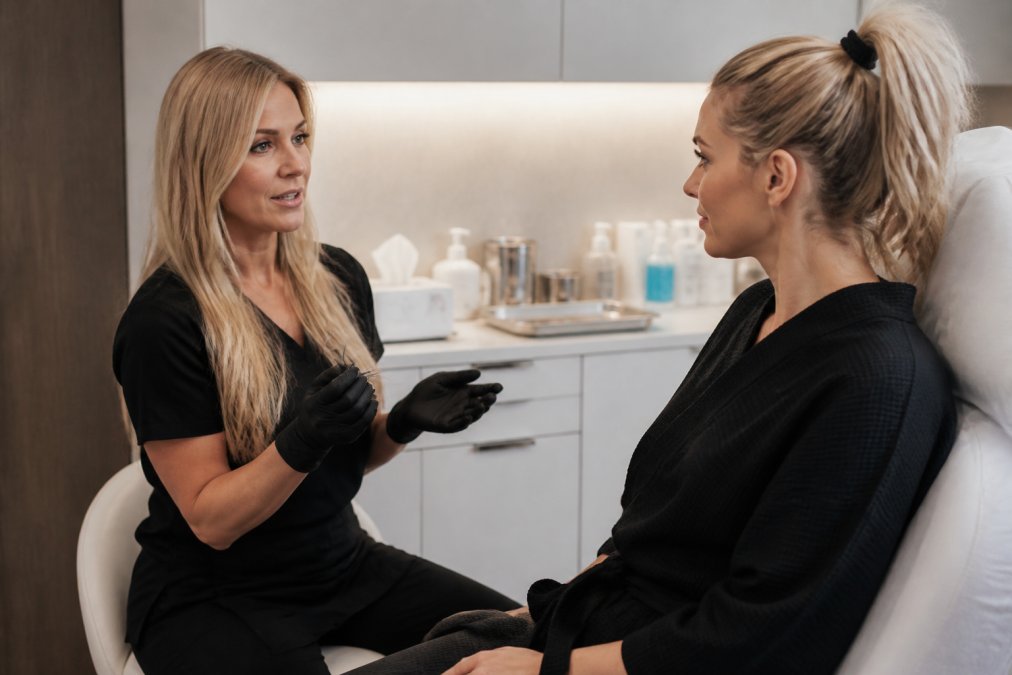
Verify credentials: physician, nurse practitioner, registered nurse, or licensed aesthetician. Each carries different training requirements and scope of practice. Board-certified dermatologists bring deepest medical knowledge; RNs/NPs with aesthetic training deliver excellent results under physician supervision. Licensed aestheticians must work under physician oversight with accredited training.
Experience with your specific concern matters enormously. A provider performing 50 injections weekly develops intuitive understanding of facial anatomy that one doing five weekly cannot match. Ask how many treatments monthly and request before-and-after photos.
A quality provider spends time understanding your goals, assessing facial structure, and explaining their approach. They discuss realistic expectations, potential risks, and alternatives, not just packages. Rushed or dismissive providers are red flags.
Advanced equipment like Genius RF and BTL Emsculpt NEO are valuable only in skilled hands. Experienced providers with solid equipment outperform inexperienced ones with modern machinery.
Medical Aesthetics Consultation Checklist: What to Evaluate
Before scheduling treatment, create a personal evaluation checklist. This approach helps you compare providers objectively and avoid decisions driven by marketing or convenience.
| Evaluation Criteria | What to Look For | Red Flags |
|---|---|---|
| Provider Credentials | MD, NP, RN, or licensed aesthetician with specialized training | No verifiable credentials or evasive answers |
| Clinical Experience | High volume in your specific treatment; detailed before/afters | Limited experience or generic portfolio |
| Medical Oversight | Physician on staff or supervising treatments | No physician involvement |
| Facility Standards | Clean, professional environment; proper equipment maintenance logs | Cluttered space or unclear sanitation practices |
| Consultation Quality | Thorough assessment; realistic expectations; discussion of alternatives | Rushed appointment; pressure to book immediately |
| Safety Protocols | Clear informed consent process; emergency procedures documented | No informed consent or safety discussion |
| Follow-up Care | Post-treatment instructions; availability for complications | No follow-up support |
Ask: How many treatments monthly? What complications have you encountered and how managed? Can you show before-and-afters from patients with my skin type? What's your approach if complications arise?
Honest practitioners acknowledge results vary and complications can occur. Providers guaranteeing perfection or dismissing safety concerns are overconfident at best, negligent at worst.
Medical Spa Safety Standards and Regulatory Compliance
Medical spas operate in a regulated environment, though standards vary significantly by state. Understanding the regulatory framework helps you identify providers who prioritize safety over shortcuts.
Medical spas must comply with state health department regulations governing facility standards, infection control, and staff qualifications. According to FDA guidance on cosmetic devices and procedures, facilities using lasers, radiofrequency devices, and other energy-based systems must ensure proper operator training and device maintenance. Your state's medical board website lists which treatments require physician supervision and which practitioners can perform specific procedures independently.
Ask about sterilization protocols. Single-use needles and applicators should be standard. If a provider reuses needles or can't explain sanitation, leave immediately.
Informed consent is legally required. Before treatment, receive written information about the procedure, expected results, potential risks, and alternatives. If skipped, the provider is cutting corners on safety.
Providers should maintain liability insurance and clear policies for adverse events. A responsible provider has protocols for complications and won't dismiss concerns if something goes wrong.
Service Offerings: Facial Rejuvenation, Body Contouring, and Hair Removal
Medical spa alternatives differ significantly in their service menus and underlying technology. Understanding what each service category includes, how the technology works, and realistic timelines helps you find a provider aligned with your goals.
Facial Rejuvenation
Facial rejuvenation encompasses multiple modalities, each addressing distinct concerns:
Injectables (Botox and dermal fillers): Botox relaxes muscles creating dynamic wrinkles; results appear in 3-7 days, peak at two weeks, last 3-4 months. Dermal fillers restore volume immediately; full integration takes 2-4 weeks, lasting 6-24 months depending on type. Ongoing maintenance required but minimal downtime; hyaluronic acid fillers are reversible.
Laser treatments: Ablative lasers vaporize skin layers, stimulating collagen; results dramatic but require 1-2 weeks downtime. Non-ablative lasers heat deeper skin with minimal downtime but need 4-6 sessions.
Radiofrequency (RF) skin tightening: RF devices heat collagen layers, triggering contraction and remodeling over 8-12 weeks. Typical protocols: 3-4 sessions spaced 4-6 weeks apart. Minimal downtime; subtle results best for mild-to-moderate laxity.
Chemical peels: Superficial peels require minimal downtime, repeatable monthly. Medium peels produce dramatic results with 5-7 days peeling. Deep peels deliver most dramatic transformation but carry significant downtime and permanent skin lightening risk.
Microneedling: Controlled micro-injuries trigger healing, stimulating collagen and elastin. Results develop over 4-6 weeks after 3-4 monthly sessions. Minimal downtime; moderate efficacy for texture and mild scarring.
Body Contouring
Body contouring addresses stubborn fat and loose skin without surgery:
Non-invasive fat reduction: RF, ultrasound, and laser systems heat or disrupt fat cells, triggering apoptosis. Results appear over 4-12 weeks. Single treatment: 10-25% fat reduction; multiple sessions (4-6) yield more noticeable outcomes. Subtle results compared to liposuction, ideal for refinement without surgery.
Electromagnetic muscle stimulation (EMS): BTL Emsculpt NEO uses HIFEM energy to trigger supramaximal muscle contractions (20,000 per 30-minute session). Protocols: 4 sessions over 2 weeks. Clinical studies show 15-19% muscle increase and 19-23% fat reduction. Dual muscle and fat benefit; localized results requiring monthly maintenance.
Skin tightening for the body: RF and ultrasound devices tighten loose skin over 8-12 weeks. Most patients need 3-4 sessions. Best for mild-to-moderate laxity; severe sagging may require surgery.
Hair Removal
Laser and intense pulsed light (IPL) hair removal target melanin in the hair shaft, damaging the follicle. Effectiveness depends on three factors:
- Hair color and skin tone: Dark hair on light skin responds best. Light hair (blonde, red, gray, white) responds poorly. Darker skin tones require Nd:YAG lasers to reduce burn risk; diode and alexandrite lasers work better on lighter skin.
- Hair growth cycle: Only hair in the active growth phase contains enough melanin to absorb laser energy. Standard protocols involve 6-8 sessions spaced 4-6 weeks apart to catch all follicles in growth phase.
- Device type: Nd:YAG lasers penetrate deepest and work on darker skin; diode lasers offer balance of depth and speed; alexandrite lasers work best on lighter skin and finer hair. IPL devices emit broad-spectrum light, making them less precise but faster for large areas.
Most patients achieve 80-90% permanent hair reduction after a full series.
Choosing Between Modalities
Patient Outcomes and Treatment Efficacy Across Providers
Comparing providers requires moving beyond marketing claims to measurable metrics. This framework helps identify providers most likely to deliver results aligned with your goals.
Defining and Measuring Patient Satisfaction
Provider Experience and Outcome Quality
Before-and-After Portfolio Analysis
Complication Rates and Safety Track Record
Responsible providers track complication rates:
- Infection: Rare with proper sterile technique. Ask about sterilization protocols.
- Vascular occlusion: Rare but serious. Experienced providers know high-risk zones. Ask how they've managed this.
- Asymmetry or over-correction: More common. Ask about free touch-up policies.
- Allergic reactions: Rare but possible. Ask how they're managed.
Realistic Outcome Expectations by Treatment Type
Understanding what each treatment can realistically achieve prevents disappointment:
- Injectables: Soften lines and restore volume but don't eliminate all wrinkles or make you look 20 years younger. Realistic expectation: refreshed, natural appearance with reduced line visibility.
- Laser treatments: Improve texture, tone, and pigmentation; reduce fine lines and mild scarring. Ablative lasers produce dramatic results; non-ablative produce subtle improvement. Realistic expectation: improved skin quality and reduced sun damage, not elimination of all imperfections.
- Radiofrequency tightening: Subtle skin tightening and collagen stimulation. Works best for mild laxity; severe sagging may still require surgery. Realistic expectation: modest improvement in skin firmness and fine lines, not dramatic lifting.
- Body contouring: Reduces stubborn fat and builds muscle in treated areas but doesn't replace weight loss or fitness. Realistic expectation: refinement of problem areas, not body transformation.
- Hair removal: Achieves 80-90% permanent reduction; fine regrowth occurs over time. Complete permanent removal is rare. Realistic expectation: significant, long-lasting reduction requiring occasional maintenance.
Evaluating Provider Transparency on Outcomes
- Discuss what treatment can and cannot achieve
- Acknowledge results vary by individual factors
- Explain why your situation might differ from others'
- Discuss potential complications and management
- Offer alternatives if you're not ideal for preferred treatment
- Avoid guaranteeing specific results or timelines
Long-Term Outcome Tracking
Making Your Decision: Patient-Centric Criteria for Selecting a Medical Spa
Integrate gathered information into a personal framework. Different patients prioritize different factors.
Frequently Asked Questions
What should I look for when choosing a medical spa alternative?
Evaluate provider credentials, including whether an MD oversees treatments. Verify that injectors and aestheticians hold appropriate licenses. Assess the facility's commitment to safety standards and informed consent protocols. Review treatment options available and ask about their experience with your specific concerns, such as acne scars or jawline definition. Request before-and-after photos from actual patients and inquire about long-term patient satisfaction rates.
How do I verify the credentials of a medical spa provider in Massachusetts?
Request documentation of staff qualifications directly from the facility. Ask whether an MD is on staff and verify their medical board registration. Check that the facility maintains appropriate liability insurance and follows evidence-based practice standards. A reputable provider will openly discuss their team's qualifications and training.
Are medical aesthetic treatments regulated in Massachusetts?
Medical spas in Massachusetts operate under state health and safety regulations. Facilities must comply with infection control protocols and maintain proper licensing for staff. Treatments involving injections or laser technology require oversight by a licensed physician. Always verify that your chosen provider maintains current compliance with state regulations and follows standard of care guidelines.
What's the difference between getting treatments at a medical spa versus a dermatologist's office?
Medical spas offer specialized aesthetic treatments often with shorter appointment times and convenient scheduling. Dermatologists provide broader skin health management and can address both medical and cosmetic concerns. Medical spas typically focus on specific procedures like injectables, laser treatments, and body contouring. Dermatologists offer diagnostic expertise for complex skin conditions. Both settings require medical oversight. Your choice depends on whether you need general skin health assessment or targeted aesthetic enhancement.