 how-to
How to Choose a Medical Aesthetician: 7 Steps
Table of Contents
- Understanding Medical Aesthetician vs Aesthetician
- Step 1: Verify Credentials and Licensing
- Step 2: Evaluate the Clinical Environment and Medical Oversight
- Step 3: Review Experience and Scope of Practice
- Step 4: Ask the Right Questions at Your Med Spa Consultation
- Step 5: Assess Safety Protocols and Hygiene Standards
- Step 6: Evaluate Before-and-After Results and Patient Testimonials
- Step 7: Trust Your Instincts and Schedule a Consultation
- Frequently Asked Questions
Last Updated: October 2, 2026
Understanding Medical Aesthetician vs Aesthetician
Understanding how to choose a medical aesthetician starts with knowing that a medical aesthetician is a licensed skincare professional who works under medical supervision in clinical settings like dermatology offices, plastic surgery centers, or medical spas. They perform advanced treatments including chemical peels, microdermabrasion, laser procedures, and support injectables. An aesthetician works in spas and salons, offering basic skincare and facials without medical oversight. Medical aestheticians complete additional training beyond standard licensure and work alongside physicians, trained in clinical protocols and patient safety standards that spas don't require. At Bella MedSpa, our team includes medical aestheticians working in a clinical environment with physician oversight.
Step 1: Verify Credentials and Licensing
Confirm your medical aesthetician holds valid state board certification by asking: "What state board certified you, and can you show me your current license?" Check your state's cosmetology or aesthetics board website to verify active licenses by name, this takes five minutes and prevents working with unlicensed practitioners.
Check State Board Certification
Most states require 600-1,200 hours of training for medical aesthetician certification. When you call a med spa, ask: "Which state board certified your aestheticians?" If they hesitate or give vague answers, that's a red flag.
Look for Advanced Certifications
Reputable medical aestheticians pursue advanced certifications in specific treatments (laser safety, chemical peels, microdermabrasion, injectables support, or radiofrequency). Ask: "What advanced certifications do you hold, and when did you complete them?" Practitioners who invest in continuing education understand treatment protocols more deeply.
Step 2: Evaluate the Clinical Environment and Medical Oversight
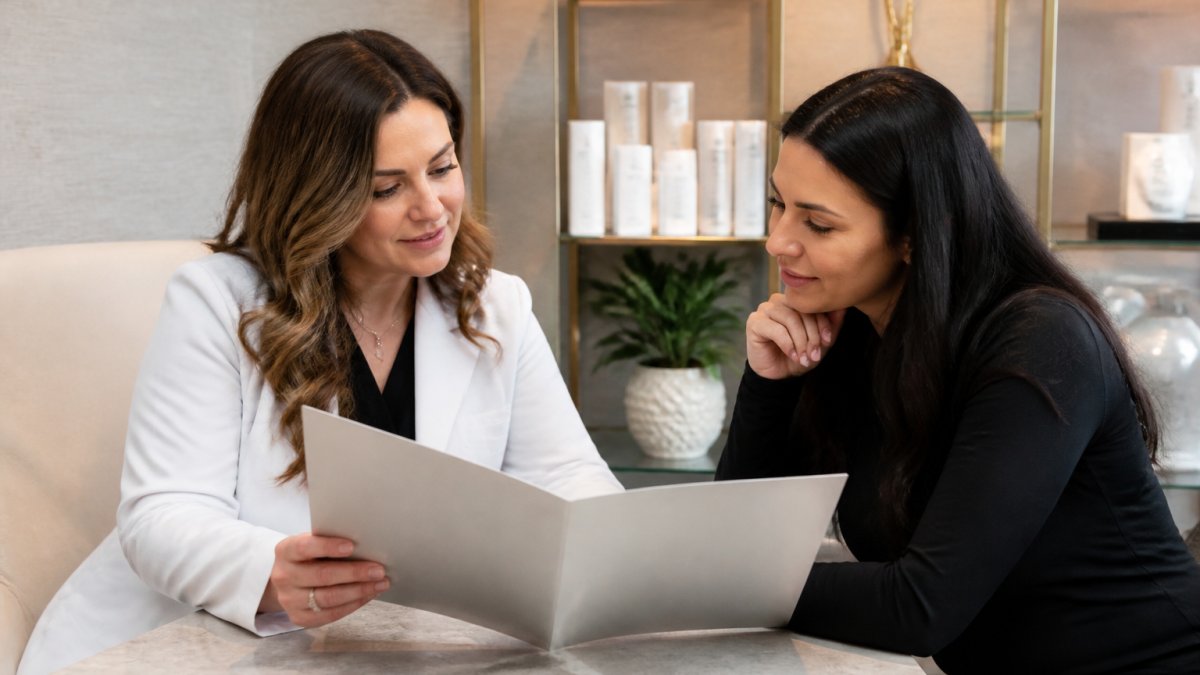
A true medical spa operates under physician supervision with protocols for emergencies, sterility, and patient safety. Look for a medical director on staff, visible sterilization equipment, clear emergency procedures, medical-grade equipment, clinical attire, and detailed consent forms. Ask: "Who is your medical director, and what is their background?" Visit in person to assess cleanliness, staff professionalism, and whether they ask detailed health questions.
Step 3: Review Experience and Scope of Practice
Ask how long your medical aesthetician has worked in clinical settings and how many procedures they've performed for your specific concern. Ask: "What specific treatments are you trained and licensed to perform?" Vague answers like "we do everything" are concerning. Request details on years in medical environments, procedure volume in your treatment area, and recent continuing education. At Bella MedSpa, our team includes practitioners with extensive clinical backgrounds.
Step 4: Ask the Right Questions at Your Med Spa Consultation
Your consultation is where you assess both the aesthetician and the facility. Come prepared with specific questions about your treatment plan, expected results, and what happens if you're unhappy.
Questions to Ask About Treatment and Experience
Ask: "How many people have you treated for my specific concern, and what was the average outcome?" "What results should I realistically expect, and on what timeline?" "What are the risks and side effects, and how often do you see them?" "Do you have before-and-after photos of patients with similar skin types?" "Have you ever had a complication with this procedure, and how did you handle it?" Pay close attention to specificity.
Red Flags During Consultation: What They Mean
Watch for these red flags: Pressure to commit immediately or book multiple treatments upfront, this prioritizes revenue over results. Vague answers about qualifications, experienced practitioners know their numbers. Unwillingness to discuss risks, every procedure carries risks, and informed consent is both ethical and legal. No personalized assessment, they should ask detailed questions about your skin type, medical history, and goals. Dismissing your concerns or rushing, you should feel heard and respected. No written consent form or post-care instructions, legitimate facilities provide these. Inability to explain treatment recommendations, a skilled practitioner explains their clinical reasoning. Claims that results are permanent or guaranteed, realistic practitioners say results typically last 6-12 months.
What a Strong Consultation Looks Like
A competent, safety-focused practitioner asks detailed health questions, examines your skin carefully, discusses multiple treatment options, spends adequate time without rushing, provides written information, answers directly, explains their experience, and discusses realistic timelines and costs upfront. After your consultation, take time to decide without pressure. Schedule consultations at multiple facilities if needed to identify the best fit.
Step 5: Assess Safety Protocols and Hygiene Standards
Medical aesthetics involves breaking the skin barrier with needles, lasers, and chemical solutions. Proper sterilization, hygiene protocols, and professional liability safeguards prevent infections and complications.
Verify Sterilization and Hygiene Practices On-Site
Observe the facility for cleanliness. Equipment should be visibly clean and organized. Single-use items should be opened in front of you from sealed packaging. Ask: "How do you sterilize equipment between clients?" They should explain their specific protocol (autoclave sterilization, high-level disinfection, or single-use items). Vague answers suggest they lack rigorous standards.
Verify Malpractice Insurance and Professional Standing
Ask directly: "Do you carry malpractice insurance, and can you provide proof?" Legitimate practitioners have this and will show documentation. Insurance companies only insure practitioners who meet safety standards and have clean records. If they hesitate or refuse, that's a red flag.
Written Safety Protocols and Emergency Preparedness
Ask: "Can I see your written safety protocols for [your specific treatment]?" "What is your emergency procedure if I have a severe reaction?" "Is emergency equipment on-site and accessible?" "Are staff trained in first aid and CPR?" They should show documentation or explain protocols in detail. Evasiveness is a red flag.
Summary: Safety Verification Checklist
Before booking, confirm:
- ☐ Sterilization method is explained and verifiable (autoclave, high-level disinfection, or single-use items).
- ☐ Facility is visibly clean, organized, and uses proper sharps containers.
- ☐ Practitioner carries malpractice insurance and can provide proof.
- ☐ Practitioner's state license is active with no disciplinary violations (or violations are explained and resolved).
- ☐ Facility has written safety protocols for your specific treatment.
- ☐ Staff are trained in first aid and emergency response.
- ☐ Post-procedure care instructions are provided in writing.
Safety is non-negotiable. If a facility or practitioner can't or won't answer these questions, that's your signal to look elsewhere.
Step 6: Evaluate Before-and-After Results and Patient Testimonials
Request before-and-after photos of patients with similar skin types, concerns, and goals. Look for natural-looking results, consistency across multiple photos, variety of skin types, and results matching your goals. Check independent review sites for patient testimonials. Look for patterns in reviews, multiple mentions of the same issue suggest a real problem. Ask: "Are these photos edited, and if so, how?" Honest practitioners explain their photo standards.
Step 7: Trust Your Instincts and Schedule a Consultation
Your gut feeling matters. If something feels off during your research or consultation, trust that instinct. You're entrusting someone with your appearance and safety. They should make you feel confident and respected.
During the consultation, notice:
- Do they listen to your concerns and goals?
- Do they ask detailed questions about your health and skin?
- Do they explain the treatment process clearly?
- Do they discuss realistic expectations and timelines?
- Do they make you feel heard and respected?
| Evaluation Criteria | What to Look For | Red Flags |
|---|---|---|
| Credentials | State board license, advanced certifications, continuing education | Vague about qualifications, no verifiable license |
| Clinical Environment | Medical director, sterilization protocols, emergency procedures | Spa atmosphere, no physician oversight, unclear safety standards |
| Experience | Years in clinical settings, specific procedure volume, relevant training | Minimal experience, only spa background, no specialization |
| Communication | Detailed consultation, honest about risks, personalized assessment | Pressure tactics, vague answers, rushing through consultation |
| Safety | Visible cleanliness, documented protocols, malpractice insurance | Unclear sterilization, evasive about safety, no documentation |
| Results | Natural-looking before-and-afters, consistent outcomes, patient testimonials | Overly edited photos, unrealistic results, no reviews |
Frequently Asked Questions
What is the difference between an aesthetician and a medical aesthetician?
An aesthetician performs basic skincare treatments like facials and waxing, while a medical aesthetician works under physician supervision and is trained to perform advanced procedures such as chemical peels, microdermabrasion, and laser treatments. Medical aestheticians complete additional clinical training and must meet higher licensing standards. They work in clinical environments like dermatology offices or medical spas, whereas aestheticians typically work in traditional spas. The distinction matters because medical aestheticians handle more complex skin conditions and use advanced technology requiring deeper clinical knowledge.
How do I verify a medical aesthetician's license?
Check your state's professional licensing board website, which maintains a public database of licensed aestheticians and medical aestheticians. Search by name or facility to confirm active licensure and check for any disciplinary history. Ask the medical spa directly for their credentials and don't hesitate to request proof. Verify that the professional has completed an accredited program and passed the state board exam. Many states also list continuing education requirements, so confirm the practitioner stays current with professional development.
What questions should I ask at a med spa consultation?
Ask about the aesthetician's specific experience with your skin concern, their certifications, and the treatment protocols they recommend. Inquire about expected results, realistic timelines, potential side effects, and aftercare requirements. Ask how many procedures they've performed and request before-and-after photos of similar cases. Discuss whether a medical director oversees treatments and what happens if you're unhappy with results. Ask about their approach to natural-looking results and how they customize treatment plans. These questions reveal their expertise and commitment to patient safety.
Should a medical aesthetician work under a doctor's supervision?
Yes, medical aestheticians should work in a clinical environment with a qualified medical director or physician present. This oversight ensures proper treatment protocols, handles complications, and maintains regulatory standards. The supervising physician typically reviews treatment plans and is available for consultations. This structure protects your safety and ensures that advanced procedures meet medical standards. Verify that a licensed physician oversees the practice and is involved in your care plan, especially for complex procedures like injectables or laser treatments.
Ready to work with a team that prioritizes your safety and natural-looking results? Book a consultation with Bella MedSpa and experience the difference that clinical expertise and physician oversight make.