 comparison
Is Body Contouring Worth the Money in 2026?
Table of Contents
- What Body Contouring Is and What It Actually Does
- Nonsurgical Body Contouring Results: What to Realistically Expect
- How Long Do Body Contouring Results Last?
- Body Sculpting Side Effects and Recovery Considerations
- Body Contouring vs Liposuction: Which Offers Better Value?
- Who Benefits Most From Body Contouring Treatment
- Is Body Contouring Worth the Investment for You?
- Conclusion
- Frequently Asked Questions
Last Updated: October 5, 2026
What Body Contouring Is and What It Actually Does
Body contouring refers to cosmetic procedures that reshape the body's silhouette by reducing fat deposits, tightening skin, or both. Whether is body contouring worth the money depends entirely on your goals, budget, and realistic expectations.
The key distinction: body contouring is not a weight-loss tool. The FDA clarifies that non-invasive technologies address body shape and targeted fat deposits, not obesity or overall health. You're paying for aesthetic refinement in specific areas, not a metabolic transformation.
At Bella MedSpa, we work with patients who've already done the hard work: diet, exercise, and weight management. Body contouring targets the stubborn pockets that remain.
Nonsurgical options use energy-based treatments to reduce fat cells or tighten skin without incisions. Surgical approaches like liposuction or abdominoplasty remove tissue directly. Each has tradeoffs in results, recovery, cost, and longevity.
Nonsurgical Body Contouring Results: What to Realistically Expect
Nonsurgical body contouring produces subtle to moderate results. Most people see visible fat reduction in treated areas, but changes are gradual, not dramatic.
Many nonsurgical treatments require multiple sessions spaced weeks apart. You might notice initial changes after 2-3 sessions, with continued improvement over 2-3 months as the body processes treated fat cells. Surgical liposuction, by contrast, delivers more immediate, pronounced results.
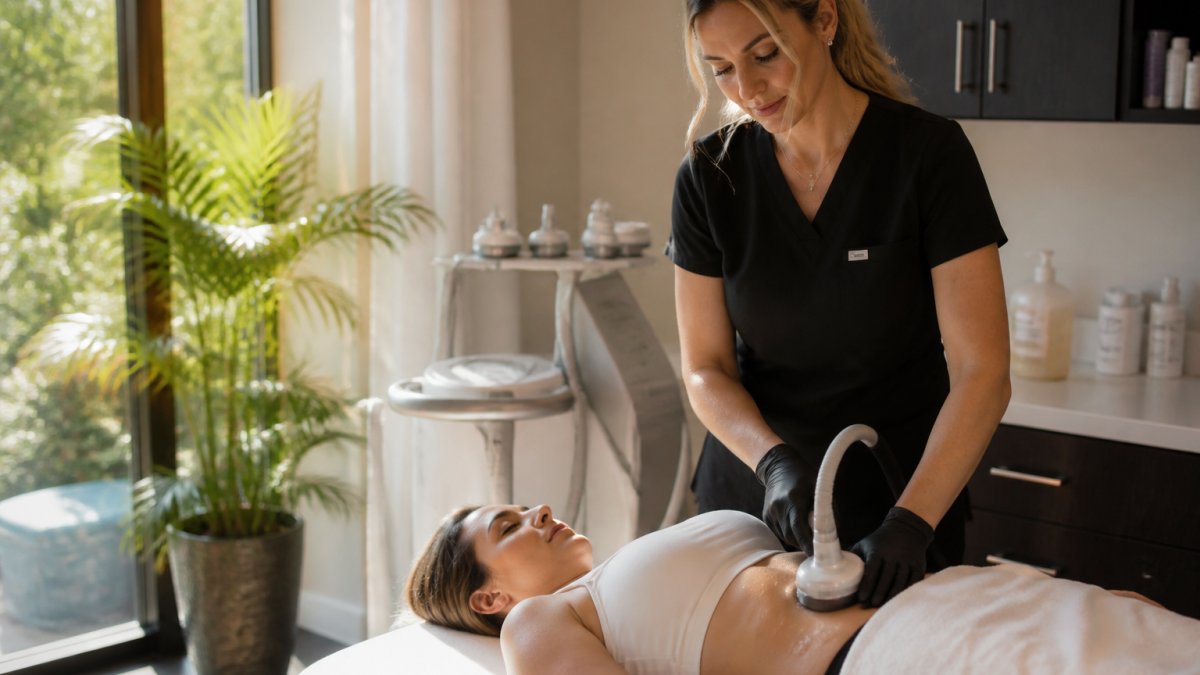
Visible improvement depends on how much fat is in the target area, your skin quality and elasticity, your age, and the technology used.
Common treatment areas include the abdomen, flanks (love handles), thighs, upper arms, and chin. The abdomen and flanks typically show the most noticeable results.
How Long Do Body Contouring Results Last?
Understanding durability requires understanding what actually happens to the treated fat cells.
The biology behind nonsurgical longevity. Technologies like cryolipolysis, radiofrequency, ultrasound, and laser treatments damage fat cells in a targeted area. The body clears them through the lymphatic system over weeks to months.
Most practitioners find visible nonsurgical results hold for roughly 6 to 12 months when weight is stable. The variable is not the technology, it is your weight trajectory.
Surgical durability. Liposuction physically removes fat cells and results are considered long-lasting if weight stays stable.
The maintenance math nobody quotes upfront. Nonsurgical treatments are often marketed per session, but the real picture includes the initial series (typically 2 to 4 sessions per area), a touch-up every 6 to 12 months, and any re-treatment after weight regain.
What actually affects how long results last:
- Weight stability: The single biggest factor. Fluctuation above roughly 10 pounds visibly compromises contour.
- Age and skin elasticity: Younger skin rebounds better; older skin may show laxity sooner even with the same fat reduction.
- Treatment area: The abdomen and flanks tend to hold results better than arms and thighs, where looser skin is more common.
- Technology used: Some energy-based devices produce more consistent fat reduction than others; a qualified provider can explain which is best supported for your area.
- Hormonal changes: Pregnancy, menopause, and thyroid shifts can redistribute fat and alter results.
The long-term value question becomes: are you willing to commit to maintenance treatments, or do you prefer a one-time surgical approach with longer-lasting but more significant recovery? Neither path is universally better, but only one matches your willingness to keep showing up.
Body Sculpting Side Effects and Recovery Considerations
Nonsurgical body contouring typically involves minimal downtime. Most people return to normal activities immediately or within a day, a major advantage over surgery.
Common temporary side effects include redness, mild swelling, temporary numbness, or slight bruising in treated areas, usually resolving within hours to a few days. Discomfort varies: some feel mild warmth or tingling, others minimal sensation.
Surgical body contouring involves real recovery. Liposuction typically requires 1-2 weeks before light activities and 4-6 weeks before normal exercise. Abdominoplasty often requires 2-3 weeks before basic activities and 6-8 weeks before strenuous exercise, plus incisions, swelling, and sometimes temporary drainage tubes.
If you travel frequently or need to maintain your normal routine immediately, surgical options aren't practical. If you can accommodate downtime, surgery offers faster, more dramatic results.
Body Contouring vs Liposuction: Which Offers Better Value?
Liposuction is technically a form of surgical body contouring, so the real question is nonsurgical body sculpting versus surgical fat removal.
Nonsurgical body contouring uses energy-based technologies, radiofrequency, ultrasound, cryolipolysis, or laser treatments, to reduce fat without surgery. Results are modest, recovery is minimal, but results take time and may require maintenance.
Surgical liposuction physically removes fat through incisions. Results are more dramatic and visible once swelling resolves, recovery is longer, and permanence is greater, though new fat can accumulate if weight returns.
The value comparison depends on your priorities:
- Fastest visible results: Surgical liposuction wins decisively
- Minimal downtime: Nonsurgical treatments win
- Long-term cost over 5 years: Likely surgical, since nonsurgical requires ongoing maintenance
- Lowest upfront cost: Nonsurgical treatments typically cost less per session
- Lowest total risk: Nonsurgical approaches carry fewer complications
Neither option is objectively "better value." The right choice depends on your tolerance for downtime, your budget for maintenance, and how dramatic you want the results to be.
Who Benefits Most From Body Contouring Treatment
Ideal candidates share several characteristics: a stable weight achieved through diet and exercise, specific areas of stubborn fat or loose skin despite those efforts, and realistic expectations about what body contouring can accomplish.
Age matters less than skin quality and overall health. Younger patients typically have better skin elasticity, but older adults with good skin can see excellent outcomes too. The determining factor is skin condition, not age.
Skin type and ethnicity influence outcomes, since different skin tones respond differently to certain energy-based treatments. A consultation with a qualified professional is essential to assess your skin characteristics and recommend the most effective approach.
People with significant weight fluctuation are often poor candidates. If you've lost 50 pounds and still have loose skin, body contouring can help.
Medical history matters too. Certain conditions, medications, or skin sensitivities may contraindicate specific treatments. This is why disclosure during your consultation is critical.
Is Body Contouring Worth the Investment for You?
The honest answer: it depends on what you value, what you can afford, and whether the likely result justifies the total cost, not just the advertised session price.
Start with the total cost, not the sticker price. A transparent comparison includes consultation fees, the full initial series, follow-up or maintenance sessions over 1 to 3 years, time off work during recovery, and the cost of managing side effects or, rarely, correcting complications.
A practical decision checklist. Body contouring is more likely to be worth the money if you can answer yes to most of these:
- I have maintained a stable weight for at least several months.
- I have specific, localized areas of concern, not a general desire to lose weight.
- I understand the realistic degree of change for my area and skin quality.
- I can afford the full series plus potential maintenance without financial strain.
- I accept that results are gradual and may require touch-ups.
- My goal is improved confidence in specific areas, not a complete transformation.
It is probably not worth the money if:
- You are hoping it will motivate weight loss or substitute for diet and exercise.
- You expect dramatic, permanent results from nonsurgical treatments.
- You cannot comfortably afford multiple sessions or ongoing maintenance.
- Your weight fluctuates significantly, which will undermine results.
- You are seeking a one-time, no-future-commitment solution.
The insurance reality. Body contouring is elective and cosmetic, so insurance does not cover it. The entire cost comes from your discretionary budget, meaning the decision should be weighed against other uses of that money.
What independent patient experience suggests. Satisfaction is highest among patients with realistic expectations, stable weight, and a clear understanding of maintenance. Disappointment most often comes from those expecting surgical-level change from a nonsurgical series, or who did not account for upkeep.
At Bella MedSpa, we believe the right choice aligns with your goals, timeline, and budget. A thorough consultation helps clarify whether body contouring is the right fit for you.
Conclusion
Is body contouring worth the money? The answer depends on your realistic expectations, your budget, and what improvements matter most. Body contouring works best for people at a stable weight who want to refine stubborn areas diet and exercise haven't addressed. Nonsurgical options offer minimal downtime but require patience and possible maintenance. Surgical approaches deliver faster, more dramatic results but involve real recovery.
At Bella MedSpa, our medical professionals can evaluate your situation and help you determine whether body contouring aligns with your goals. We offer advanced technologies including radiofrequency and other energy-based treatments designed for real results. If you're considering body contouring and want to discuss what's realistic for your body and budget, we invite you to book a consultation with our team.
Frequently Asked Questions
Does body contouring really make a difference?
Body contouring produces measurable changes in body shape and fat reduction when performed with appropriate technology and multiple treatment sessions. Results are typically most noticeable in targeted areas like the abdomen, flanks, thighs, and arms. The degree of visible change depends on your starting point, the treatment technology used, and your commitment to the recommended treatment plan. Realistic expectations matter: body contouring refines your shape rather than transforming your body entirely. Many patients report improved confidence and a more sculpted appearance after completing their treatment series.
How long do body contouring results last?
Nonsurgical body contouring results can last several months to years, though longevity varies by treatment type and individual factors. Most patients benefit from maintenance treatments to sustain results over time. Your lifestyle, particularly diet, exercise, and weight stability, significantly influences how long results persist. Unlike surgical procedures, nonsurgical body contouring typically requires periodic touch-up sessions to maintain the sculpted appearance you achieved. Discussing a long-term maintenance plan with your provider helps you understand the ongoing commitment and cost involved.
What are the main side effects of body sculpting?
Nonsurgical body sculpting commonly causes temporary redness, mild swelling, bruising, or numbness in treated areas. Most side effects resolve within days to a few weeks. Rare complications include persistent numbness, uneven results, or skin texture changes. The specific side effects depend on the technology used, radiofrequency, ultrasound, and cryolipolysis each carry slightly different risk profiles. A consultation with a qualified medical professional helps you understand which side effects are most likely for your chosen treatment and how to manage them during recovery.
How does body contouring compare with liposuction in terms of value?
Nonsurgical body contouring offers minimal downtime and lower upfront costs but typically requires multiple sessions and maintenance treatments. Liposuction is surgical, involves longer recovery and higher initial expense, but can remove more fat in a single procedure. Body contouring suits people seeking gradual, subtle improvement with no surgery; liposuction appeals to those wanting dramatic fat removal and willing to accept surgical recovery. Neither treats obesity or produces weight loss. The better value depends on your goals, budget, downtime tolerance, and how much fat reduction you need in specific areas.
Who is a good candidate for body contouring?
Ideal candidates are generally at or near their goal weight, have stubborn fat pockets resistant to diet and exercise, and want to refine their body shape without surgery. Good candidates have realistic expectations, understand results develop gradually over multiple sessions, and can commit to a treatment plan. People with significant weight to lose benefit more from weight loss first, then body contouring to address remaining problem areas. A medical consultation determines your candidacy based on your skin quality, body composition, and specific goals.