 how-to
Laser Hair Removal Aftercare for Sensitive Skin: A Step-by-Step Plan
Last Updated: November 4, 2026
Quick Summary
Laser hair removal aftercare for sensitive skin focuses on keeping the treated area cool, moisturized, and protected. Use a mild fragrance-free cleanser, avoid hot water and heat for 48 hours, apply broad-spectrum sunscreen outdoors, and avoid waxing or depilatory creams between sessions.
- Avoid hot showers, baths, saunas, and hot tubs for the first 48 hours.
- Apply a cool compress for 10 to 15 minutes, with a thin cloth between ice and skin.
- Choose fragrance-free moisturizers with soothing ingredients like ceramides or panthenol.
- Hold off on retinoids, alpha-hydroxy acids, and benzoyl peroxide during the first week.
- Use broad-spectrum sunscreen of SPF 30 or higher on exposed treated areas.
Table of Contents
- Why Sensitive Skin Needs Extra Care After Laser Hair Removal
- Your First 24 to 48 Hours: Cooling and Calming the Treated Area
- Step 2: Build a Daily Moisturizing Routine With the Best Moisturizer After Laser Hair Removal
- Step 3: Protect the Skin From Sun, Heat, and Friction
- Step 4: Use Laser Hair Removal Aftercare Exfoliate Carefully, Week by Week
- Expected Reactions Versus Warning Signs After Treatment
- Booking Your Follow-Up Consultation at Bella MedSpa
- Frequently Asked Questions
Why Sensitive Skin Needs Extra Care After Laser Hair Removal
Sensitive skin often reacts more strongly after laser hair removal, so aftercare matters more for you than for most people. Redness, warmth, and mild swelling are common in the first few days. Good laser hair removal aftercare for sensitive skin focuses on calming the area, protecting it from heat and sun, and avoiding anything that could irritate it.
This guide is built around one idea: gentle care for the treated area works better than harsh products or quick fixes. The steps below follow a simple timeline, so you know what to do and when.
Shaving before treatment is a common question. If you want a clear answer on prep, read Can You Shave Before Laser Hair Removal? before your appointment.
Your First 24 to 48 Hours: Cooling and Calming the Treated Area
The first two days matter most. Your skin is still healing, so keep the treated area cool, clean, and free of anything that could add friction or heat.
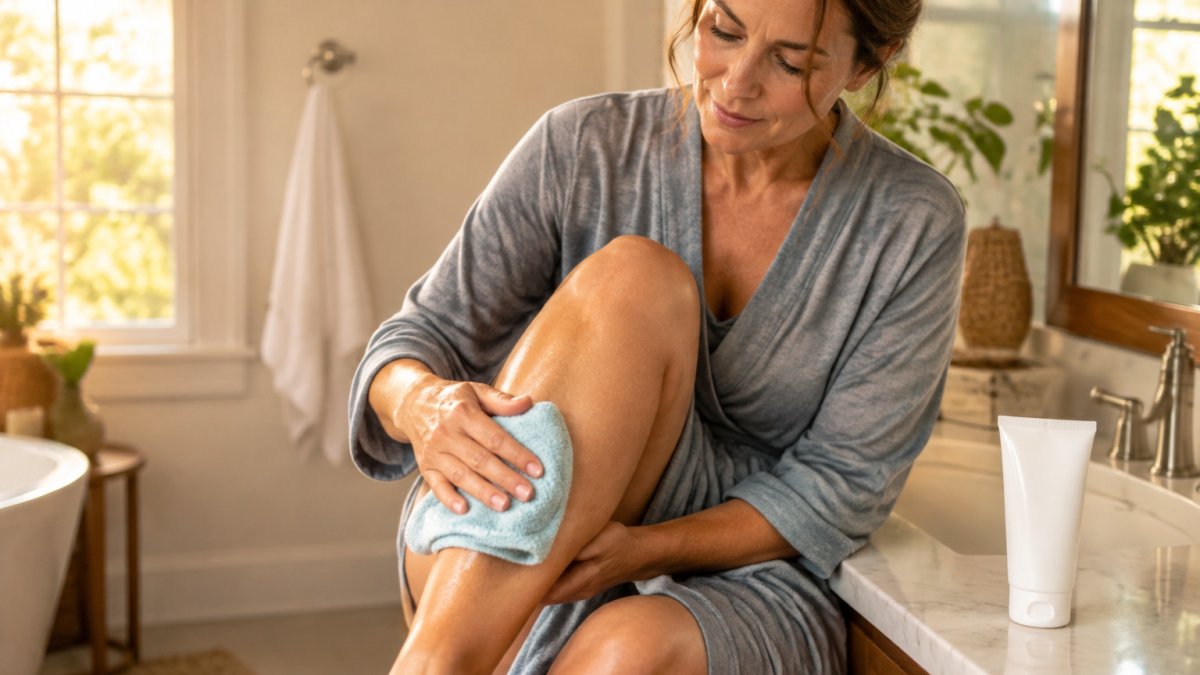
Most people feel some warmth or tenderness for a day or two. This is normal. Avoid hot showers, hot baths, saunas, steam rooms, and hot tubs during this time.
Choosing a Gentle, Fragrance-Free Cleanser
Use a mild, fragrance-free cleanser on the treated area. Look for products labeled for sensitive skin.
- Use lukewarm water, not hot
- Pat the skin dry with a soft towel
- Skip scrubs, brushes, and washcloths on the treated area
- Avoid products with alcohol, fragrance, or strong acids
Using a Cool Compress Safely
A cool compress can ease heat and mild swelling. Wrap a clean cloth around a cold pack or soak it in cool water, then wring it out.
- Hold the compress on the skin for 10 to 15 minutes at a time
- Place a thin cloth between the compress and your skin
- Never apply ice directly to the skin
- Stop if the skin looks worse or feels painful
Step 2: Build a Daily Moisturizing Routine With the Best Moisturizer After Laser Hair Removal
Hydrated skin heals more comfortably, and for sensitive skin the right moisturizer does more than lock in water, it supports the skin barrier while the treated area calms. Dryness can make irritation feel worse, so moisturize the treated area once or twice a day, starting the same day as your session unless your clinician says otherwise.
What to look for on the label
A good moisturizer after laser hair removal for sensitive skin is simple, bland, and boring on purpose. When shopping for a moisturizer, it helps to scan for:
- Soothing ingredients such as ceramides, glycerin, hyaluronic acid, panthenol (vitamin B5), allantoin, colloidal oatmeal, and squalane. These support the barrier and reduce the tight, dry feeling that follows treatment.
- Short ingredient lists. Fewer ingredients means fewer chances for a reaction on compromised skin.
- Fragrance-free and dye-free formulas. "Unscented" is not the same as "fragrance-free", unscented products can still contain masking fragrances.
- Non-comedogenic, hypoallergenic labeling if you are treating the face or bikini area, where clogged pores are a concern.
What to avoid for the first week
- Actives: retinoids, alpha-hydroxy acids (glycolic, lactic), beta-hydroxy acid (salicylic), vitamin C in higher concentrations, and benzoyl peroxide. These can sting or over-exfoliate healing skin.
- Fragrance, essential oils, and alcohol denat. Common triggers for sensitive skin even when the skin is intact.
- Physical scrubs and exfoliating mitts. Save these for later weeks.
Watch out: if a product stings for more than a few seconds or leaves the area redder than before, rinse it off with cool water and stop using it, a reaction to a new product can be mistaken for a treatment reaction.
How to apply
Apply a thin layer to clean, dry skin and let it absorb before dressing. Keep using it for at least several days, and longer if the skin still feels dry or tight. If you are unsure which formula suits your skin, bring your current products to your follow-up so your clinician can review them.
The article lists the label features to look for and the actives to avoid during the first week.
| Ingredient type | Examples from the article | Why it helps or what to avoid |
|---|---|---|
| Soothing ingredients | Ceramides, glycerin, hyaluronic acid, panthenol | Support the barrier and ease tightness |
| Ingredients to avoid (week 1) | Retinoids, AHAs, BHA, benzoyl peroxide | Can sting or over-exfoliate healing skin |
| Triggers to avoid | Fragrance, essential oils, alcohol denat. | Common irritants for sensitive skin |
| Label to check | Fragrance-free, dye-free | 'Unscented' can still contain masking fragrance |
Step 3: Protect the Skin From Sun, Heat, and Friction
Treated skin is more vulnerable to sun, heat, and rubbing for at least the first week, and sometimes longer depending on your skin and the area treated. Protecting it well is one of the highest-impact aftercare habits for sensitive skin.
Sun protection
- Apply a broad-spectrum sunscreen, SPF 30 or higher, to exposed treated areas once you go outdoors, and reapply every two hours if you stay outside.
- Choose a mineral formula (zinc oxide or titanium dioxide) if your skin reacts to chemical filters; mineral sunscreens tend to be gentler on sensitized skin.
- Cover the area with loose clothing or a hat when you can, and avoid direct sun and tanning beds for as long as your clinician advises, often at least two weeks.
- Skip self-tanners and spray tans on treated skin until it has fully calmed.
Heat
Avoid hot showers, baths, saunas, steam rooms, and hot tubs for the first 48 hours, and keep showers lukewarm. Heat increases blood flow to the area and can worsen redness and swelling.
Exercise
Light activity is usually fine, but strenuous workouts that cause heavy sweating can irritate treated skin. Ask your clinician how soon you can return to intense exercise. If the area feels hot, stings, or looks redder after a workout, scale back for another day.
Shaving, waxing, and hair removal between sessions
- Shaving: wait at least a few days, and only shave once the skin feels calm and looks normal. Use a clean, sharp razor and shave with the grain.
- Waxing, tweezing, threading, epilators, and depilatory creams: avoid these on treated areas between sessions, they can disturb follicles that the laser is targeting. Ask your clinician when each method is safe to resume.
- Hair may begin to shed in the days to weeks after treatment; that is expected and not a sign the treatment failed.
Makeup and skincare
- For facial treatments, wait until the skin has calmed, often 24 hours, before applying makeup, and choose a gentle, non-comedogenic formula.
- Remove makeup gently with a mild cleanser rather than wipes that tug the skin.
Friction and clothing
- Wear loose, breathable clothing over treated areas, especially for legs, bikini, and underarms.
- Avoid tight waistbands, straps, and rough fabrics that rub.
- Skip heavy sweating in tight workout gear for the first day or two.
Differences by treatment area
- Face: sun protection matters most, and makeup and skincare actives need a longer pause.
- Underarms: friction from shaving and deodorant is the main concern, switch to a fragrance-free deodorant or skip it for a few days.
- Bikini: tight underwear and hot baths are common irritants; loose cotton and lukewarm showers help.
- Legs: shaving, tight pants, and sun exposure after outdoor activity are the main risks.
Your clinician can tailor timing to your skin type and the area treated.
Step 4: Use Laser Hair Removal Aftercare Exfoliate Carefully, Week by Week
Exfoliation can help ingrown hairs and uneven texture, but it can also irritate sensitive skin. Start slowly, and wait until the skin has fully calmed before you begin.
- Week 1: Do not exfoliate the treated area
- Week 2: If skin feels calm, try a gentle, fragrance-free exfoliant once or twice a week
- Week 3 and beyond: Keep exfoliation light, and stop if redness or sensitivity returns
Skip waxing, tweezing, threading, bleaching, and depilatory creams on the treated area until your clinician says it is safe. Your clinician can also tell you how soon hair may begin to shed.
For more on what happens after a session, read What to Expect From Acne Scar Treatment for an overview of recovery timelines and how to tell normal reactions from concerns.
Some people also ask about after laser hair removal side effects. Most reactions are mild and fade within a few days, but any reaction that worsens should be checked promptly.
Expected Reactions Versus Warning Signs After Treatment
Some redness, warmth, and mild swelling are expected in the first few days. These usually fade without treatment beyond cooling and moisturizing.
Contact your provider promptly if you notice:
- Blistering, open sores, or crusting
- Redness, pain, or swelling that gets worse after the first few days
- Signs of infection, such as pus, warmth spreading outward, or fever
- Dark patches or skin color changes that do not fade over time
If you have a skin condition, take medication that affects skin, or are unsure whether a reaction is normal, talk with your clinician before starting any new product.
Booking Your Follow-Up Consultation at Bella MedSpa
Follow-up visits help your clinician check healing and plan your next session. If you have questions about your skin after treatment, a consultation is a good next step.
You can book a consultation with Bella MedSpa to review your skin and ask what is normal after treatment. For care near you, read Botox Near Me: How to Choose a Qualified Injector to learn what to look for in a qualified provider.
Frequently Asked Questions
How long is skin sensitive after laser hair removal?
Most people notice redness, warmth, or mild swelling for a few hours to a few days after a session, and the treated area often feels sensitive for about 24 to 48 hours. Sensitive skin can take longer to settle, so keep the area cool, moisturized, and protected from the sun during that window. If redness or discomfort persists beyond what your provider described, contact the clinic that performed your treatment for individualized guidance.
Can I use fragrance-free products after laser hair removal?
Fragrance-free, alcohol-free products are generally the safest choice for sensitive skin after laser hair removal because they are less likely to irritate a freshly treated area. Look for a gentle cleanser and a fragrance-free moisturizer, and avoid products with added fragrance or strong exfoliating acids until your provider says the skin has fully recovered. Patch-testing new products on a small area first is a sensible habit.
What is the best moisturizer after laser hair removal?
The best moisturizer after laser hair removal is usually a simple, fragrance-free formula labeled for sensitive skin, with hydrating ingredients and no alcohol or irritating additives. Apply it after the skin has cooled, and reapply as needed to keep the treated area comfortable. Because individual skin reacts differently, ask your provider which products they recommend for your skin type.
When can I resume exfoliating after laser hair removal?
Most providers recommend waiting before using physical scrubs or chemical exfoliants on a freshly treated area, since these can increase irritation. Resume gentle exfoliation only after the skin has fully calmed and your provider approves, and then start slowly, with a gentle product used a few times per week. Contact your provider with any questions about timing for your specific treatment.
Ready to talk about your aftercare plan? Contact Bella MedSpa to schedule your consultation. New patients can book now.