 ultimate-guide
What to Expect From Acne Scar Treatment
Table of Contents
- Understanding Acne Scar Types and How Treatment Works
- Best Treatments for Deep Acne Scars
- Laser Resurfacing for Acne Scars: What the Process Involves
- Acne Scar Treatment Recovery Time and Realistic Expectations
- Managing Side Effects and Skin Barrier Health
- Personalized Consultation and Treatment Planning
- Frequently Asked Questions
Last Updated: September 25, 2026
Understanding Acne Scar Types and How Treatment Works
Acne scar treatment addresses the lasting damage that severe breakouts leave behind. At Bella MedSpa, we work with patients who've struggled with acne scars for years, sometimes decades. The good news: modern treatments can meaningfully improve texture and appearance. But understanding what you're actually treating, and what realistic results look like, changes everything about how you approach it.
Scars form differently depending on how your skin healed after acne. Some scars are depressed, sitting below the surrounding skin surface. Others are raised, forming keloid or hypertrophic scars that extend above the skin. The type determines which treatment works best.
Depressed vs. Raised Scars
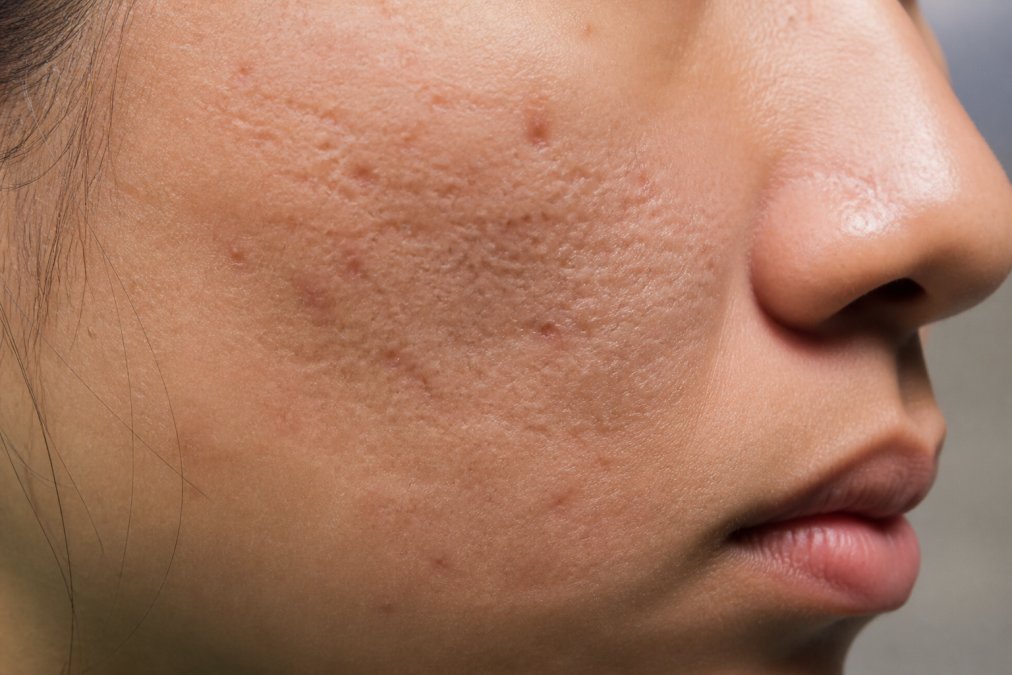
Depressed scars (atrophic scars) are far more common than raised ones. They happen when acne destroys collagen beneath the skin, leaving a depression. Punch scars look like small holes. Rolling scars create a wavy texture across the skin. Boxcar scars are broader depressions with defined edges.
Raised scars (hypertrophic or keloid scars) form when your skin produces too much collagen during healing. These sit above the skin surface and feel firm or thick to the touch. Keloid scars extend beyond the original acne area, while hypertrophic scars stay within the boundaries of the original breakout.
The distinction matters because depressed scars respond well to treatments that rebuild collagen or resurface skin. Raised scars often need different approaches, like injections or surgical revision.
Why Scars Form and What Treatment Addresses
Acne causes inflammation deep in the skin. When severe breakouts penetrate the dermis, they damage the collagen structure that supports skin firmness and texture. As the skin heals, it doesn't always rebuild evenly. Sometimes it produces too little collagen, creating depressions. Sometimes it produces too much, creating raised tissue.
Treatment for acne scar damage works by triggering controlled healing. Fractional laser resurfacing, microneedling, and chemical peels all create micro-injuries that signal your skin to rebuild collagen. Surgical options like punch excision and subcision physically reshape the scar or release tethered tissue beneath it. The goal isn't to erase the scar entirely, that's rarely possible, but to improve texture, depth, and visibility so the scar blends better with surrounding skin.
Best Treatments for Deep Acne Scars
Deep acne scars require interventions stronger than topical creams. The most effective approaches combine multiple treatment types, often spaced weeks apart, to gradually remodel scar tissue and stimulate new collagen formation.
Laser Resurfacing and Fractional Laser Technology
Fractional laser technology is one of the most effective treatments for depressed acne scars. Unlike older ablative lasers that treated the entire skin surface, fractional systems create thousands of tiny treatment columns while leaving surrounding skin untouched. This approach accelerates healing and reduces downtime.
The laser energy penetrates the dermis, triggering collagen remodeling. Over weeks and months, new collagen fills in depressed scars, raising the scar tissue closer to the surrounding skin level. Most patients need multiple sessions spaced 4-6 weeks apart. Results improve gradually, with significant improvement visible after 3-6 months of treatment.
Common side effects include temporary redness, swelling, and mild stinging that typically resolve within a few days to a week. Darker skin tones carry a higher risk of post-inflammatory hyperpigmentation, temporary darkening of treated areas, which usually fades over time but requires careful sun protection.
Microneedling and Collagen Induction Therapy
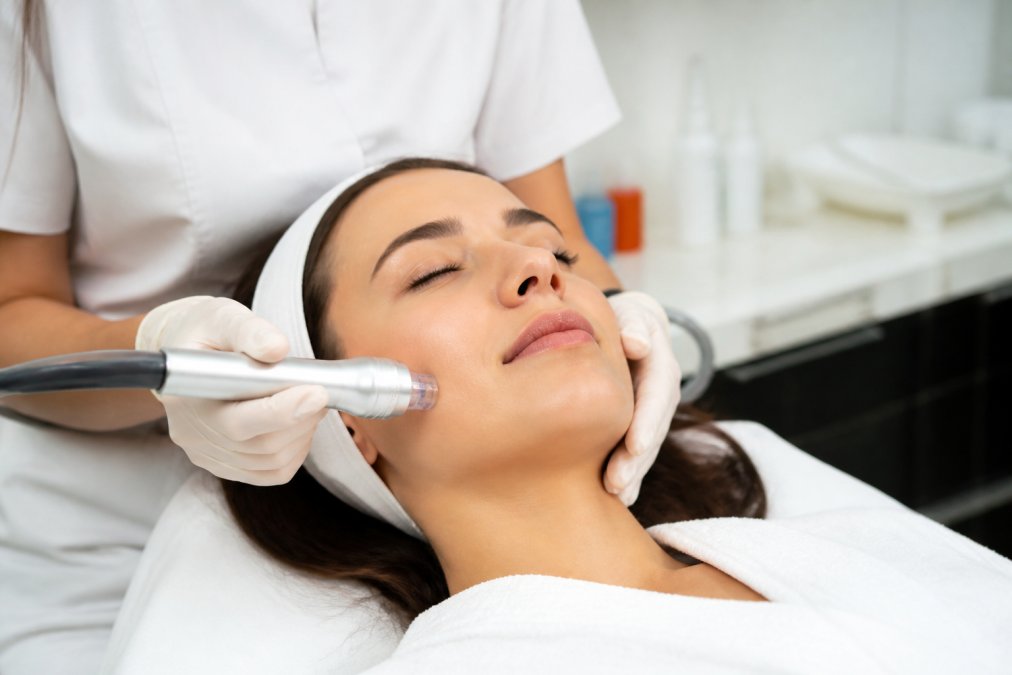
Microneedling, also called collagen induction therapy, uses fine needles to create controlled micro-injuries in the skin. This stimulates the body's natural healing response and collagen production. The procedure is gentler than laser resurfacing, making it suitable for sensitive skin or darker skin tones where laser carries more risk.
A dermaroller or microneedling pen creates thousands of tiny punctures. The depth of needles varies, deeper penetration treats more severe scars but requires more recovery time. Most treatments take 30-60 minutes. You'll see mild improvements after one session, but meaningful results require a series of treatments spaced 4-6 weeks apart.
Microneedling causes less erythema (redness) than laser treatments and typically resolves faster. Swelling and minor bleeding during the procedure are normal. The main limitation is that microneedling works best on rolling and mild boxcar scars; very deep or severe scarring may need laser or surgical intervention.
Chemical Peels and Topical Treatments
Chemical peels use acids to remove the outer layers of skin, triggering skin renewal. Superficial peels (glycolic acid, salicylic acid) improve texture and mild scarring. Medium-depth peels (TCA, trichloroacetic acid) penetrate deeper and create more significant improvement but require longer recovery.
Topical treatments alone, retinoids, vitamin C serums, niacinamide, improve skin texture and reduce post-inflammatory hyperpigmentation but don't meaningfully address structural scarring. They work best as maintenance between professional treatments or for very mild surface irregularities.
Chemical peels pair well with other treatments. Many practitioners use a peel before microneedling or laser to enhance penetration and results.
Surgical Options: Punch Excision and Subcision
For very deep or severe scars, surgical intervention may be necessary. Punch excision removes the scarred tissue entirely, then closes the wound with stitches. This works well for isolated deep scars or ice-pick style pitting. The trade-off: you're left with a small surgical scar that's usually less visible than the original acne scar.
Subcision uses a needle or blade inserted beneath the scar to break up tethered collagen that pulls the scar downward. This releases the scar, allowing it to rise closer to skin level. Subcision works particularly well for rolling scars. It's often combined with other treatments like microneedling or fillers for optimal results.
Both procedures require local anesthesia and create temporary bruising and swelling. Results improve over weeks as collagen remodels.
Laser Resurfacing for Acne Scars: What the Process Involves
Laser resurfacing for acne scar treatment begins with a consultation to assess scar depth, type, and skin tone. Your practitioner determines laser settings, number of sessions needed, and realistic outcomes for your specific scarring pattern.
During treatment, your skin is numbed with topical anesthetic or local injection. The laser handpiece is passed over scarred areas, delivering fractional energy pulses. You'll feel heat and hear a clicking sound as the laser fires. The entire session typically takes 30-45 minutes depending on treatment area size.
Immediately after, your skin looks red and feels warm, similar to a moderate sunburn. Mild swelling develops over the next 24 hours. Downtime varies: superficial fractional treatments allow return to normal activities within 3-5 days, while deeper treatments may require 7-10 days before the skin is presentable for work or social activities.
Peeling begins around day 3-5 as dead skin sheds. This is normal and expected. Avoid picking at peeling skin; let it shed naturally. New skin underneath is delicate and prone to irritation.
Acne Scar Treatment Recovery Time and Realistic Expectations
Understanding recovery helps you plan treatment around your schedule. Recovery varies based on treatment intensity, but knowing what to expect reduces anxiety and improves compliance with aftercare instructions.
Immediate Aftercare and First Week
The first 24-48 hours are the most intense. Your skin will be red, possibly swollen, and tender. Apply ice packs for 15 minutes every hour during the first day to minimize swelling. Keep your head elevated, even while sleeping, to reduce fluid accumulation in facial tissues.
Avoid touching your face, applying makeup, or using active skincare products. Your skin barrier is compromised and vulnerable to irritation and infection. Use only gentle cleansing with lukewarm water and a soft cloth. Pat dry gently, don't rub.
By day 3-5, redness decreases but peeling intensifies. Your skin may feel tight and uncomfortable. Moisturize generously with fragrance-free products. Avoid heat (hot showers, saunas, intense exercise) for at least 5-7 days, as heat increases inflammation and prolongs redness.
Sun protection is non-negotiable. Treated skin is extremely photosensitive.
Weeks Two Through Six: Visible Healing
By week two, most redness has faded, though some erythema may persist. Peeling usually stops by the end of week two. Your skin feels smoother, and you may notice the first signs of scar improvement as new collagen begins forming.
Long-Term Results and Multiple Sessions
Meaningful improvement from a single laser session becomes visible around 8-12 weeks as collagen remodeling continues. However, one treatment rarely produces complete scar resolution. Most patients need 3-5 sessions spaced 4-6 weeks apart for optimal results.
Managing Side Effects and Skin Barrier Health
Most side effects from acne scar treatment are temporary and manageable. However, understanding what's normal versus what requires professional attention protects your results and prevents complications.
Personalized Consultation and Treatment Planning
The best acne scar treatment plan is customized to your specific scar types, skin tone, pain tolerance, and downtime availability. This is why a thorough consultation matters.
Frequently Asked Questions
How many sessions are usually required for acne scar reduction?
The number of sessions depends on scar depth, type, and treatment method. Most patients require 3-6 sessions spaced 4-8 weeks apart for noticeable improvement. Depressed atrophic scars typically need more sessions than superficial scars. Laser resurfacing and microneedling often show progressive results with each treatment, with final outcomes visible 3-6 months after the last session as collagen remodeling continues.
What are the typical results of acne scar treatment?
Most patients experience significant improvement in scar appearance, depending on scar type and treatment choice. Shallow scars often respond better than deep pitted scars. Results include smoother skin texture, reduced visibility of scars, and improved skin tone uniformity. Realistic expectations are essential: complete removal is rare, but substantial improvement in appearance and skin confidence is common after a full treatment course.
Can acne scars be 100% removed?
Complete removal of acne scars is rarely achieved. However, modern treatments like laser resurfacing, microneedling, and surgical revision can dramatically reduce their visibility and improve overall skin texture. The goal of acne scar treatment is substantial improvement rather than total erasure. Individual results vary based on scar type, skin tone, age, and healing capacity. A professional consultation can clarify what's realistic for your specific scars.
Does acne scar treatment actually work?
Yes, acne scar treatment is clinically effective when the right approach is chosen for your scar type. Laser resurfacing, microneedling, and chemical reconstruction of skin scars all show documented efficacy in scar remodeling and skin rejuvenation. Success depends on selecting the appropriate treatment, completing the recommended session schedule, and following post-procedure care instructions. A consultation with a qualified professional ensures you receive the most effective treatment plan for your needs.