 how-to
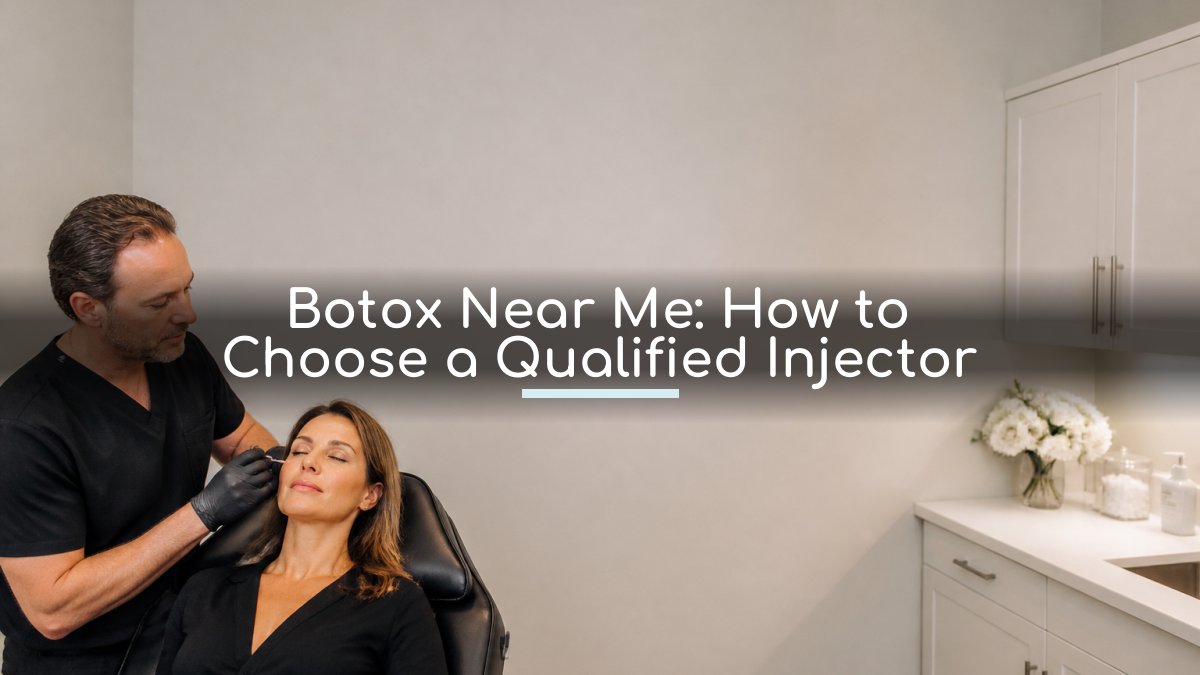
Botox Near Me: How to Choose a Qualified Injector
Table of Contents
- How to Find Botox Near Me: A Step-by-Step Approach
- Botox Provider Qualifications: Who Should Be Injecting You?
- What Happens During a Botox Consultation
- How Long Does Botox Last? Setting Realistic Expectations
- Botox Aftercare: What to Do After Your Appointment
- Safety, Side Effects, and Candidacy for Botox Near Me
- Frequently Asked Questions
Last Updated: October 13, 2026
How to Find Botox Near Me: A Step-by-Step Approach
Searching for botox near me usually starts the same way: you want smoother lines, a refreshed look, and a provider you can trust without driving across the state. The problem is that search results reward whoever markets hardest, not whoever injects best.
Here's the framework we'd use if we were choosing a provider for ourselves.
- List 3-5 clinics within a comfortable drive
- Verify who actually performs the injections
- Read consultation and follow-up policies
- Check reviews for patterns, not one-off complaints
- Book a consultation before committing to treatment
That last step matters most. A consultation is where you learn whether the provider listens or just sells.
Start With Provider Credentials, Not Discounts
Discounts are the loudest signal in this market, and the weakest one. A low promotional rate tells you nothing about who holds the syringe or how they handle a complication.
What to look for instead:
- The injector's license type (physician, nurse practitioner, registered nurse, or physician assistant)
- Whether a supervising physician is named and available
- Years of injectable experience, not just years in aesthetics
- Training specific to facial anatomy and vascular safety
Bella MedSpa's injectable team works under the direction of Dr. Craig Schacher, MD, FACEP, a board-certified physician with over 16 years in advanced aesthetic medicine. That structure matters: medical oversight is what separates a clinical setting from a storefront.
Compare Consultation Policies and Follow-Up Care
Ask one question before you book: what happens after the appointment?
A clinic that offers a follow-up visit, a direct line for concerns, and a clear touch-up policy is telling you they expect to stand behind the work. A clinic that hands you a mirror and a receipt is telling you something too.
- Is there a follow-up appointment included?
- Who do I contact if something looks off in week one?
- Is the treating injector reachable, or only a front desk?
- Are correction policies explained in writing before treatment?
Botox Provider Qualifications: Who Should Be Injecting You?
Botox is a prescription neuromodulator, and in most states only licensed medical professionals may administer it.
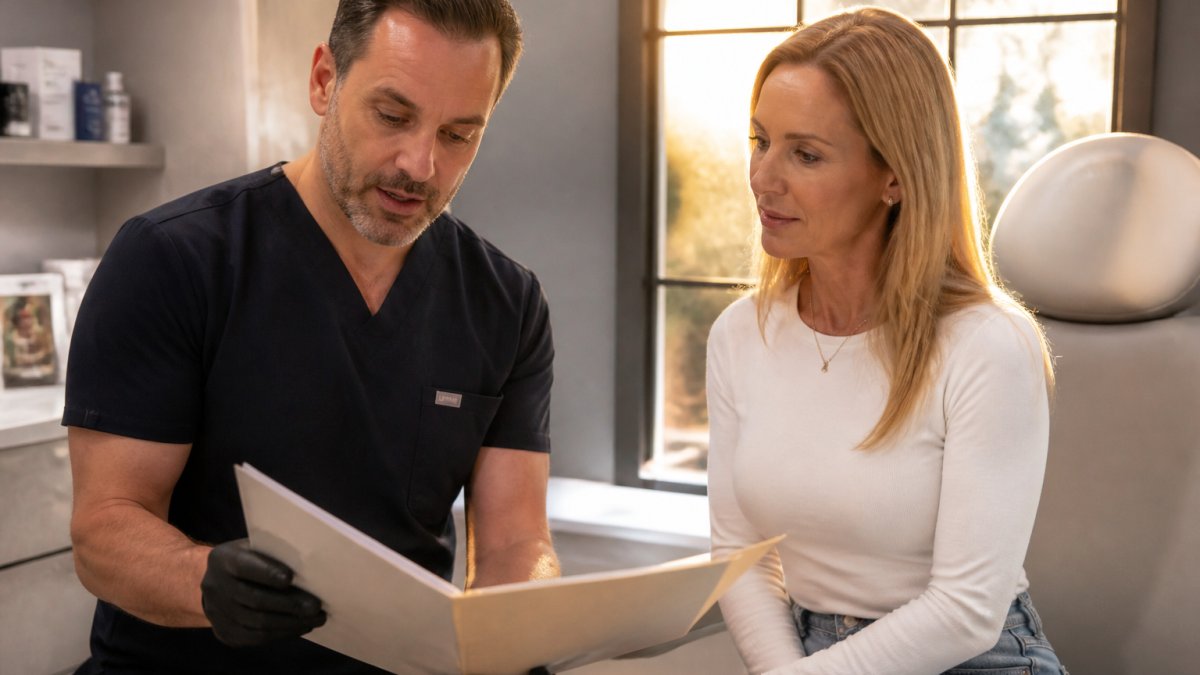
In practice, that means you should expect to see a physician, nurse practitioner, registered nurse, or physician assistant, working under appropriate supervision. Aestheticians without injectable licensure should not be injecting you, regardless of how the clinic markets itself.
How to Verify a Credential in About Five Minutes
Most people never check. It takes less time than reading a menu.
- Find the injector's full name and license type. It should be on the clinic website, not just a first name and a title like "injection specialist."
- Look up the license through your state's medical, nursing, or physician assistant board licensee search. Confirm the license is active and in good standing, and note the issue date, a license that is only a year old is not disqualifying, but it tells you to ask more about training.
- Confirm the supervising physician relationship if the injector is an NP, RN, or PA. Ask who the supervising physician is, whether they are on site or available, and how complications are escalated.
- Ask what injectable-specific training they completed. General aesthetics experience is not the same as training in facial anatomy, vascular mapping, and complication management.
- Ask how they handle a vascular occlusion. This is the rare but serious event where filler or toxin affects blood flow. A qualified injector will answer without hesitation and describe a protocol, including hyaluronidase availability if fillers are also offered.
Red Flags Worth Walking Away From
- The injector's name is never stated, or changes between booking and your appointment
- No one can tell you who the supervising physician is
- The clinic cannot produce before-and-after photos of the actual injector's own work
- Complications are described as "not really a thing" or "we've never had one"
- You are asked to consent to treatment before a health history is taken
What Medical Oversight Actually Buys You
Oversight is not a formality. It means there is a named clinician accountable for protocols, emergency supplies, and follow-up. It means dosing decisions are made by someone trained to weigh your anatomy and history, not by a script. And it means that if something goes wrong, there is a medical chain of command rather than a front desk.
Bella MedSpa's injectable team works under the direction of Dr. Craig Schacher, MD, FACEP, a board-certified physician with over 16 years in advanced aesthetic medicine. That structure matters: medical oversight is what separates a clinical setting from a storefront.
What Happens During a Botox Consultation
A proper Botox consultation is a medical appointment, not a sales pitch. It should include a facial assessment at rest and in motion, a review of your health history, and a conversation about what you actually want to change.
Your provider should examine how your facial muscles move, ask about medications and prior procedures, and explain which treatment areas make sense for your goals. They should also tell you when a treatment won't help.
Questions to Ask Before You Agree to Treatment
Bring these to your appointment:
- Which areas are you treating, and why those?
- How many units do you expect to use, and how did you arrive at that number?
- What results should I realistically expect, and when?
- What are the risks specific to my anatomy and history?
- What happens if I'm not satisfied with the outcome?
A provider who welcomes these questions is a provider worth staying with. One who brushes them aside is not.
How Long Does Botox Last? Setting Realistic Expectations
Botox results typically last around three to four months for most patients, though this varies with dosage, treatment area, and individual metabolism. First-time patients sometimes notice results fading sooner; regular patients often find their intervals stretch slightly.
The timeline looks roughly like this:
| Phase | Timeframe | What You'll Notice |
|---|---|---|
| Onset | 2-7 days | Movement begins to soften |
| Full effect | 10-14 days | Peak smoothing at treated areas |
| Plateau | Weeks 3-10 | Results hold steady |
| Fade | Months 3-4 | Movement gradually returns |
If you're comparing options, Dysport, Xeomin, and Jeuveau are also botulinum toxin type A products with similar mechanisms and comparable durations. Your injector can explain which suits your anatomy and goals.
Botox Aftercare: What to Do After Your Appointment
Aftercare is simple, but skipping it can cost you results. For the first 24 hours, stay upright for a few hours, avoid strenuous exercise, and skip facials, saunas, and anything that presses on the treated areas.
For the first few days:
- Avoid rubbing or massaging injection sites
- Skip alcohol if you bruise easily
- Use cold compresses for any swelling, never pressure
- Report anything unusual to your provider promptly
Mild redness, tenderness, or a small bruise at an injection site is common and typically settles within days. Drooping eyelid or brow, while uncommon, is a known risk and should be reported to your injector rather than managed on your own.
Safety, Side Effects, and Candidacy for Botox Near Me
Botox is well studied and widely used, but it isn't right for everyone. The difference between a good outcome and a bad one often comes down to how thoroughly your history was reviewed before anyone opened a vial.
A Practical Screening Checklist
Bring this to your consultation. A provider who welcomes it is a provider worth staying with.
Conditions to disclose:
- Pregnancy or breastfeeding (treatment is generally deferred)
- Neuromuscular conditions such as myasthenia gravis, Lambert-Eaton syndrome, or ALS
- Known allergy to botulinum toxin or any ingredient in the formulation
- Prior facial surgery, implants, or permanent fillers
- Active infection, rash, or broken skin at a planned injection site
- Bleeding disorders or current use of blood thinners
Medications and supplements to mention:
- Blood thinners such as warfarin, apixaban, or rivaroxaban
- Daily aspirin or NSAIDs
- Muscle relaxants
- Aminoglycoside antibiotics
- High-dose fish oil, vitamin E, ginkgo, or turmeric, which can increase bruising
History worth volunteering even if no one asks:
- Prior neuromodulator treatments and how you responded
- Any past drooping eyelid or brow asymmetry after treatment
- Autoimmune conditions
- Recent illness or fever
If a provider skips the health history portion entirely, that's your cue to leave. No amount of experience compensates for treating a patient you haven't screened.
Common and Uncommon Side Effects
Most side effects are mild, localized, and temporary.
| Effect | How Common | Typical Course |
|---|---|---|
| Redness or tenderness at injection sites | Common | Hours to a few days |
| Small bruise | Common | Several days |
| Headache | Common | A day or two |
| Flu-like feeling shortly after treatment | Less common | Resolves on its own |
| Eyelid or brow drooping | Uncommon | Weeks; report to your injector |
| Asymmetry between sides | Uncommon | Often correctable at follow-up |
Drooping eyelid or brow is uncommon but is a known risk. It should be reported to your injector rather than managed on your own, and it usually resolves as the effect fades.
When to Call Your Provider
- Any difficulty swallowing, speaking, or breathing
- Widespread muscle weakness
- Signs of infection at an injection site, such as spreading redness, heat, or pus
- Drooping that appears suddenly or worsens
- Vision changes
These are rare, but they are the reason a direct line to your injector matters more than a discount.
Candidacy Comes Down to Three Things
Your health history, your anatomy, and your goals. A provider who addresses all three before recommending treatment is doing the job. A provider who addresses only your goals is selling.
If you're looking for Botox near me in the Westfield area, Bella MedSpa offers personalized consultations with an experienced medical team. Our approach prioritizes natural-looking results and honest guidance about what treatment can and cannot do.
Frequently Asked Questions
How do I find a qualified Botox provider near me?
Start by confirming who will perform the injection and their license type. In many states, physicians, nurse practitioners, physician assistants, and registered nurses may inject under specific supervision rules, while aestheticians generally cannot. Look for a provider with documented injectable training, a real medical director, and a willingness to discuss your medical history. A Botox consultation should include a facial assessment and a clear treatment plan, not a rushed sales pitch.
What should I ask during a Botox consultation?
Ask who will inject you, what product they plan to use (Botox, Dysport, Xeomin, or Jeuveau), and how many units they expect for your treatment areas. Request a review of risks, side effects, and what to do if you are unhappy with the result. Also ask about follow-up visits, since reputable practices typically offer a two-week check-in. If any answer feels evasive, that is a signal to keep looking.
How long does Botox last, and when will I see results?
Most people notice the effect beginning within a few days, with the full result visible around two weeks. The effect typically lasts three to four months, though this varies by product, dosage, treatment area, and how your body responds. Muscles that move a lot, such as those causing frown lines, may wear off sooner. Scheduling maintenance before the effect fully fades can help keep results consistent.
What is the 4-hour rule for Botox aftercare?
Many injectors advise staying upright for about four hours after treatment and avoiding rubbing or massaging the treated area. Some also suggest skipping strenuous exercise, saunas, and facials for the rest of the day. These are general precautions, not guarantees, and your provider's instructions should take priority. If you have questions about Botox aftercare, ask before you leave the appointment so you know exactly what to expect.
Finding a provider you trust takes more effort than clicking the first sponsored result, but the payoff is a result that looks like you, only refreshed. Bella MedSpa combines physician oversight from Dr. Craig Schacher, MD, FACEP, a comprehensive range of facial rejuvenation services, and a personalized consultation process designed around your goals rather than a template. Get started with Bella MedSpa and book a consultation to discuss whether cosmetic injectables are right for you.