 ultimate-guide
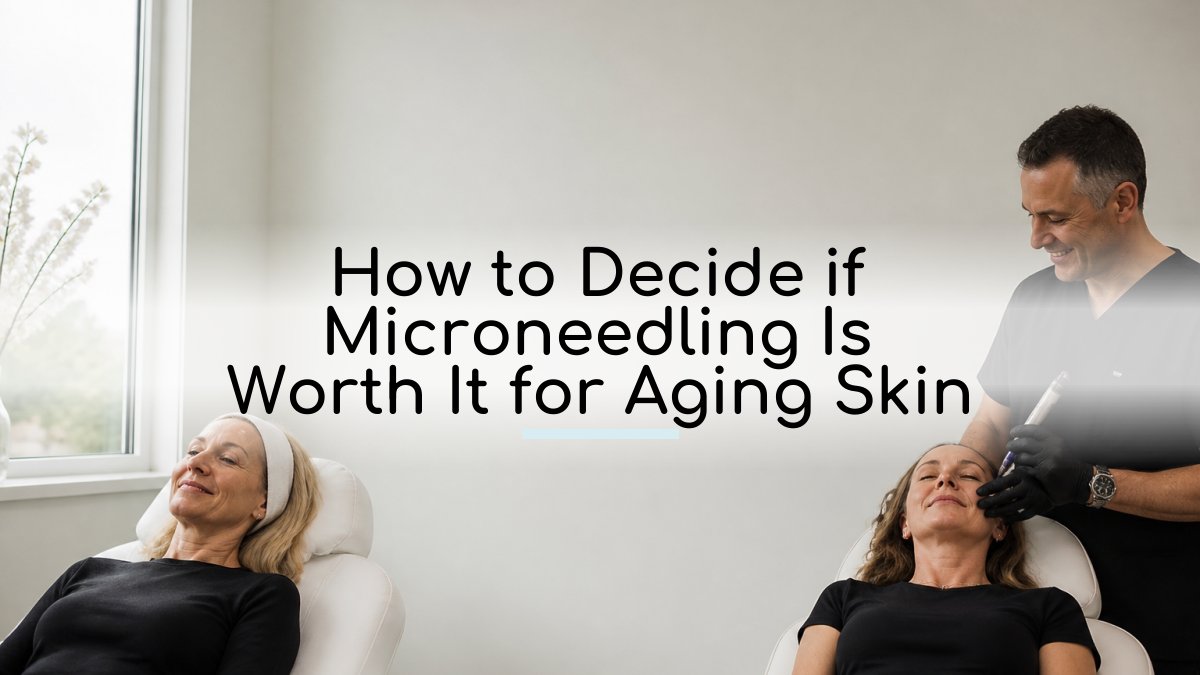
How to Decide if Microneedling Is Worth It for Aging Skin
Last Updated: October 25, 2026
Quick Summary
Microneedling aging skin stimulates collagen and elastin production through controlled micro-punctures, addressing the structural loss behind wrinkles, texture changes, and loss of firmness. Results build over one to three months and typically require three to six sessions spaced four to six weeks apart, making it a comprehensive approach to skin rejuvenation that lasts longer than alternatives like Botox.
- Standard microneedling addresses fine lines within weeks; radiofrequency microneedling produces stronger collagen stimulation for deeper wrinkles and laxity.
- Most people need three to six sessions spaced four to six weeks apart for meaningful results, with peak improvement appearing three to six months after the final session.
- Recovery involves redness and mild swelling for one to three days with standard microneedling, or three to seven days with radiofrequency microneedling.
- Results last one to two years or more with maintenance; most people benefit from one maintenance session every six to twelve months.
- Post-inflammatory hyperpigmentation is a known risk in medium to deep skin tones and requires strict sun protection and experienced provider selection.
Table of Contents
- What Microneedling Is and How It Works on Aging Skin
- How Microneedling for Wrinkles Addresses Fine Lines and Deeper Creases
- How Many Microneedling Sessions for Wrinkles Does Your Skin Need
- Microneedling Results and Recovery: Timeline and Realistic Expectations
- Microneedling vs Botox: Which Approach Fits Your Goals
- Safety, Provider Selection, and When to Avoid Microneedling
- Schedule Your Microneedling Consultation
- Frequently Asked Questions
What Microneedling Is and How It Works on Aging Skin
Microneedling uses fine needles to create controlled micro-punctures in the skin, triggering the body's wound-healing response and collagen production, a proven approach to microneedling aging skin.
The needles penetrate the dermis, where collagen lives, activating fibroblasts to produce fresh collagen and elastin.
At Bella MedSpa, microneedling for aging skin addresses collagen loss, rather than masking symptoms.
Radiofrequency microneedling (RF microneedling) adds radiofrequency energy that heats the deeper dermis, accelerating collagen remodeling for more dramatic tightening, especially for loose skin and deeper wrinkles.
How Microneedling for Wrinkles Addresses Fine Lines and Deeper Creases
Fine lines and wrinkles form when collagen breaks down faster than the body replaces it.
Deeper wrinkles demand more aggressive treatment. Radiofrequency microneedling penetrates further and generates more collagen, making it the better choice for pronounced nasolabial folds, forehead lines, and neck creasing.
Needle depth matters enormously. Shallow treatments (0.5-1.0 mm) address fine lines and texture; deeper treatments (1.5-2.5 mm) target wrinkles and laxity.
Many patients see first improvements in texture and tone within one to two weeks as hydration improves and fresh collagen fills in. For deeper wrinkles, results build over three to six months as collagen remodeling accelerates, a genuine restoration of skin quality that strengthens over time.
How Many Microneedling Sessions for Wrinkles Does Your Skin Need
Most people need a series of sessions for meaningful wrinkle results.
For fine lines and mild aging, three sessions often suffice; for moderate to deep wrinkles, four to six deliver more dramatic results. Each session builds on the last, and afterward many people benefit from maintenance treatments once or twice yearly.
Radiofrequency microneedling may require fewer sessions because it produces more collagen per treatment; some patients see satisfying results in two to three RF sessions.
Spacing is critical. Four to six weeks lets collagen develop and inflammation resolve; rushing increases irritation without benefit, while waiting too long breaks collagen-building momentum.
Microneedling Results and Recovery: Timeline and Realistic Expectations
The first 24 to 48 hours involve visible redness, mild swelling, and a tight or sunburned sensation, expected, since the inflammatory response is part of healing. Most people resume normal activities within 24 hours, avoiding intense exercise, saunas, and direct sun for three to five days. Pinpoint bleeding and mild crusting can occur with deeper treatments and typically resolve within days.
What changes, and when
It helps to separate the two phases of improvement, because they come from different processes:
- Early change (days to two weeks): Skin looks smoother and more hydrated. This is largely due to reduced inflammation, increased moisture retention, and temporary swelling that plumps fine lines. It is real but partly transient.
- Collagen-driven change (one to three months and beyond): New collagen fibers mature and cross-link, gradually improving texture, fine lines, and firmness. This is the durable result, and it is why the timeline feels slow.
- Peak results: Peak collagen remodeling typically appears roughly three to six months after the final session in a series. Results then gradually soften over time without maintenance.
Radiofrequency microneedling typically involves slightly longer recovery, redness may persist five to seven days, and some swelling is common, in exchange for stronger collagen stimulation and more tightening, particularly for laxity and deeper creases. Explore recovery timelines for other skin resurfacing procedures to compare healing expectations across different treatments.
Setting realistic expectations for mature skin
Older skin has less collagen reserve and slower remodeling, so improvements are gradual and cumulative. A common pattern is meaningful improvement in texture, tone, and fine lines, with more modest change in deep static wrinkles and significant laxity, which often need combination approaches. Microneedling improves skin quality substantially but does not erase wrinkles or replace surgical lifting. Your provider can frame goals against your specific baseline.
Maintenance: how long results last
Results are not permanent; collagen keeps turning over, and sun exposure and natural aging continue. A common pattern is one session every six to twelve months after the initial series, adjusted to your response. Daily sunscreen and a consistent routine help hold results longer; skipping maintenance softens benefits gradually over one to two years.
Recovery by treatment type
| Standard microneedling | Radiofrequency microneedling | |
|---|---|---|
| Typical redness | 1-3 days | 3-7 days |
| Return to makeup | Often 24-48 hours | Often 2-4 days |
| Swelling | Mild | Mild to moderate |
| Sun avoidance | 3-5 days | 5-7 days |
| Collagen response | Gradual | Stronger, especially for laxity |
These are typical ranges; deeper settings and higher energy extend recovery. Plan treatment around events, not immediately before them.
Skin tone and pigment during recovery
In medium to deep skin tones, recovery deserves extra attention because post-inflammatory hyperpigmentation can appear as healing progresses. Strict daily sunscreen, first-week sun avoidance, and avoiding heat and active ingredients reduce risk. Report new darkening early, pigment is easier to manage when addressed promptly.
When to expect less than hoped
Some patients see more modest change: significant laxity, heavy sun damage, or very deep wrinkles may need combination treatment or a different modality, and smoking, poorly controlled diabetes, and inconsistent sun protection can blunt results. For dynamic wrinkles from muscle movement, microneedling is the wrong tool. An honest consultation should say when microneedling is unlikely to deliver.
Microneedling vs Botox: Which Approach Fits Your Goals
Botox paralyzes the muscles that create expression lines, softening existing wrinkles and preventing new ones.
Microneedling stimulates the skin's own collagen, addressing the structural loss behind aging.
For fine lines on the forehead and around the eyes, Botox works quickly and effectively. Discover the full range of facial rejuvenation options for mature skin to evaluate all approaches available to you.
The choice depends on your timeline, budget, and goals. For immediate results before an event, Botox is faster; for comprehensive rejuvenation, microneedling is the stronger long-term choice. Learn about alternative wrinkle treatments to explore your full range of options beyond these two approaches.
Safety, Provider Selection, and When to Avoid Microneedling
Microneedling is generally well tolerated with sterile equipment and appropriate technique. Common side effects are temporary redness, mild swelling, and pinpoint bleeding resolving within a day or two. Serious complications, infection, granulomas, scarring, or cold sore reactivation, are uncommon but real, and mostly preventable with proper screening.
Conditions and medications to disclose before treatment
A thorough consultation should screen for factors that change risk. Be prepared to discuss:
- Active skin problems, active acne, eczema flares, psoriasis, open wounds, or recent sunburn should be resolved before needling. Treating over inflamed skin raises infection and scarring risk.
- Cold sores, a history of herpes simplex labialis is a common trigger for reactivation after any skin injury. Many providers prescribe antiviral prophylaxis for patients with a history.
- Bleeding and bruising, blood thinners (including daily aspirin), anticoagulants, and some supplements (fish oil, high-dose vitamin E, ginkgo) increase bruising. Never stop a prescribed medication without your physician's guidance; the provider should coordinate.
Skin-tone-specific risk: post-inflammatory hyperpigmentation
Post-inflammatory hyperpigmentation (PIH), darkening of treated skin, is a known risk after any controlled injury, more common in medium to deep skin tones (Fitzpatrick types III-VI). Risk rises with deeper needle depth, aggressive energy settings, and inadequate sun protection during healing. A provider experienced with diverse skin tones may:
- Start with conservative depth and energy and build gradually across sessions.
- Consider a test spot before a full-face treatment in higher-risk patients.
- Build in a pigment-prevention plan, daily broad-spectrum sunscreen, strict sun avoidance during healing, and sometimes topical lightening agents before and after treatment.
If you have a history of melasma or PIH, raise it explicitly. Melasma in particular can be aggravated by heat-based treatments, and a provider should have a specific plan rather than a generic reassurance.
How to vet a provider
Licensure alone does not signal competence. Microneedling is performed by physicians, nurses, nurse practitioners, physician assistants, and licensed aestheticians, and training varies widely. Practical vetting questions:
- Who performs the treatment, and what is their specific training in microneedling and, if offered, radiofrequency microneedling?
- What device is used, and is it cleared by the FDA for its intended use? Ask whether the practice uses a medical-grade device with single-use, sterile needle cartridges, never a roller reused between patients.
- How is depth and energy chosen for my skin tone and concern? A provider who cannot explain this in plain terms is a red flag.
At Bella MedSpa, our team includes Dr. Craig Schacher, MD, and clinical advisors with extensive training in advanced aesthetic medicine. Learn how to choose a qualified microneedling provider to ensure you receive safe, effective treatment from someone with genuine expertise.
Aftercare that protects results
Post-treatment care affects both outcomes and complication risk. Use a gentle, non-exfoliating cleanser, avoid retinol, vitamin C, and other actives for about a week, and apply broad-spectrum SPF 30 or higher daily, sun exposure during healing is a leading driver of PIH. Don't pick or scrub flaking skin, skip intense exercise, saunas, and hot tubs for a few days, and moisturize with a bland, fragrance-free product.
Schedule Your Microneedling Consultation
Whether microneedling is worth it for aging skin depends on your concerns, skin type, and expectations.
Its comprehensive approach remodels the entire skin structure. Results build over months, creating natural-looking improvements without the "done" look many people fear.
Your next step is a consultation with a qualified aesthetic provider who can assess your skin, discuss your goals, and recommend a personalized plan, where realistic expectations are set and expertise is demonstrated.
Frequently Asked Questions
Does microneedling really help with wrinkles and fine lines?
Microneedling stimulates collagen and elastin production through controlled micro-punctures, which can improve skin texture and reduce the appearance of fine lines and wrinkles over time. Results are typically gradual and build with each treatment session. Deep wrinkles may show less dramatic improvement than fine lines, and results depend on skin quality, age, and treatment depth. A consultation with a qualified provider can help set realistic expectations for your specific concerns.
How many microneedling sessions are needed to see results on aging skin?
Most people require a series of 3 to 6 treatment sessions spaced 4 to 6 weeks apart to see meaningful improvements in skin rejuvenation and wrinkle reduction. Your provider will customize the treatment plan based on your skin condition, age, and aesthetic goals. Maintenance treatments may be recommended annually to sustain results as skin continues to age.
What is the downtime after microneedling, and when can I return to work?
Typical downtime is 24 to 48 hours. Most people experience redness and mild skin irritation immediately after treatment, which subsides within a few days. You can usually return to normal activities and work the next day, though you should avoid strenuous exercise, direct sun exposure, and certain skincare products during the initial recovery period. Your provider will give you detailed aftercare instructions.
Is microneedling better than Botox for wrinkles?
Microneedling and Botox work differently. Botox relaxes muscles to smooth dynamic wrinkles (those caused by facial movement), while microneedling stimulates collagen to improve skin texture and address static wrinkles (those present at rest). Microneedling also treats scarring, texture, and discoloration, whereas Botox targets expression lines. Some people combine both treatments for comprehensive facial rejuvenation. Your provider can recommend the best approach for your specific goals.
Microneedling for aging skin works because it restores what time takes away: collagen and skin structure. If you're ready to explore whether this treatment aligns with your goals, schedule a consultation with Bella MedSpa to discuss your skin concerns with an experienced aesthetic team. We'll assess your skin, answer your questions, and help you decide whether microneedling is the right path forward for your rejuvenation goals.