 ultimate-guide
Medical Grade Retinol for Beginners: 2026 Guide
Last Updated: October 30, 2026
Quick Summary
Medical grade retinol is a retinol product sold through clinical channels, usually by a provider, rather than a legally defined FDA category. For beginners, the best starting point is a low-strength product, often 0.1% to 0.3%, applied two nights per week. Its value comes from a provider matching strength to your skin and monitoring your response.
- Medical grade" is not a legally defined category; the FDA regulates retinol as either a cosmetic or a drug.
- Choose a low strength, commonly 0.1% to 0.3% for over-the-counter products, as a beginner.
- Start with two nights per week for the first two to four weeks, then add a night only if skin stays calm.
- Apply a pea-sized amount to dry skin at night, follow with a fragrance-free moisturizer, and skip exfoliating acids.
- Use sunscreen every morning, since retinol increases sun sensitivity.
Table of Contents
- What Medical Grade Retinol Means and How It Differs From Over-the-Counter Retinol
- Choosing Your Starting Point: A Beginner Decision Guide
- Building a Retinol Beginner Routine, Step by Step
- How Often to Use Retinol as Your Skin Adjusts
- Retinol Side Effects and How to Manage Irritation
- Medications, Pregnancy, and When to See a Clinician First
- Booking Your Retinol Consultation at Bella MedSpa
- Frequently Asked Questions
What Medical Grade Retinol Means and How It Differs From Over-the-Counter Retinol
"Medical grade" is one of the most misunderstood phrases in skincare, and it is worth being precise about it before you spend a dollar on a product. In the United States, the term is not a legally defined category. The FDA regulates retinol products either as cosmetics (over-the-counter) or as drugs (prescription), and "medical grade" is a marketing and clinical-channel descriptor rather than an official classification. That does not make it meaningless, it tells you something about how the product is sold, who selects it, and how it is supervised, but it does mean you should look past the label to the formula itself.
Here is how the three tiers actually differ:
| Category | Regulatory status | Typical retinol/retinoid strength | How you get it | Supervision |
|---|---|---|---|---|
| Over-the-counter retinol | Cosmetic | Often 0.1%-1% retinol, though labels vary and concentration is not always disclosed | Drugstore, online, mass retail | None |
| Medical grade retinol | Sold through clinical channels; cosmetic or drug depending on claims | Often higher or better-stabilized retinol, sometimes paired with boosters | Through a provider or med spa | Provider-selected |
| Prescription retinoid | FDA-approved drug (e.g., tretinoin) | Fixed, regulated strengths | Prescription only | Clinician-managed |
A few practical points follow from that table:
- Concentration disclosure is inconsistent. Many over-the-counter products do not state their retinol percentage, and retinol degrades with light and air exposure. A well-formulated 0.3% product in opaque, air-restrictive packaging can outperform a poorly stabilized 1% product in a clear jar.
- Prescription retinoids are a different molecule class. Tretinoin is already the active form of vitamin A; retinol must be converted by the skin first, which is one reason it tends to be gentler. That conversion step is also why retinol is often the better starting point for a beginner.
- "Medical grade" usually means provider selection, not magic. The real advantage is that a trained provider matches strength and formulation to your skin tolerance and monitors your response, the same principle that makes a prescription appropriate for some patients and not others.
Choosing Your Starting Point: A Beginner Decision Guide
Most beginner retinol guides tell you to "start low and go slow" and then stop there. This section gives you the specifics that phrase leaves out: what strength to look for, how often to apply it, and how to match a formula to your skin type and goal.
Start with concentration, not brand
For a true beginner, a sensible starting range is a low-strength retinol, commonly in the 0.1% to 0.3% range for over-the-counter products, or the lowest strength your provider offers in a clinical line. Higher percentages are not automatically better; they are simply more likely to irritate skin that has not yet adapted. If a product does not disclose its percentage, treat that as a yellow flag and ask before you buy.
Match the formula to your skin type
| Your skin situation | What to look for | What to avoid at first |
|---|---|---|
| Sensitive, reactive, or rosacea-prone | Lowest strength; cream or lotion base; fragrance-free; paired with ceramides or niacinamide | High-percentage serums, alcohol-heavy formulas, exfoliating acids in the same product |
| Dry skin | Cream or emulsion texture; barrier-supporting ingredients | Lightweight gels that can feel tightening |
| Oily or acne-prone | Gel or serum texture; non-comedogenic labeling | Heavy occlusive bases that can clog pores |
| Normal skin with early fine lines | Low-to-mid strength; simple formulation | Stacking multiple actives in week one |
Match the plan to your goal
- Fine lines and uneven tone: consistent low-strength use over several months is the workhorse approach. Results build gradually, and consistency matters more than intensity.
- Acne marks and post-inflammatory discoloration: retinol can help over time, but this is a case where a provider should assess whether retinol alone is the right tool or whether it should be paired with other treatments.
- Texture and dullness: a gentle retinol plus daily sunscreen is often enough for a beginner; adding more actives early tends to backfire.
A simple starting schedule
A common beginner pattern is two nights per week for the first two to four weeks, then a third night if the skin stays calm, then a slow build from there. Apply a pea-sized amount to dry skin in the evening, follow with a fragrance-free moisturizer, and keep exfoliating acids out of the routine on retinol nights. If your skin stays comfortable for several weeks at a given frequency, that is your signal to consider adding a night, not before.
If you are unsure where you fall on that spectrum, a consultation with a qualified professional can help you sort it out rather than leaving you to guess from a label.
Building a Retinol Beginner Routine, Step by Step
A workable beginner routine looks like this. Apply your product to dry skin in the evening, using a pea-sized amount for the whole face. Follow with a fragrance-free moisturizer. Skip exfoliating acids on the same night at the start.
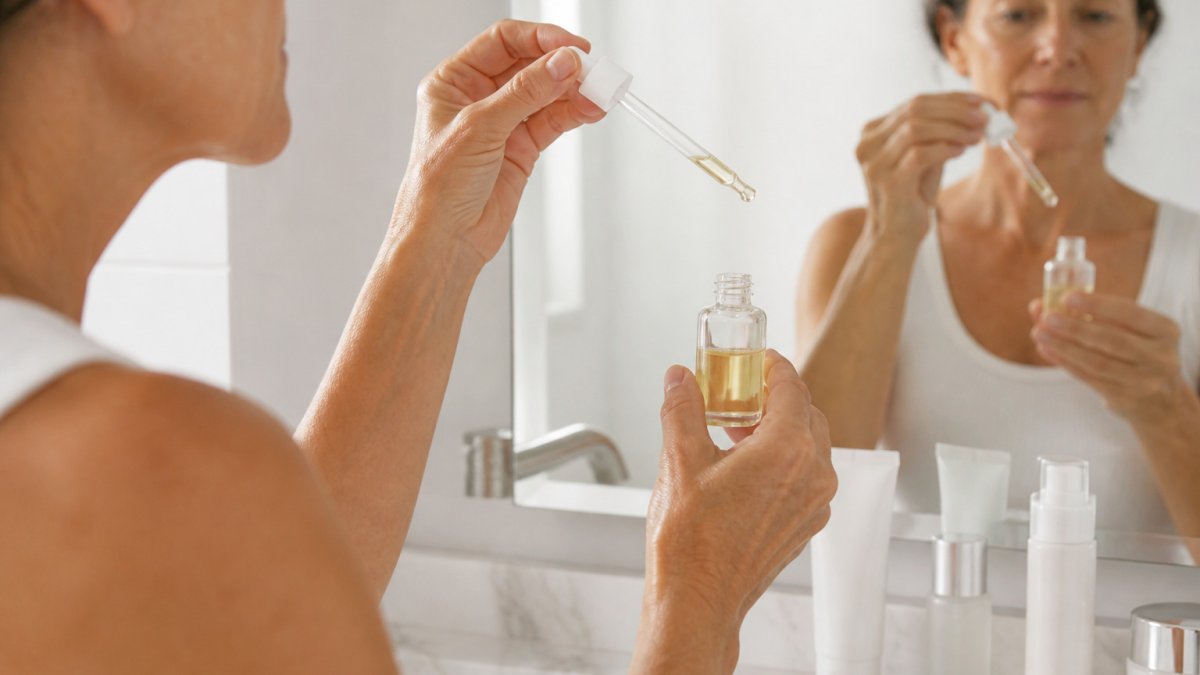
Use sunscreen every morning. Retinol increases sun sensitivity, and daily sun protection is what keeps the results you are paying for from being undone.
Keep the routine simple for the first month. Adding five new products at once makes it impossible to tell which one caused a reaction.
How Often to Use Retinol as Your Skin Adjusts
Most beginners start two to three nights per week and only increase frequency after several weeks without significant irritation. Moving too quickly is the most common reason people quit.
Increase slowly. If your skin stays calm, you can add a night, then perhaps a strength step, but only when the current level feels comfortable. Consistency over several months tends to matter more than the fastest possible progression.
Results typically take a few months to become visible, so judge progress over time rather than week to week.
Retinol Side Effects and How to Manage Irritation
Early dryness, flaking, mild redness, and a tight feeling are common during the adjustment period. This is often called retinization. It usually settles as the skin adapts.
If irritation is significant, reduce frequency, switch to a gentler formula, or pause for a few days. Layer a barrier-supporting moisturizer, and avoid harsh scrubs and other strong actives during this time. Stop and contact a clinician if you notice swelling, blistering, or irritation that is severe or spreading.
Medications, Pregnancy, and When to See a Clinician First
Retinoids are not appropriate for everyone. Pregnancy and breastfeeding are important reasons to speak with a clinician before using any vitamin A derivative, as guidance on retinoid use during these periods is specific and should come from your doctor. Our FAQ answers common safety questions about medications and pregnancy before you start treatment. Certain medications, including some acne treatments and other topical actives, can also interact with retinol. Share your full medication list at your consultation.
A consultation with a qualified professional can review your history and help you decide whether retinol is a reasonable choice for you right now.
Booking Your Retinol Consultation at Bella MedSpa
The most useful next step is a consultation with a qualified professional, where your skin and health history can be reviewed and a realistic plan discussed. Our step-by-step guide to scheduling a medical spa consultation shows you how to book one and what to expect. Our guide on choosing a medical aesthetician explains what to look for in a provider.
If you are weighing medical-grade products against everyday options, our article on whether medical-grade skincare really works better walks through the comparison.
Frequently Asked Questions
What is medical-grade retinol?
Medical grade retinol generally refers to formulas used or recommended by clinicians, typically at concentrations and in vehicles designed for controlled, supervised use. The term is not a single regulated standard in the United States, so it helps to ask a provider what concentration, delivery system and stability testing a product uses. Prescription retinoids such as tretinoin require a prescription from a licensed clinician. Over-the-counter retinol is sold without one and is usually milder. A consultation can help you decide which category fits your skin goals and sensitivity.
Is medical-grade retinol suitable for beginners?
It can be, but beginners usually do best starting with a lower concentration and a gentle formula, regardless of the label. Skin tolerance varies widely, especially for people with sensitive skin, rosacea or a compromised skin barrier. Starting slowly and assessing how your skin responds in the first few weeks is more important than the category name on the bottle. If you have a condition or take medications, speak with a qualified clinician before starting.
How should a beginner start using retinol?
A common approach is to apply a small, pea-sized amount to clean, dry skin in the evening, two to three nights per week, and gradually increase frequency as your skin tolerates it. Always follow the product instructions. Use a daily moisturizer and broad-spectrum sunscreen during the day, since retinol can increase sun sensitivity. Stop or reduce use if you notice persistent burning, peeling or swelling, and contact your clinician if symptoms do not settle.
What are the common side effects of retinol?
The most frequently reported side effects include dryness, redness, flaking, stinging and temporary sensitivity, especially during the first several weeks. This adjustment period is sometimes called retinization. These effects are usually mild and tend to improve as skin adapts, but they can be more pronounced with stronger products or overuse. Reduce frequency, use a fragrance-free moisturizer and avoid harsh exfoliants until symptoms resolve. Seek medical care for severe reactions, blistering or signs of infection.
How often should beginners use retinol?
Most beginners start two to three evenings per week and only increase frequency if their skin stays calm. Moving to nightly use too quickly is a common reason for irritation. Frequency depends on the strength of the product, your skin type and your goals, so there is no single schedule that fits everyone. A clinician can help you set a schedule based on your skin assessment.
Should you consult a skincare professional before using prescription-strength retinoids?
Yes. Prescription retinoids are regulated medications that require a clinician's evaluation, and they can interact with other medications and conditions. A professional can review your medical history, check for contraindications such as pregnancy or breastfeeding, and recommend an appropriate starting strength. Bring a list of your current skincare products and medications to the appointment.