 comparison
Does Medical-Grade Skincare Really Work Better?
Last Updated: October 23, 2026
Quick Summary
Medical-grade skincare contains higher concentrations of active ingredients formulated to penetrate deeper than over-the-counter products, and it delivers measurable results when the active ingredient, concentration, and formulation are evidence-backed and used consistently.
- Medical-grade skincare is typically available only through licensed professionals, dermatologists, or medical spas, not retail stores.
- A drugstore retinol might contain 0.3% retinol while medical-grade retinoids can contain 0.5% to 1% or higher in prescription-strength formulations.
- Tretinoin has decades of controlled trials showing reduced fine wrinkles; retinol has meaningful but generally smaller and slower effects.
- Medical-grade skincare makes most sense for stubborn acne, significant hyperpigmentation, or advanced photoaging where OTC options plateau.
- Consistent use matters more than product tier; a modest OTC retinoid used nightly can outperform an expensive product used sporadically.
Table of Contents
- What Is Medical-Grade Skincare?
- Medical-Grade Skincare vs Over-the-Counter: The Real Differences
- Medical-Grade Skincare Ingredients That Deliver Results
- Clinical Evidence: What Research Shows
- Is Medical-Grade Skincare Worth It?
- How to Verify Medical-Grade Claims and Avoid Misleading Marketing
- The Role of Professional Guidance in Skincare Success
- Frequently Asked Questions
What Is Medical-Grade Skincare?
Medical-grade skincare refers to products formulated with higher concentrations of active ingredients and designed to penetrate deeper than over-the-counter alternatives. These products are typically available only through licensed professionals, dermatologists, or medical spas, not retail stores or open online marketplaces.
The term "medical-grade" isn't officially regulated by the FDA, so manufacturers can use it loosely. Genuine medical-grade skincare distinguishes itself through rigorous formulation standards, clinical testing, and professional dispensing requirements.
How Medical-Grade Products Differ from Cosmetics
Medical-grade skincare products are formulated with pharmaceutical-grade ingredients at therapeutic concentrations, while over-the-counter cosmetics contain lower concentrations designed for general consumer use without professional oversight.
The key differences come down to three factors: ingredient potency, formulation stability, and delivery systems. Medical-grade products use stabilized forms of actives like retinoids and vitamin C that remain effective longer, follow stricter manufacturing controls, and are designed to work synergistically rather than sitting on the skin's surface.
A common mistake is assuming "natural" or "luxury" brands offer the same benefits as medical-grade options. Luxury brands excel at marketing and packaging; medical-grade brands invest in research, stability testing, and clinical evidence.
Medical-Grade Skincare vs Over-the-Counter: The Real Differences
When evaluating medical-grade skincare vs over-the-counter options, practical distinctions matter more than marketing claims. Over-the-counter products sit in the cosmetic category under FDA oversight and cannot make therapeutic claims about treating skin conditions. Medical-grade products, dispensed through professionals, operate under different regulatory frameworks and can address specific concerns clinically.
Ingredient Concentration and Formulation
The most significant difference lies in active ingredient concentration. A drugstore retinol product might contain 0.3% retinol, while a medical-grade retinoid can contain 0.5% to 1% or higher in prescription-strength formulations.
Formulation also determines bioavailability. Medical-grade products use stabilized delivery systems that protect actives from degradation and enhance skin penetration. Over-the-counter products often lose potency within weeks of opening.
Absorption and Delivery Systems
Skin penetration depends on molecular size, pH balance, and delivery technology. Medical-grade skincare uses advanced delivery systems, liposomal encapsulation, nano-particles, and pH-optimized formulations, that push actives deeper into the dermis where collagen and elastin live.
This explains why results from medical-grade skincare appear faster and more dramatic: you're delivering therapeutic doses to the tissue that needs treatment, not just coating the surface.
Medical-Grade Skincare Ingredients That Deliver Results
The most effective medical-grade skincare ingredients share one trait: clinical evidence backing their efficacy. Not every ingredient in a medical-grade product is equally powerful, so knowing which ones move the needle helps you invest wisely.
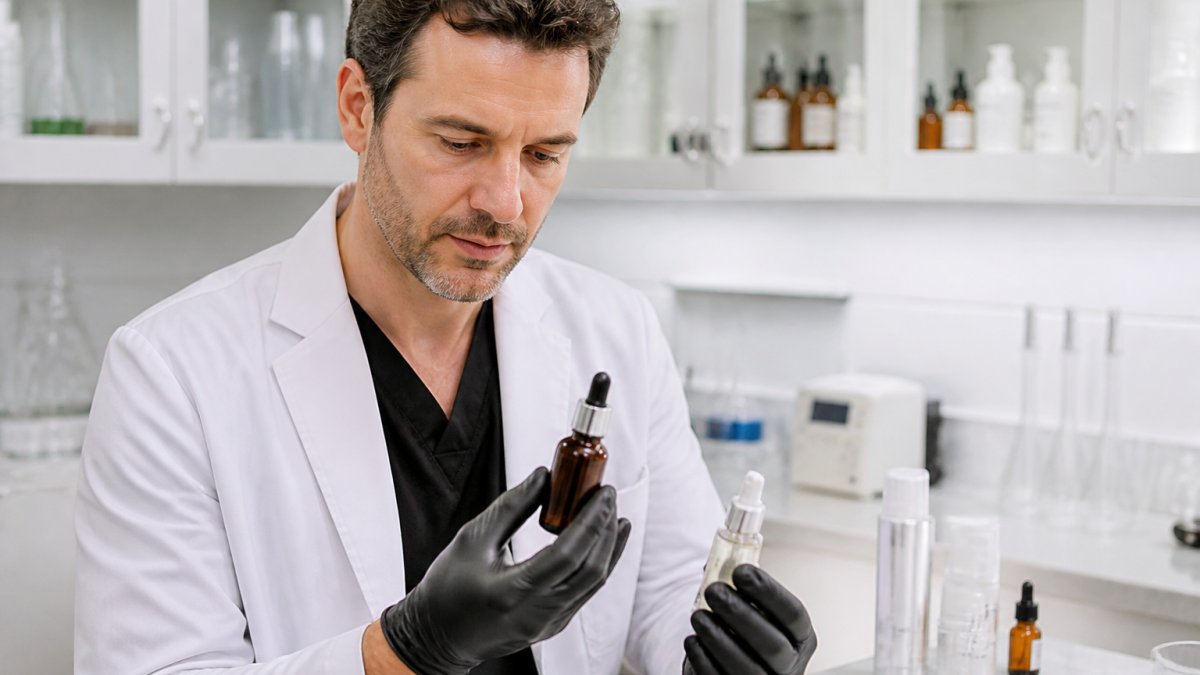
Retinoids and Vitamin A Derivatives
Retinoids remain the gold standard for anti-aging because decades of research confirm they stimulate collagen production and accelerate cell turnover.
Start with lower concentrations if your skin is sensitive; retinoids work best introduced gradually. Many people abandon them after two weeks because they expect immediate results without understanding the adjustment period. Professional guidance prevents this common mistake.
Vitamin C, Peptides, and Antioxidants
Vitamin C in medical-grade formulations uses stabilized L-ascorbic acid at 10-20% concentration, which brightens skin, boosts collagen synthesis, and neutralizes free radicals. Drugstore vitamin C products often use unstable forms that oxidize within days of opening, delivering minimal benefit.
Peptides signal the skin to produce more collagen and elastin and work best combined with other actives. Antioxidants like ferulic acid and vitamin E extend the shelf life of unstable actives like vitamin C while providing their own skin-protective benefits.
Alpha Hydroxy Acids and Professional-Strength Actives
Alpha hydroxy acids (AHAs) exfoliate by dissolving the bonds between dead skin cells.
Professional-strength actives like niacinamide, azelaic acid, and salicylic acid address specific concerns, rosacea, hyperpigmentation, acne, more effectively at higher concentrations. These ingredients require professional guidance because they can irritate if introduced incorrectly or used with incompatible products.
These key medical-grade ingredients have the strongest clinical backing and deliver measurable results when formulated at effective concentrations.
| Ingredient | Primary Benefit | Effective Concentration | Evidence Strength |
|---|---|---|---|
| Tretinoin | Reduces fine wrinkles, improves texture | Prescription strength | Decades of controlled trials |
| Retinol | Stimulates collagen, accelerates cell turnover | 0.5% to 1% or higher | Well-established, slower than tretinoin |
| L-ascorbic acid vitamin C | Brightens skin, boosts collagen, neutralizes free radicals | 10-20% at low pH | Solid evidence with vitamin E and ferulic acid |
| Glycolic acid (AHA) | Exfoliates, improves texture and mild photodamage | 4-10% consumer use | Controlled studies support efficacy |
| Niacinamide | Barrier support, reduces irritation | Documented effective levels | Solid published evidence |
| Azelaic acid | Addresses rosacea and hyperpigmentation | Professional-strength formulations | Well-documented efficacy |
| Salicylic acid | Treats acne | Professional-strength formulations | Strong evidence for acne |
| Peptides | Signal skin to produce collagen and elastin | Product-specific | Mixed evidence, often product-dependent |
Clinical Evidence: What Research Shows
Medical-grade skincare's reputation rests on clinical testing, but the evidence is not uniform across ingredients or products. Evaluate the category ingredient by ingredient: a well-studied active like tretinoin and a thinly studied 'proprietary complex' shouldn't be treated as equivalent just because both appear in professional-dispensed packaging.
Ingredient-by-Ingredient Evidence Snapshot
- Retinoids (tretinoin, adapalene, retinol): Tretinoin is the most extensively studied topical for photoaging, with decades of controlled trials showing reduced fine wrinkles and improved texture. Adapalene has prescription and OTC versions backed by acne trials. Retinol has meaningful but generally smaller and slower effects than tretinoin in comparative work. The key nuance: the molecule and concentration matter more than the 'medical-grade' label, an OTC adapalene 0.1% is the same drug as the prescription version.
- Vitamin C (L-ascorbic acid): Studies typically use 10-20% L-ascorbic acid at low pH, often with vitamin E and ferulic acid for stability. Evidence supports antioxidant protection and some brightening. Products using unstable derivatives or poorly stabilized L-ascorbic acid may deliver little, regardless of channel.
- AHAs (glycolic, lactic): Controlled studies show improved texture and mild photodamage at effective concentrations and pH (roughly 4-10% for consumer use, higher for professional peels). The formulation's free-acid level and pH drive results more than the 'medical-grade' tag.
Product-Specific vs. Broad Marketing Claims
A common pattern is citing a study on an ingredient and implying it proves a specific finished product works, different claims. Ingredient-level evidence shows an active can work at a given concentration and formulation; it doesn't confirm a particular serum contains that concentration, remains stable, or penetrates as claimed. Ask: Is there a study on this exact formula, or only one ingredient?
Where Head-to-Head Evidence Is Thin
Direct trials comparing a medical-grade product against a comparable OTC formula are uncommon, and most comparisons are ingredient-level rather than brand-level. The honest conclusion isn't 'medical-grade always wins' but 'the active, its concentration, its stability, and its delivery determine results.' Professional dispensing adds oversight and access to higher-potency or prescription options, but isn't itself proof of superiority.
Is Medical-Grade Skincare Worth It?
The honest answer depends on your skin concerns, budget, and commitment level, and the value question is best answered with cost per use and a personalized framework rather than a blanket yes or no.
Cost Per Use and Realistic Value
A meaningful comparison looks at price per ounce, how much you use per application, and how often the product needs replacing. A concentrated serum used at two to three drops per night can last considerably longer than a thin lotion applied liberally, narrowing the apparent price gap.
A practical way to compare: divide the product's price by the estimated number of applications in the container, then weigh that against the strength of evidence for the active.
A Personalized Decision Framework
Use your primary concern, sensitivity, budget, and treatment history to decide where medical-grade products add the most value:
- Stubborn acne, significant hyperpigmentation, or advanced photoaging: Prescription or professional-dispensed options (tretinoin, higher-potency azelaic acid, professional peels) often justify the cost because the evidence and potency are strongest where OTC options plateau.
- Sensitive or reactive skin: Professional guidance on which actives to use and how to introduce them reduces irritation risk; a simpler, well-tolerated routine may outperform an aggressive one.
- Maintenance and generally healthy skin: A basic OTC routine with a well-formulated retinoid, antioxidant, and sunscreen can be sufficient; medical-grade products are optional rather than necessary.
Long-Term Value and Consistency
Consistent use matters more than product tier. The best medical-grade serum won't work if used sporadically, and a modest OTC retinoid used nightly can outperform an expensive product used inconsistently. Budget for ongoing use, not a one-time purchase, and factor in sunscreen, the non-negotiable step that protects results from any active. Prevention through consistent skincare generally costs less than treating advanced damage later, but 'effective' is defined by the active and its evidence, not the label.
Who Benefits Most
Medical-grade skincare makes the most sense when you have specific concerns that benefit from higher potency or prescription access, want professional oversight to manage irritation, or value a provider-curated protocol. It makes less sense if your skin is healthy and your goals are maintenance, or if budget is tight and an evidence-backed OTC routine already meets your needs.
How to Verify Medical-Grade Claims and Avoid Misleading Marketing
The term "medical-grade" lacks legal definition, so manufacturers use it liberally. Some products sold as medical-grade are barely different from drugstore alternatives.
Red flags: products claiming to be medical-grade but sold on general e-commerce sites without professional consultation. Legitimate medical-grade skincare typically requires a consultation or prescription.
Look for third-party testing certifications, published clinical studies, and professional-only distribution.
The Role of Professional Guidance in Skincare Success
This is where professional skincare truly differs from self-directed routines.
Learn how to choose a medical aesthetician with 7 practical steps. Verify credentials, ask the right questions, and find a qualified professional.(page:3)
Professional guidance prevents common mistakes: using incompatible products, introducing actives too quickly, or expecting results on an unrealistic timeline.
At Bella MedSpa, our team combines Dr.
Medical-grade skincare delivers measurable results when chosen thoughtfully and used consistently.
Frequently Asked Questions
Does medical-grade skincare really work better than over-the-counter products?
Medical-grade skincare typically delivers stronger results due to higher active ingredient concentrations, superior formulation stability, and advanced delivery systems that allow deeper skin penetration. Clinical testing supports that products with prescription-strength retinoids, vitamin C, and peptides produce measurable improvements in fine lines, hyperpigmentation, and overall skin texture. However, results depend on consistent use, appropriate skin type matching, and professional guidance to avoid irritation.
What makes medical-grade skincare ingredients different?
Medical-grade skincare ingredients are formulated at therapeutic concentrations proven effective in clinical studies. Retinoids in medical-grade products contain higher percentages than drugstore alternatives, vitamin C is stabilized for better bioavailability, and peptides are engineered for optimal skin penetration. These products undergo rigorous testing for safety and efficacy, whereas over-the-counter cosmetics have lower active ingredient levels and less stringent formulation requirements.
Is medical-grade skincare worth the extra cost?
For those with persistent skin concerns like deep wrinkles, severe acne, or hyperpigmentation, medical-grade skincare offers superior long-term value. Results typically appear within 6-12 weeks of consistent use, and the improved efficacy often means you need less product overall. However, if your skin responds well to basic skincare routines, the investment may not be necessary. A dermatologist or aesthetician can help determine whether medical-grade products align with your specific skin needs and goals.
How can I tell if a skincare product is actually backed by clinical evidence?
Look for products that cite peer-reviewed studies, list active ingredient percentages on labels, and come from brands with transparent formulation practices. Medical-grade products sold through professional channels (dermatologists, medical spas, licensed aestheticians) typically have stronger evidence backing than those sold in drugstores. Ask your skincare provider for specific clinical data on the products they recommend, and be cautious of vague marketing claims like 'advanced formula' without supporting research.