 comparison
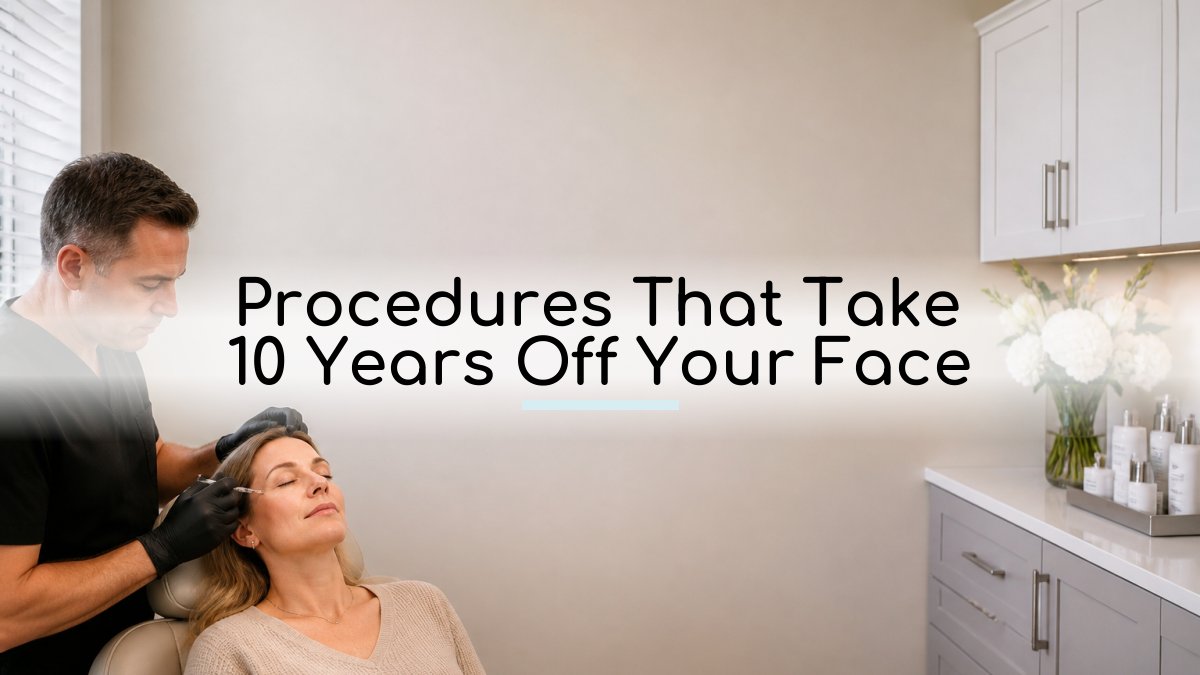
Procedures That Take 10 Years Off Your Face
Table of Contents
- What Does 'Taking 10 Years Off' Really Mean?
- Nonsurgical Facial Rejuvenation Options
- Laser Skin Resurfacing for Comprehensive Rejuvenation
- Skin Tightening Treatments and Results
- Facelift Results: Surgical Rejuvenation
- Comparing Surgical and Nonsurgical Approaches
- How Your Age, Anatomy, and Skin Quality Affect Outcomes
- Choosing the Right Procedure for Your Goals
- Frequently Asked Questions
Last Updated: October 21, 2026
What Does 'Taking 10 Years Off' Really Mean?
When people ask which procedures take 10 years off face, they're asking which treatment delivers the most dramatic rejuvenation. The phrase is more marketing than medicine: it means a noticeably younger appearance through improved skin texture, firmness, volume, and softened lines.
The procedures that come closest fall into two categories: surgical options like facelifts that lift and tighten tissue, and advanced nonsurgical treatments that stimulate collagen, tighten skin, and restore volume. Both produce striking results; the choice depends on your goals, recovery tolerance, and desired longevity.
Nonsurgical Facial Rejuvenation Options
Nonsurgical procedures stimulate collagen, tighten skin, or restore lost volume, delivering results many patients find comparable to surgery with minimal downtime, though they typically require maintenance.
Injectable Treatments
Injectable treatments like BOTOX address dynamic wrinkles by relaxing the muscles that create expression lines on the forehead, between the brows, and around the eyes. Results appear over 7 to 14 days.
Dermal fillers restore volume loss in the cheeks, lips, and under-eye area. As skin ages, it loses fat and collagen, creating hollowness and sagging; fillers plump these areas, lift the cheekbones, and soften nasolabial folds.
Together they're powerful: BOTOX smooths dynamic lines while fillers restore youthful fullness, delivering noticeable rejuvenation without surgery or significant downtime.
Chemical Peels and Surface Treatments
Chemical peels use acids to remove damaged outer skin layers, improving texture, fading age spots and sun damage, and stimulating collagen remodeling. They range from light (minimal downtime, subtle results) to deep (significant peeling, dramatic improvement).
Light peels can be done in a series with no real downtime. Medium peels create visible peeling for 5 to 7 days but deliver more noticeable results.
Surface treatments like microdermabrasion physically exfoliate dead skin, improving texture and brightness. Best for mild concerns, they require multiple sessions and pair well with other treatments.
Laser Skin Resurfacing for Comprehensive Rejuvenation
Laser skin resurfacing is one of the most effective nonsurgical approaches to comprehensive rejuvenation.
Ablative lasers remove the entire outer layer of skin, delivering dramatic results but requiring significant downtime: visible redness and peeling for 7 to 14 days. Results are substantial and improve for months as collagen rebuilds.
Fractional lasers treat only a fraction of the skin at a time, leaving untreated skin to aid healing.
Combining laser resurfacing with injectables or skin tightening amplifies results, addressing multiple aging signs at once.
Skin Tightening Treatments and Results
Radiofrequency and ultrasound tighten skin by heating deep layers, stimulating collagen contraction and remodeling.
Radiofrequency devices like Genius RF create heat deep in the dermis, triggering immediate collagen contraction and long-term remodeling. Results improve over several months as new collagen forms.
Ultrasound therapy (microfocused ultrasound) lifts and tightens by precisely heating tissue at specific depths. It's particularly effective for jawline definition and neck tightening.
These treatments work best for mild to moderate laxity, excellent for refreshing aging skin without surgery's recovery or injectables' maintenance.
Facelift Results: Surgical Rejuvenation
A facelift physically lifts and tightens facial tissues, addressing sagging skin and lost definition.
The longevity of a facelift is a major advantage: results typically last 10 to 15 years, far longer than nonsurgical treatments, making it cost-effective over time despite higher upfront investment.
A facelift requires surgery and anesthesia. Recovery involves 2 to 3 weeks of visible bruising and swelling, with full healing at 6 weeks.
Comparing Surgical and Nonsurgical Approaches
Choosing between surgical and nonsurgical procedures requires honest assessment of your expectations, recovery tolerance, and budget. Both deliver impressive results; the right choice depends on your situation.
Recovery Time and Downtime
Nonsurgical treatments offer minimal to no downtime.
Surgery requires significant recovery: 2 to 3 weeks before returning to normal activities with visible bruising and swelling, and 6 weeks for full healing, though results keep improving for months.
For busy professionals, nonsurgical options are appealing: you can have treatment and return to work the same or next day with minimal visible evidence. Surgery demands time away from work and social activities.
Duration of Results
Here the approaches diverge dramatically. Injectables last 3 to 6 months and require ongoing maintenance. Chemical peels and lasers improve skin but don't stop aging, so periodic maintenance sustains results.
A facelift produces results that last 10 to 15 years. Some patients never need another facelift. Others choose a mini-lift or nonsurgical touch-ups 10 years later to maintain results.
Over a decade, the cost math changes. Nonsurgical maintenance adds up. A facelift costs more upfront but requires no ongoing treatments for years.
Risks and Candidacy
All procedures carry risks.
Surgery carries the risks of any procedure: infection, bleeding, and anesthesia reactions. Facelift-specific risks include nerve injury (usually temporary), asymmetry, and visible scarring if healing is poor.
Candidacy varies. Most adults are candidates for injectables and nonsurgical treatments. Surgery requires good overall health and realistic expectations. Smokers and patients with certain medical conditions may not be surgical candidates.
A Decision-Focused Comparison
To directly answer the comparison intent, here is a side-by-side look at key factors. This table summarizes typical patterns; individual results vary.
| Factor | Nonsurgical Options | Surgical Facelift |
|---|---|---|
| Expected rejuvenation | Subtle to moderate; improves skin quality, volume, and mild laxity | Dramatic; lifts and tightens deeper tissues, redefines jawline and neck |
| Longevity | 3-18 months (injectables); 6-12 months (laser/peels); 1-2 years (skin tightening) | 10-15 years |
| Downtime | None to 7 days | 2-3 weeks visible recovery; 6 weeks full healing |
| Risks | Bruising, asymmetry, pigmentation changes, infection (rare) | Infection, bleeding, anesthesia reactions, nerve injury (usually temporary), scarring |
| Suitability | Mild to moderate aging; good skin elasticity; realistic expectations | Moderate to severe laxity; good general health; nonsmokers |
| Maintenance | Requires periodic repeat treatments | Minimal for years; may need touch-ups after a decade |
This table is not a substitute for a consultation, but it highlights the trade-offs. For example, a patient in their 40s with early jowling might achieve satisfying results with a combination of fillers and radiofrequency, while a patient in their 60s with significant sagging may be better served by a facelift.
How Your Age, Anatomy, and Skin Quality Affect Outcomes
Your results depend heavily on factors you can't change. Age, genetics, and skin type influence which procedures work best and what you can realistically expect, key to setting expectations and choosing the right approach.
Age: A Moving Target
Younger patients (40s) with mild aging typically see dramatic results from injectables or laser treatments. Their skin has good elasticity and fewer deep structural changes. Nonsurgical approaches often deliver the improvement they seek.
Older patients (60s and beyond) with significant volume loss and laxity may need surgery or combination approaches.
A common pattern is that patients in their 50s often benefit from a combination of skin tightening and injectables, while those in their 60s may need surgical intervention for significant laxity.
Skin Quality: Beyond Wrinkles
Skin type matters. Fair skin responds well to laser treatments but carries higher pigmentation risk. Darker skin requires different laser wavelengths and more cautious treatment. Sun-damaged skin needs more aggressive resurfacing to see results.
Skin thickness also plays a role. Thicker skin may respond better to radiofrequency tightening, while thinner skin may be more prone to bruising from injectables. A provider assesses skin quality during consultation to tailor the plan.
Anatomy: Structural Individuality
Genetics influence how much volume you lose, how your skin ages, and how long results last. Some people maintain youthful cheekbones naturally. Others lose volume quickly. This affects which procedures help most.
Facial bone structure is another factor. Patients with strong bone structure may need less volume restoration, while those with flatter cheekbones might benefit more from fillers. Jawline definition and neck anatomy also guide whether a facelift or nonsurgical tightening is appropriate.
The Evidence Behind "10 Years Off"
It's important to distinguish marketing claims from measured evidence. The phrase "takes 10 years off" is not a standardized or guaranteed outcome; it's an estimate based on typical improvements in skin texture, firmness, and volume. No procedure can literally reverse the clock, and results vary widely.
Studies on facial rejuvenation often measure outcomes using validated scales or patient satisfaction, but these are not equivalent to a fixed age reduction.
Choosing the Right Procedure for Your Goals
Fine lines and mild wrinkles respond well to BOTOX and light laser treatments.
Consider your timeline. Need results quickly? Injectables and surgery deliver immediate improvement. Want gradual change?
Recovery tolerance matters. Can you take time off work? Surgery or aggressive laser might work. Need zero downtime?
Budget influences the decision. Nonsurgical treatments cost less per session but require maintenance.
Many patients find combination approaches work best. Craig Schacher at Bella MedSpa specializes in customized treatment plans that combine procedures strategically.
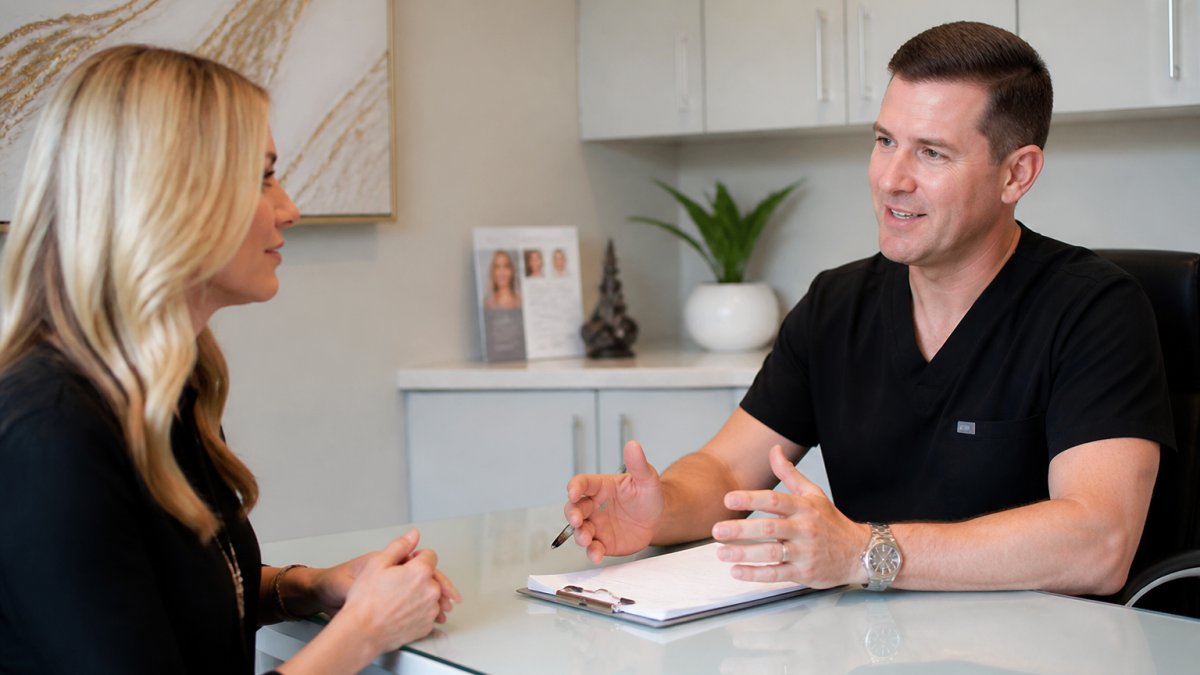
The best approach is consultation with a qualified provider who listens to your concerns and explains realistic options.
Frequently Asked Questions
Can a procedure really take 10 years off your face?
Yes, but the outcome depends on your starting point, skin condition, and which procedure you choose. A comprehensive facelift or combination of nonsurgical treatments can address multiple signs of aging, fine lines, wrinkles, sagging skin, age spots, and loss of volume, creating a noticeably more youthful appearance. The specific degree of improvement varies by individual anatomy and the skill of your provider. A consultation with a qualified aesthetic professional can help you understand realistic expectations for your face.
What's the difference between surgical and nonsurgical facial rejuvenation?
Surgical facelifts physically lift and tighten underlying facial tissues, producing dramatic, long-lasting results but requiring anesthesia and recovery time. Nonsurgical facial rejuvenation uses injectables, lasers, and radiofrequency to improve skin texture, stimulate collagen, reduce wrinkles, and restore volume without incisions. Nonsurgical options have minimal downtime but typically require maintenance treatments over time. Your choice depends on your goals, how much change you want, and your availability for recovery.
How long do results from facial rejuvenation procedures last?
Facelift results typically last 7-10 years or longer, though the face continues to age naturally. Nonsurgical treatments vary: injectables like Botox last 3-4 months, dermal fillers 6-18 months depending on type, and laser or radiofrequency treatments can provide results lasting 1-3 years with maintenance. Collagen-stimulating procedures may offer longer-lasting benefits as they rebuild skin structure. Your provider can discuss the expected timeline for your specific treatment.
What is the recovery time for different facial rejuvenation procedures?
Injectables and chemical peels typically have minimal to no downtime; you may see mild redness or swelling that resolves within hours to days. Laser skin resurfacing and radiofrequency treatments may cause redness, swelling, or peeling for several days to a week. A facelift requires the most recovery, typically 2-3 weeks before returning to normal activities, with full results visible over several months as swelling subsides. Your provider will give you specific aftercare instructions based on your procedure.
Who is a good candidate for facial rejuvenation procedures?
Most adults with visible signs of aging, fine lines, wrinkles, sagging skin, or loss of volume, can benefit from facial rejuvenation. Good candidates are generally in good overall health, have realistic expectations, and understand the specific benefits and limitations of their chosen procedure. Age, skin type, and anatomy all influence which procedures work best for you. A consultation with a qualified aesthetic provider can assess your skin condition and recommend the most suitable options for your goals.
Ready to explore which facial rejuvenation approach is right for you? At Bella MedSpa, our expert team offers personalized consultations to help you achieve a refreshed, naturally youthful appearance. With advanced technologies and Dr. Schacher's extensive training in facial aesthetics, we create customized treatment plans tailored to your unique needs. Book your consultation today to discover the procedures that can help you look and feel your best.