 blog
CoolSculpting: What to Expect From Fat Freezing
Last Updated: November 9, 2026
Quick Summary
CoolSculpting is a nonsurgical fat freezing treatment that uses controlled cooling to target stubborn fat bulges that resist diet and exercise. The cooled fat cells crystallize and die, and the body clears them naturally over several months. It is not a weight loss method, and results are gradual and modest.
- Fat cells are more sensitive to cold than surrounding skin and tissue, so they crystallize and die.
- The best candidate is an adult near a stable weight with a distinct, pinchable fat bulge and good skin tone.
- Common side effects include redness, swelling, bruising, tenderness, cramping, and temporary numbness.
- Many people return to work or normal routines the same day because there is no incision.
- Some people need more than one treatment session per area, and results hold as long as weight stays steady.
Table of Contents
- How CoolSculpting Freezes and Removes Fat Cells
- Treatment Areas: Abdomen, Flanks, Thighs, and Chin
- Who Is a Good Candidate for Fat Freezing
- CoolSculpting Side Effects and Rare Complications
- CoolSculpting Recovery Time and What to Expect After Treatment
- CoolSculpting Before and After: Realistic Results and Timeline
- CoolSculpting vs. Weight Loss and Surgical Alternatives
- Book a CoolSculpting Consultation at Bella MedSpa
- Frequently Asked Questions
How CoolSculpting Freezes and Removes Fat Cells
CoolSculpting is a nonsurgical fat reduction treatment that uses controlled cooling to target stubborn fat bulges that resist diet and exercise. The technique, called cryolipolysis, freezes fat cells beneath the skin without damaging the surface. This guide explains what fat freezing involves, who it suits, and what results to expect.
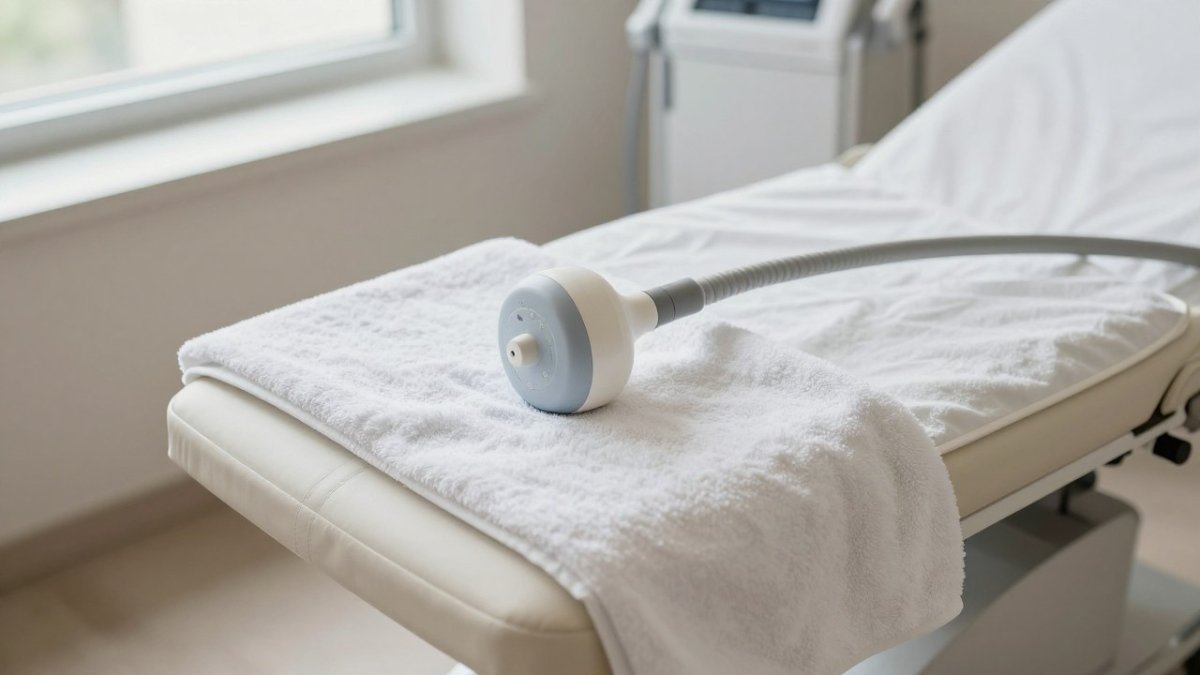
Fat cells are more sensitive to cold than the skin and tissue around them. During a treatment session, an applicator draws a fold of tissue into a cup and cools it to a precise temperature. The cooled fat cells crystallize and die. Over the following weeks, the body clears them through natural elimination.
The treated fat layer thins gradually. Results build over a treatment timeline of several months, not overnight. Clinical studies on cryolipolysis describe it as a noninvasive option for localized fat, and it is not a weight loss method.
Treatment Areas: Abdomen, Flanks, Thighs, and Chin
Fat freezing devices are used on several areas where localized fat tends to sit, such as the abdomen, flanks, thighs, and chin. Which areas are appropriate depends on the applicator and the person's anatomy, and a consultation with a qualified provider can confirm options.
Each area needs its own assessment, since fat in different areas behaves differently.
Not every bulge qualifies. Loose skin responds differently than firm fat, and a consultation decides whether the treated area is a good fit.
Who Is a Good Candidate for Fat Freezing
The best candidate for fat freezing is an adult near a stable weight with a distinct, pinchable fat bulge and good skin tone. Fat freezing suits people who want a nonsurgical option for localized fat, not a solution for overall weight loss. That distinction drives every part of the candidacy assessment, so it is worth understanding how a provider actually evaluates each factor rather than running through a generic checklist.
The four things a provider assesses
- Weight stability. Most practitioners look for a body weight that has held steady for several months. A person planning to lose or gain a significant amount of weight is usually asked to wait, because the treated fat cells are gone permanently but the remaining fat cells can still enlarge if weight rises. Fat freezing does not prevent future weight gain.
- A discrete, pinchable bulge. The applicator works by drawing a fold of tissue into a cup, so the fat needs to be soft enough to pull away from the muscle layer. Fat that is deep, diffuse, or spread thinly across a large area does not draw into the applicator well and may not respond.
- Skin elasticity. CoolSculpting removes fat; it does not tighten skin. A patient with loose, crepey skin over the treatment area may see less satisfying contour after the fat layer thins, because the skin does not snap back. Providers often discuss skin quality and, where relevant, pair fat reduction with a skin-tightening option.
- Cold sensitivity and medical history. Cryolipolysis relies on controlled cold exposure, so conditions that make a person unusually sensitive to cold, or that impair circulation or sensation in the treatment area, are reasons to pause. A provider typically reviews medications, prior surgery in the area, and any history of hernias or implanted devices near the site.
Who is usually not a good fit
- People seeking overall weight loss or a large-volume change
- People with very loose skin and no plan to address it
- People with a condition that affects cold sensitivity or skin sensation
- People who cannot commit to the multi-month results timeline
- People with an active infection or open wound in the treatment area
A practical candidacy checklist
- My weight has been stable for several months
- I can pinch a specific fat bulge I want reduced
- My skin over that area still has some elasticity
- I understand results build over months, not days
- I have no condition that affects cold sensitivity
- I am not planning major weight changes soon
- I am looking for contour, not weight loss
If fat freezing seems like a fit, it helps to know how to find and vet a provider before you commit. A consultation confirms candidacy, rules out reasons to wait, and sets realistic expectations for the area you want treated.
CoolSculpting Side Effects and Rare Complications
Most side effects of fat freezing are mild and settle within days to weeks. Common reactions in the treated area include redness, swelling, bruising, tenderness, cramping, and temporary numbness. Skin sensitivity can linger a little longer for some people. These are expected responses to controlled cold exposure and generally resolve without treatment.
Paradoxical adipose hyperplasia
A rare complication called paradoxical adipose hyperplasia (PAH) is worth understanding in detail. In this response, the treated area grows firmer and larger instead of thinner. The fat layer in the treatment zone enlarges gradually, typically becoming noticeable weeks to months after the session rather than immediately. It is uncommon, and the exact cause is not fully settled; researchers have proposed that cold exposure may trigger an abnormal proliferation of fat cells in a susceptible person. Providers monitor for it during follow-up, and a firm, enlarging mass in a treated area is the signal to report.
Other uncommon reactions
- Late-onset pain in the treated area, sometimes appearing days to weeks after treatment
- Changes in skin sensation, including prolonged numbness or tingling
- Skin surface changes such as dimpling or unevenness
- Rare reports of cold-related injury to the skin surface
Warning signs that warrant a call to your provider
- A firm mass that appears weeks after treatment and does not soften
- Numbness that persists for months rather than days
- Pain that worsens instead of easing
- Skin color changes, blistering, or open areas in the treated zone
- Any change that feels wrong to you, even if it seems minor
Watch out: a firm, enlarging area in a treated zone is the classic PAH signal, and it is easier to manage when reported early, do not wait for a scheduled follow-up if you notice it.
How safety is managed
Safety depends on an honest medical history and a qualified clinician. A provider should review cold sensitivity, circulation, prior surgery in the area, and any implanted device near the site before treatment. Ask your provider how follow-up is scheduled and who to contact if something changes between appointments.
CoolSculpting Recovery Time and What to Expect After Treatment
Fat freezing recovery time is generally short for most people. Because there is no incision, many return to work or normal routines the same day. Some feel tender or numb in the treated area for a few days and choose looser clothing.
Expect to feel cold, pulling, or mild cramping during the session as the applicator works. Afterward, the area may look red or slightly swollen. Bruising is common and fades on its own.
For a closer look at planning around treatment, see our guide to body contouring downtime.
The woman is American.
CoolSculpting Before and After: Realistic Results and Timeline
Fat freezing results are typically gradual and modest, not dramatic. Results generally appear over several months as the body clears the damaged fat cells. Some people notice changes sooner; others need longer.
Some people need more than one treatment session per area. A provider can discuss a plan based on the size of the bulge and your goals. Long-lasting results hold as long as weight stays steady, because the treated fat cells do not return.
What most guides miss is patience. The treated area often looks unchanged for the first few weeks. Photograph the area at the start and again at regular intervals so you can judge real change instead of guessing.
CoolSculpting vs. Weight Loss and Surgical Alternatives
Fat freezing is not a weight loss treatment. Diet and exercise lower overall body weight, while fat freezing targets specific fat bulges that stay put despite a healthy routine. The two can work together, but they are not interchangeable.
Surgical alternatives such as liposuction remove fat more quickly and in larger volumes, with anesthesia and real downtime. CoolSculpting is noninvasive with little recovery, but results are subtler and slower.
- CoolSculpting: nonsurgical, gradual, best for small pockets
- Weight loss: whole-body change, no fat-cell targeting
- Liposuction: surgical, faster, larger volume, more recovery
If you are weighing other body treatments too, our local guide to cellulite treatment covers nearby options.
Here is how the article compares fat freezing with the other routes to a slimmer contour.
| Option | Approach | Key difference |
|---|---|---|
| CoolSculpting | Nonsurgical, gradual | Best for small pockets; little recovery |
| Weight loss | Diet and exercise | Whole-body change, no fat-cell targeting |
| Liposuction | Surgical | Faster, larger volume, more recovery |
Book a CoolSculpting Consultation at Bella MedSpa
Choosing a provider matters as much as choosing the treatment. At Bella MedSpa, our team includes an MD and clinical advisors, and we build a personalized plan around your goals and your body. We offer body contouring alongside facial rejuvenation and skin health services in a professional setting.
A consultation is the right first step. We review your history, assess the area you want treated, and explain what fat freezing can and cannot do for you.
Book now with Bella MedSpa and take the first step toward body contouring that fits your goals.
Ready to see whether fat freezing is right for you? Our team will walk you through candidacy, expected results, and aftercare so you can decide with confidence.
Frequently Asked Questions
Does CoolSculpting actually work for fat reduction?
Clinical studies on cryolipolysis report reductions in the treated fat layer, though outcomes vary by person and area. The controlled cooling damages fat cells, which your body clears naturally over several months. Results are gradual and long-lasting, but the procedure is not a weight loss tool. It works best on localized fat bulges that resist diet and exercise, and a consultation can confirm whether you are a suitable candidate.
What are the common side effects of CoolSculpting?
Most people experience temporary redness, swelling, bruising, tenderness, cramping, and numbness in the treated area. These effects usually resolve within days to a few weeks. Numbness can linger longer as nerves recover. Rare complications include paradoxical adipose hyperplasia, where the fat layer enlarges instead of shrinking. A qualified provider will review your medical history and explain warning signs before treatment.
How long does CoolSculpting recovery time last?
Recovery is generally minimal. Many people return to work and normal activities soon after the session, though the treated area may feel tender or numb for a few days. Recovery time is minimal compared with surgical fat reduction, but individual comfort levels vary. Your provider can give specific aftercare instructions based on the treatment area.
Can I lose 20 pounds with CoolSculpting?
No, CoolSculpting is not a weight loss procedure. It is designed for localized fat reduction and body contouring in specific areas. The scale may not change much even when you see a slimmer contour. If your goal is significant weight loss, talk to a healthcare provider about medical weight management options. CoolSculpting works best for stubborn fat bulges in people near their target weight.