 blog
blog
Advanced Aesthetics vs Medical Spas: What Actually Works
Table of Contents
- What Sets Advanced Aesthetics Apart from Standard Medical Spa Services
- Core Treatment Differences: Injectables, Laser Procedures, and Body Contouring
- Medical Spa Safety Regulations and Clinical Oversight
- How to Choose a Med Spa: Credentials, Expertise, and Professional Certification
- Aesthetic Treatment Recovery Time and Downtime Expectations
- Cost-Benefit Analysis: What You're Actually Paying For
- Frequently Asked Questions
Last Updated: September 18, 2026
What Sets Advanced Aesthetics Apart from Standard Medical Spa Services
The difference between advanced aesthetics vs medical spa services comes down to clinical oversight, technology sophistication, and treatment depth. Medical spas combine spa amenities with non-surgical procedures under medical supervision, while advanced aesthetics represents specialized care integrating dermatologic science with modern technology and complex protocols. These distinctions become particularly relevant when evaluating how high tech medical alternatives reshape the landscape of patient outcomes by prioritizing precision over traditional relaxation.
The distinction matters: advanced practices build treatment plans on diagnostic assessment, not trends, and customize protocols based on individual anatomy and goals.
Some facilities offer basic injectables and laser hair removal with minimal customization. Advanced practices combine multiple modalities, adjust protocols based on skin analysis, and manage complex cases requiring deeper expertise.
Advanced aesthetics reflects qualified clinical teams, sophisticated technology, and personalized treatment plans, you're paying for clinical precision and better outcomes.
Core Treatment Differences: Injectables, Laser Procedures, and Body Contouring
Injectable Treatments and Dermal Fillers
Injectable treatments vary significantly in execution. Standard spas offer basic botulinum toxin and fillers as standalone treatments. Advanced providers design protocols considering facial anatomy, muscle dynamics, and long-term goals.
Standard consultations offer single-treatment solutions. Advanced consultations assess your entire face, muscle dynamics, and volume loss to determine whether combination strategies are needed.
Dermal fillers come in formulations for different depths: superficial for fine lines and lips, deeper for cheeks and jawline. Advanced practitioners select based on anatomy and goals, producing natural appearance and longer-lasting results.
Injectable treatments require follow-up every 3-4 months (botulinum toxin) or 6-12 months (fillers). Advanced practices refine protocols based on individual response.
Laser Skin Rejuvenation and Chemical Peels
Laser technology ranges from basic systems handling hair removal and surface concerns to advanced platforms addressing deeper dermal damage and multiple conditions in one session.
Chemical peels range from light lunch-hour peels to aggressive resurfacing. Standard spas offer lighter peels; advanced providers offer tiered protocols from maintenance to deep resurfacing for severe damage.
Advanced practices combine laser, chemical peels, and injectables across coordinated appointments, layered approaches produce results single-modality treatments cannot match.
Light laser treatments require 1-2 days of redness; advanced resurfacing involves 1-2 weeks of visible healing. Advanced providers have protocols to manage recovery and optimize results.
Body Contouring and Advanced Technology
Modern non-invasive body contouring uses radiofrequency, electromagnetic energy, or cryotherapy to reduce fat and tighten skin without surgery.
Standard spas offer one or two body contouring options. Advanced practices integrate multiple technologies in single sessions to address fat reduction, skin tightening, and muscle definition simultaneously.
Entry-level devices produce modest results. Advanced platforms deliver measurable fat reduction and noticeable skin tightening, justifying the investment for significant transformation.
Medical Spa Safety Regulations and Clinical Oversight
Medical spas operate under state-level regulatory frameworks that vary significantly in physician oversight requirements, creating gaps between rigorous clinical protocols and minimum legal standards.
Physician Oversight: What the Law Requires vs. What Advanced Practices Provide
Physician supervision requirements vary by state: some require physical presence during procedures, others allow remote supervision, and some permit oversight of protocols only without direct patient involvement.
Advanced providers exceed minimums with board-certified physicians maintaining direct involvement: pre-treatment assessment by the physician, protocol customization based on individual anatomy, and real-time availability during treatment.
Ask: "Is the physician present during treatment?" and "Will the physician assess me before treatment?" These answers reveal actual clinical oversight.
Licensing and Credential Verification
State licensing requirements vary: Estheticians require 600-1,000 hours of training; RNs/NPs hold nursing licenses with NPs having graduate training; PAs require graduate education; Physicians must hold active medical licenses and ideally board certification in dermatology, plastic surgery, or aesthetic medicine.
Advanced practices employ staff with credentials beyond basic licensure, such as NCCA certification in advanced techniques or specialized training in facial anatomy and injection protocols.
Verify credentials through your state's medical and nursing board websites, which confirm active licenses, disciplinary history, and board certifications.
Complication Management and Emergency Protocols
Complications from aesthetic treatments, while rare, do occur: allergic reactions, infections, burns, or vascular occlusion. How a facility handles these situations determines severity.
Advanced practices maintain documented protocols: patient screening to identify contraindications, informed consent documentation, staff training on complication recognition, emergency response with reversal agents and medications on-site, and detailed documentation and follow-up.
Ask: "What is your protocol for allergic reactions?" or "How do you manage unresolved bruising?" Specific answers indicate serious safety commitment.
Infection Control and Facility Standards
Advanced practices exceed CDC and state guidelines: autoclaves sterilize reusable equipment, single-use items are never reused, staff practice hand hygiene and wear gloves, sharps are disposed in puncture-resistant containers, and surfaces are cleaned with hospital-grade disinfectants between patients.
During a facility tour, observe whether gloves are changed between patients, surfaces are visibly clean, and single-use items are opened fresh.
Accreditation and Third-Party Oversight
Accreditation from AAAASF or the Joint Commission indicates independent inspection and rigorous standards for safety, staffing, and equipment maintenance, higher than legal minimums.
When comparing providers, ask about accreditation status. It's a concrete indicator of commitment to safety beyond what regulations require.
How to Choose a Med Spa: Credentials, Expertise, and Professional Certification
Evaluate credentials: supervising physician should be board-certified in dermatology or plastic surgery; nurse injectors should hold RN or NP licenses; estheticians should have state licensure and ideally advanced certifications.
Experience matters: a provider specializing in your specific concern will deliver better results than one offering it as one option among many.
Ask whether they perform thorough skin analysis and create customized plans or push standard packages. Advanced practices tailor plans to your goals.
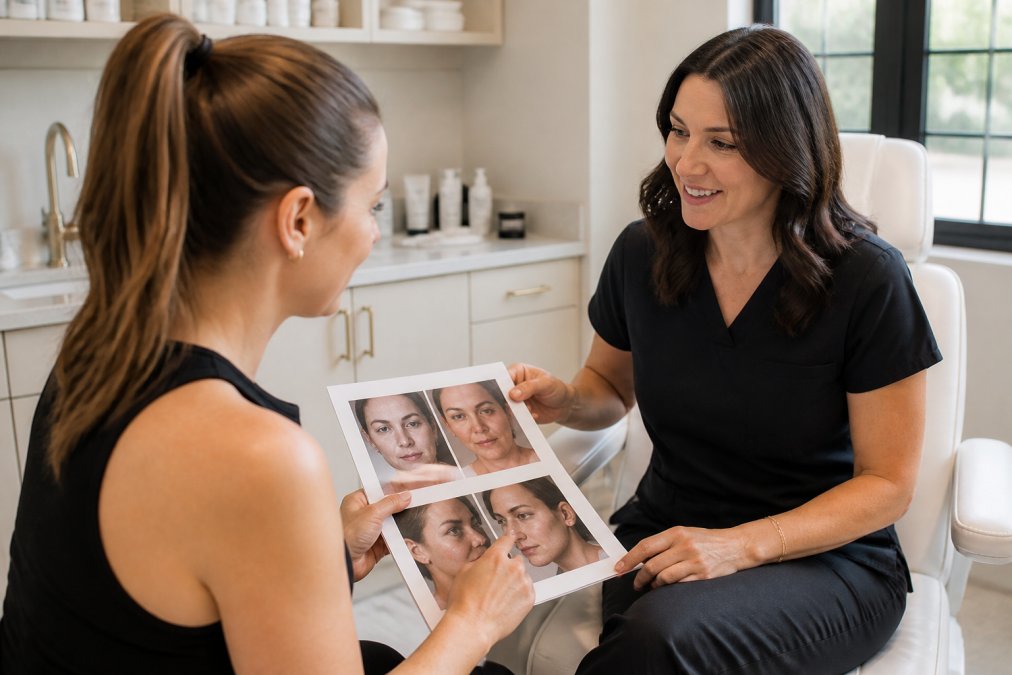
Request before-and-after photos showing natural-looking improvement consistent with your goals. Consistent quality results suggest clinical competence.
Visit in person: assess whether the environment is clean and professional, staff seem knowledgeable, and the provider explains procedures thoroughly. These observations reveal transactional vs. clinical practice.
| Evaluation Criteria | What to Look For | Why It Matters |
|---|---|---|
| Physician credentials | Board certification in dermatology or plastic surgery | Ensures medical oversight and clinical expertise |
| Staff licensing | RN/NP for injections; state-licensed estheticians | Confirms legal qualifications and training |
| Experience | Years in practice; specific expertise in your concern | Correlates with skill and complication management |
| Consultation quality | Thorough assessment; customized treatment plan | Indicates clinical approach vs. transactional service |
| Facility standards | Clean, professional environment; safety protocols | Reflects commitment to patient safety and outcomes |
| Before-and-after portfolio | Consistent, natural-looking results | Demonstrates actual capability and aesthetic sense |
Aesthetic Treatment Recovery Time and Downtime Expectations
Recovery varies by procedure. Light treatments like laser hair removal or light peels require no downtime, maybe mild redness fading within hours.
Injectable treatments have minimal downtime with possible swelling or bruising lasting 3-7 days. Results develop over 1-2 weeks for botulinum toxin and are immediate but improve for 2 weeks with fillers.
Moderate laser treatments and medium-depth peels involve redness, peeling, and sensitivity for 3-7 days. Avoid sun exposure, intense exercise, and certain skincare products.
Advanced resurfacing requires 1-2 weeks of visible healing with noticeable redness and peeling. Full results develop over 2-3 months as collagen remodels.
Body contouring treatments typically have minimal downtime, though you might experience mild soreness or swelling. Most people resume normal activities immediately, though strenuous exercise might be limited for a few days.
Plan treatment around commitments.
Cost-Benefit Analysis: What You're Actually Paying For
Understanding cost differences requires examining technology, expertise, and outcomes.
Technology Investment: Why Advanced Platforms Cost More
Equipment sophistication directly affects results and explains price differences between standard and advanced practices.
Expertise and Customization: The Clinical Judgment Premium
You're also paying for clinical judgment determining which treatments will work for your situation, where advanced practices command higher fees.
Treatment Longevity and Total Cost of Ownership
Injectable treatments require ongoing maintenance: botulinum toxin ($600-$1,600 annually), dermal fillers ($500-$4,500 annually). Over 5 years, costs range $3,000-$22,500. Advantages include gradual improvement and protocol adjustment; disadvantage is perpetual cost.
Quality of Results: The Hidden Cost of Cheap Treatments
Cheapest options produce cheapest results. Low-cost providers use standard equipment and protocols with minimal customization, producing modest or unnatural-looking results and more complications. Advanced providers use sophisticated equipment, customize protocols, and achieve natural-looking results with rare complications.
Return on Investment: Confidence and Quality of Life
Aesthetic treatment has psychological return on investment: increased confidence and improved social or professional comfort extend value beyond the procedure.
Frequently Asked Questions
What is the difference between advanced aesthetics and a standard medical spa?
Advanced aesthetics typically involves specialized treatments delivered by highly trained professionals, often under medical supervision, using cutting-edge technology for more dramatic results. Standard medical spas offer foundational aesthetic services like basic facials and lighter treatments. Advanced aesthetics focuses on clinical outcomes through injectables, laser procedures, body contouring, and skin resurfacing that require deeper expertise and regulatory compliance. The difference lies in the depth of training, technology sophistication, and scope of procedures available.
How do I verify the credentials of an aesthetician providing advanced treatments?
Ask about professional certification, state licensure, and specific training in advanced procedures. In Massachusetts, estheticians must hold a current license from the state. For advanced treatments like injectables or laser work, verify that a physician or nurse practitioner oversees the practice. Request information about continuing education in your specific treatment area. Reputable medical spas display credentials and are transparent about staff qualifications. Don't hesitate to ask about complication management and malpractice insurance.
What aesthetic treatment recovery time should I expect?
Recovery varies by procedure. Non-invasive treatments like certain laser therapies may have minimal downtime, with some redness resolving in hours to days. Injectable treatments typically require 24-48 hours of avoiding strenuous activity. More intensive procedures like chemical peels or microdermabrasion may involve 3-7 days of visible recovery. Body contouring treatments can require 1-2 weeks before returning to normal exercise. Your provider should give you a detailed downtime estimate during consultation so you can plan accordingly.
Are advanced aesthetic treatments safe?
Advanced aesthetic treatments are generally safe when performed by qualified professionals in regulated settings with proper medical oversight. Safety depends on proper training, appropriate patient selection, sterile technique, and complication management protocols. Look for facilities that follow clinical standards, maintain detailed patient records, and have emergency procedures in place. However, all medical procedures carry some risk. Discuss potential complications specific to your treatment with your provider, and ensure they have experience managing adverse outcomes.