 how-to
Managing Expectations for Aesthetic Procedures: A Guide
Table of Contents
- Why Managing Expectations Matters for Aesthetic Procedures
- Conducting an Honest Aesthetic Consultation
- Understanding Your Goals and Desired Outcomes
- How to Avoid an Overdone Cosmetic Look
- Treatment Limitations, Risks, and Realistic Results
- Cosmetic Procedure Recovery Timeline and Aftercare
- Achieving Natural-Looking Cosmetic Results
- Managing Dissatisfaction and Follow-Up Care
- Frequently Asked Questions
Last Updated: October 6, 2026
Why Managing Expectations Matters for Aesthetic Procedures
Managing expectations for aesthetic procedures is one of the most important factors in patient satisfaction and successful treatment outcomes. When patients arrive with unrealistic ideas about what a procedure can achieve, disappointment follows even when the treatment itself goes perfectly.
A thorough conversation upfront prevents problems down the line. Patients who understand the real limitations, the typical timeline for results, and the natural variation between individuals tend to be thrilled with their outcomes. Those who skip this step often feel let down, even when the clinical result is excellent.
The stakes are high. A patient might spend significant money on a procedure only to feel it didn't meet their hopes. That's not just frustrating for them, it creates a difficult situation for the provider too.
Conducting an Honest Aesthetic Consultation
An honest aesthetic consultation is the foundation of managing expectations for aesthetic procedures. This is where the provider learns what the patient truly wants, and where the patient learns what's realistically achievable. It's not a sales conversation, it's a diagnostic one.
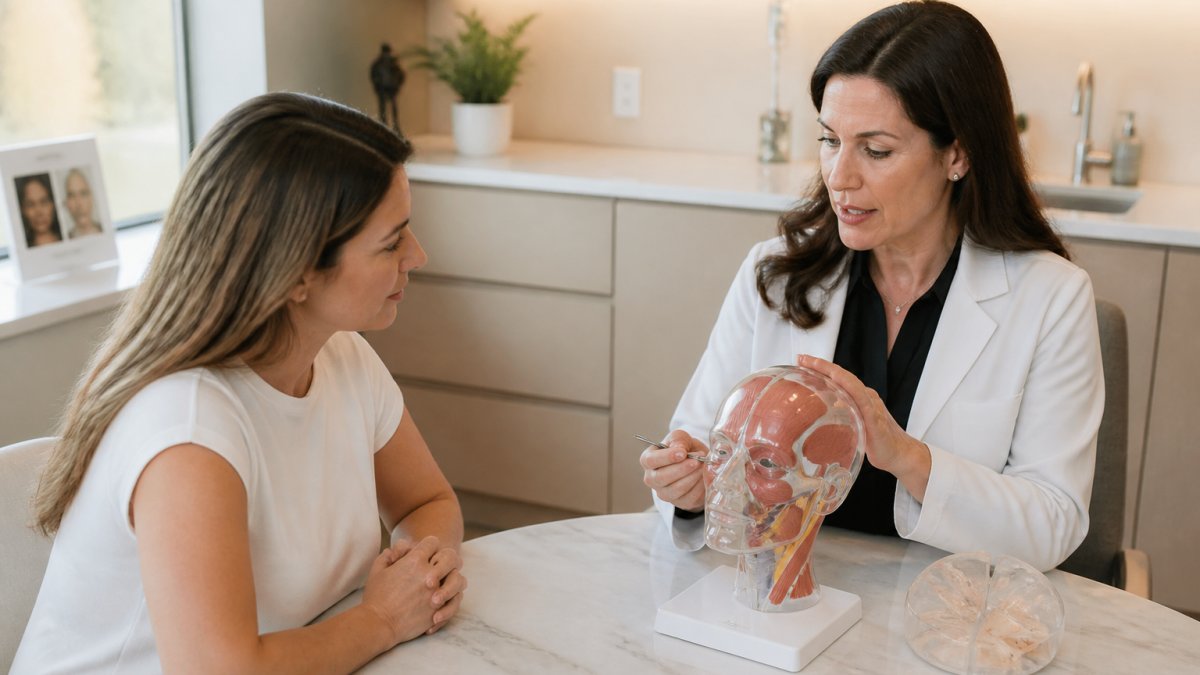
The consultation should feel like a partnership. The provider asks detailed questions, listens carefully to the patient's concerns and motivations, and then explains clearly what the procedure can and cannot do. A provider who rushes through this step or avoids difficult truths is setting up both parties for disappointment.
Essential Questions to Ask During Your Consultation
A good consultation includes specific questions that reveal what the patient really wants and why. Here are the questions that matter most:
- What specific change are you hoping to see?
- How long have you been thinking about this procedure?
- Have you had similar treatments before? If yes, what was your experience?
- What would make you feel the procedure was successful?
- Are there any results you've seen on social media or in photos that inspired you?
- What concerns do you have about the procedure or the results?
- How much downtime can you realistically manage?
- What is your budget, and are you flexible if the optimal approach costs more?
These questions do two things. They help the provider understand the patient's true goals and psychology. They also give the patient a chance to voice concerns and hear honest answers before committing.
What Your Provider Should Explain
During the consultation, the provider should cover these specific topics clearly and without glossing over the hard parts:
- Exactly what the procedure does and how it works
- What realistic results look like for someone with your specific features and skin type
- How long results typically last
- What downtime to expect (swelling, bruising, redness, activity restrictions)
- Potential risks and side effects, even if they're rare
- Why results vary from person to person
- The cost and what's included
- What happens if you're not satisfied with the results
A provider who avoids discussing risks, downplays downtime, or promises perfect results is not being honest. Patients deserve to hear the full picture, including what could go wrong and how common complications are managed.
Understanding Your Goals and Desired Outcomes
Many patients come in with a vague idea of what they want. They know they want to "look refreshed" or "tighten things up," but they haven't thought through what that actually means for their face or body.
A desired outcome should be specific and realistic. "I want to look younger" is too broad. "I want my jawline to look more defined without appearing overdone" is specific.
The provider should help translate vague desires into concrete, measurable goals. What does "refreshed" mean to this patient? Brighter skin? Less sagging? Fewer lines? Once you know, you can explain whether a specific procedure addresses it and what the realistic result looks like.
How to Avoid an Overdone Cosmetic Look
One of the biggest fears patients express is ending up looking "done." They want improvement, not transformation. They want people to notice they look good, not that they've had work done.
An overdone cosmetic look typically results from one of these mistakes: too much product injected, not enough time between treatments, or procedures that don't match the patient's natural proportions.
The best approach is to start conservatively. It's easier to add more later than to undo too much. A patient who gets a subtle result at first can always return for additional treatment.
A provider should also explain that natural-looking results take skill. The goal is enhancement, not transformation. The patient should look like a better version of themselves, not like a different person.
Treatment Limitations, Risks, and Realistic Results
Every aesthetic procedure has limits. Laser treatments can improve texture and tone but can't remove deep wrinkles. Body contouring can reduce stubborn fat pockets but isn't a substitute for weight loss or fitness.
Patients need to understand these limitations before committing. A procedure that addresses 70% of the concern is still a good outcome if the patient knew upfront that 100% wasn't possible. A procedure that addresses 70% when the patient expected 100% feels like a failure.
Risks exist with every procedure, even non-invasive ones. Swelling, bruising, temporary redness, and mild discomfort are common. More serious complications are rare but possible. A provider who explains risks honestly and explains how they're managed builds trust and prevents the shock of unexpected side effects.
Variability in Results Across Patients
One of the hardest truths to communicate is that results vary. The same procedure performed by the same provider on two different patients can look different. This is because skin type, age, genetics, healing response, and facial structure all influence the outcome.
A patient with thin skin might bruise more easily. A patient with deep lines might need more aggressive treatment to see the same improvement. A patient with oily skin might metabolize injectables differently than a patient with dry skin. These aren't failures, they're just biology.
Managing expectations for aesthetic procedures means explaining upfront that results are individual. Photos of other patients are helpful, but they're not a guarantee of what your result will look like.
Cosmetic Procedure Recovery Timeline and Aftercare
Downtime is one of the biggest unknowns for patients considering aesthetic procedures. They want to know whether they can go back to work tomorrow or whether they need a week off.
Different procedures have different recovery timelines. Non-invasive treatments like laser or radiofrequency might cause mild redness that fades in hours or days. Injectable treatments might cause bruising that peaks at 48 hours and then gradually improves.
The provider should give a realistic timeline and explain what to expect at each stage. Day one might involve swelling and redness. Days two through five might involve bruising.
Aftercare matters too. Patients need to know what to avoid (sun exposure, intense exercise, certain products) and what to do (ice, elevation, specific skincare). Following aftercare instructions can reduce downtime and improve results.
Achieving Natural-Looking Cosmetic Results
Natural-looking cosmetic results are the gold standard. Patients want to look refreshed and improved, not obviously treated. This requires skill, restraint, and a provider who understands facial aesthetics and proportion.
A natural result respects the patient's unique features. It enhances what's already there rather than imposing a cookie-cutter look. It accounts for age, a 50-year-old shouldn't look 30, but they can look vibrant and well-cared-for at 50.
The provider's role is to guide the patient toward realistic goals and then execute with skill and restraint. This means sometimes saying no to a request that would look overdone, and sometimes recommending a different approach than what the patient initially wanted.
Using Before-and-After Photographs
Before-and-after photos are powerful tools for managing expectations for aesthetic procedures. They show what's actually possible, not what's filtered or edited. Good before-and-after photos are taken in consistent lighting, from the same angle, with minimal makeup or editing.
When reviewing photos, look for results that match your goals and your facial features. Photos of someone with a very different face shape or skin type are less relevant. Ask the provider for photos of patients with similar concerns and similar features to your own.
Pay attention to the timeline too. Some results take weeks or months to fully appear. A photo taken immediately after treatment might look different from a photo taken three months later. Ask when each photo was taken so you understand the progression.
Shared Decision-Making and Treatment Planning
The best outcomes happen when the patient and provider make decisions together. This is called shared decision-making, and it's at the heart of managing expectations for aesthetic procedures.
In shared decision-making, the provider presents options, explains the pros and cons of each, and then the patient chooses based on their values and preferences. The provider isn't pushing a particular treatment, they're helping the patient make an informed choice.
A good treatment plan includes a specific procedure, realistic expectations for results, a timeline for when results appear, a plan for follow-up or touch-ups, and a clear understanding of cost. It should be documented so both the patient and provider have the same understanding going forward.
Managing Dissatisfaction and Follow-Up Care
Even with perfect communication and execution, some patients feel disappointed.
The key is to address dissatisfaction promptly and honestly. A provider should follow up with the patient after treatment, ask how they're feeling, and listen to any concerns.
Options might include waiting longer for full results to appear, a touch-up or adjustment, a different approach, or in some cases, a reversal or correction.
Follow-up care also includes ongoing support. Some procedures require maintenance treatments to sustain results. Others fade naturally over time. The provider should explain what to expect and help the patient plan for the future.
Managing expectations for aesthetic procedures doesn't end after the treatment. It continues through recovery, through the appearance of results, and through the follow-up period.
At Bella MedSpa, we believe that honest communication and realistic goal-setting are the foundation of every successful aesthetic treatment. We use advanced technologies like Genius RF for skin rejuvenation, BTL Emsculpt NEO for body contouring, and Clarity II for precise aesthetic results.
Frequently Asked Questions
How do I set realistic expectations for an aesthetic procedure?
Realistic expectations come from honest dialogue with your provider. Ask to see before-and-after photographs of similar cases, understand the timeline for results, and discuss what variability exists between patients. Your provider should explain both benefits and limitations clearly. Avoid social media comparisons or celebrity results, which often don't reflect typical outcomes for your specific anatomy and skin type.
What should I ask during an aesthetic consultation?
Ask about your provider's experience with your specific concern, the expected timeline for results, potential side effects and recovery time, whether results are temporary or permanent, what happens if you're not satisfied, and alternatives to the proposed treatment. Request before-and-after photos from actual patients. Discuss your lifestyle, work schedule, and specific goals so your provider can recommend the best approach for your needs.
How can I avoid an overdone cosmetic look?
Choose a provider experienced in subtle, natural enhancement rather than dramatic transformation. Communicate clearly that you want to look refreshed, not obviously treated. Start conservatively, many treatments can be adjusted at follow-up visits. Review before-and-after photos showing natural results. Avoid comparing yourself to celebrity results, which often involve multiple procedures and professional styling. Your provider should prioritize balance and proportion suited to your facial structure.
What is the typical recovery timeline for cosmetic procedures?
Recovery varies significantly by procedure. Non-invasive treatments like injectables may have minimal downtime, while laser treatments might involve 3-7 days of redness. Body contouring procedures can require 1-2 weeks before returning to normal activities, though strenuous exercise may need longer. Your provider will give you a specific timeline based on your chosen treatment. Plan accordingly for work and social commitments, and follow aftercare instructions carefully to optimize healing.