 how-to
How to Find and Book a Hydrafacial Near Me
Table of Contents
- What to Look for in a Hydrafacial Provider
- Hydrafacial Benefits for Your Skin
- Is Hydrafacial Suitable for Sensitive Skin?
- How Long Does a Hydrafacial Appointment Take?
- What to Expect During Your Treatment
- Hydrafacial Aftercare and Recovery
- Questions to Ask Before Booking Your Appointment
- Frequently Asked Questions
Last Updated: October 19, 2026
What to Look for in a Hydrafacial Provider
Finding the right provider for your hydrafacial near me starts with understanding what separates a skilled practitioner from an inexperienced one. Results depend almost entirely on the clinic's expertise and equipment, the wrong provider can leave skin irritated or underwhelmed, while the right one delivers transformative results.
Look for board-certified medical professionals or licensed aestheticians with specific training in this treatment. Ask about their experience with your skin type and concerns. A qualified provider will spend time understanding your goals during a consultation before recommending a tailored treatment plan.
Equipment matters too. Clinics using the latest technology deliver more consistent results with better safety profiles. Ask whether the provider uses authentic Hydrafacial devices and how often they maintain and calibrate them.
Location and convenience factor in as well. An accessible hydrafacial near me means you're more likely to keep up regular treatments, which is how you see sustained improvements. Look for flexible scheduling and a welcoming environment.
A Practical Vetting Checklist for Nearby Clinics
Most directory listings stop at star ratings and a phone number. Use this short, repeatable checklist on every clinic you shortlist.
Credentials and oversight. Confirm who will perform your treatment and what license or certification they hold. Ask whether a physician or nurse practitioner is available for questions, and who handles complications.
Training specific to the device. Hydrafacial is a branded system with proprietary handpieces and serums.
Equipment authenticity and maintenance. Counterfeit or poorly maintained devices are a real risk.
Consultation quality. A good provider asks about your skin history, medications (especially isotretinoin and blood thinners), allergies, and recent procedures before recommending anything.
Before-and-after evidence. Ask for photos of patients with your skin type and concern, not just the clinic's best-case gallery.
Follow-up and aftercare. Ask what happens if you have a reaction or question after treatment.
Use this checklist on two or three nearby clinics before you book, an afternoon of comparison is the best way to avoid a disappointing first treatment.
Hydrafacial Benefits for Your Skin
A hydrafacial combines gentle suction, exfoliation, and hydration to cleanse and rejuvenate skin in a single appointment. Patented vortex technology removes dead skin cells and impurities while infusing serums deep into the dermis, dual action that addresses multiple concerns at once.
Benefits accumulate over time. Many patients notice immediate improvements in texture and radiance after their first treatment. With consistent sessions, you can address fine lines, hyperpigmentation, enlarged pores, and acne-prone skin. The hydrafacial near me you choose should explain how results develop and what timeline to expect.
A standout advantage is that hydrafacial works on all skin types without irritation. Unlike harsher chemical peels or microdermabrasion, it's gentle enough for sensitive skin while delivering professional-grade results. Customizable serums let your provider target aging, acne, or uneven tone.
Hydration is another key benefit. The treatment infuses skin with moisture and beneficial ingredients, leaving it plump and glowing. This boost can last for weeks, and regular treatments strengthen your skin barrier, meaning fewer breakouts and less sensitivity over time.
Is Hydrafacial Suitable for Sensitive Skin?
Yes, hydrafacial treatments are generally well-suited for sensitive skin when performed by a knowledgeable provider. The procedure is non-invasive, with minimal risk of irritation, using gentle suction and customizable serums adjusted to your skin's tolerance.
Before booking your hydrafacial near me, tell your provider about any sensitivities or conditions, including rosacea, active acne, eczema, or recent sunburn. A skilled aesthetician will modify intensity, select appropriate serums, and may recommend a gentler setting or shorter duration for reactive skin.
The key to success with sensitive skin is communication. Discuss your concerns openly during your consultation, and ask which serums the clinic uses and whether they have options for reactive skin types.
After treatment, sensitive skin may need extra care. Your provider should give clear aftercare instructions, including what products to avoid and how to protect your skin from sun exposure.
How Long Does a Hydrafacial Appointment Take?
A typical hydrafacial appointment takes 30 to 45 minutes from start to finish, including consultation, treatment, and post-treatment skincare. The actual hydrafacial near me procedure usually runs 25 to 30 minutes, with the rest spent on prep and finishing touches.
Duration varies with your skin's needs and the clinic's process. Some providers spend extra time on problem areas or add LED light therapy, so plan for a slightly longer appointment if yours includes add-ons.
This short treatment window is one reason hydrafacial is so popular, it fits into a lunch break, which is why many busy professionals choose it.
Booking in advance is smart, especially for a specific time slot. Most clinics allow online scheduling, making it easy to reserve your hydrafacial near me at a time that works for you. If you're new to the treatment, arrive 10 to 15 minutes early for paperwork.
What to Expect During Your Treatment
Your hydrafacial near me appointment begins with a thorough skin analysis. Your provider examines your skin under magnification to assess texture, tone, and problem areas, informing serum selection and treatment intensity. You'll lie comfortably on a treatment bed with protective eyewear or eye pads.
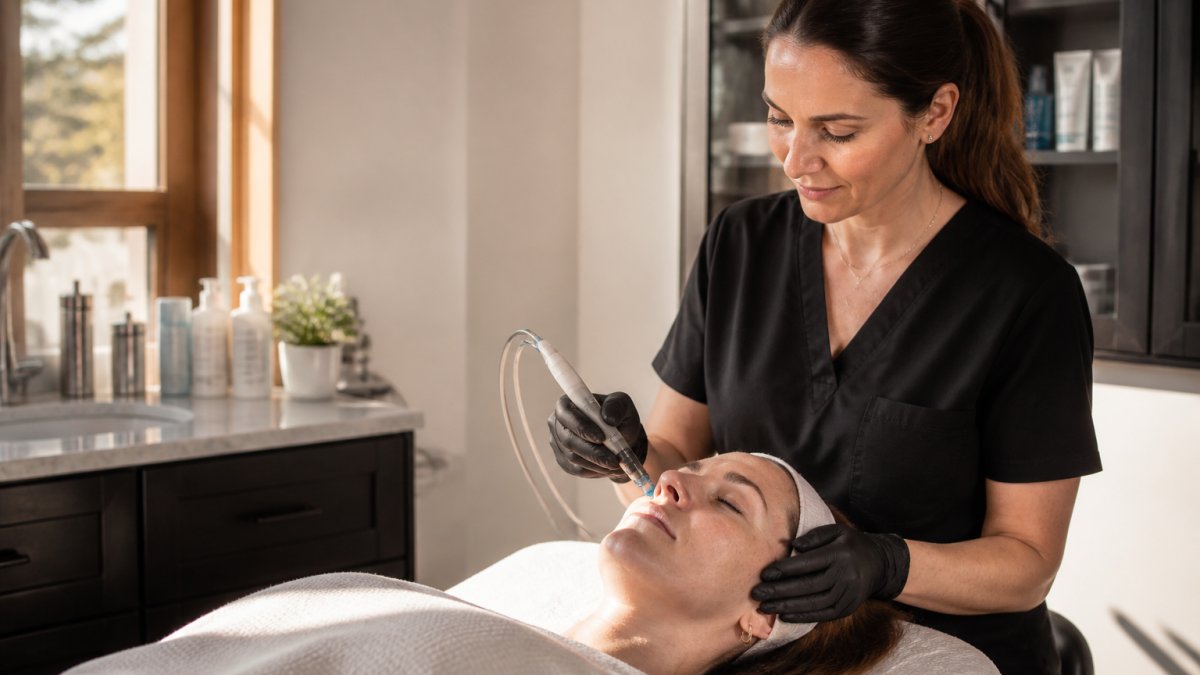
The handheld device moves across your face in gentle, controlled motions. You'll feel light suction as it removes dead skin cells and debris, many patients describe it as relaxing, like a gentle facial massage. Suction is adjustable if needed.
Next comes serum infusion. The device applies customized serums selected for your skin type and concerns. A slight tingling or cooling sensation is normal and indicates the active ingredients are working. The process is painless and most people find it soothing.
After the main treatment, your provider applies a hydrating mask or additional serums to lock in moisture and calm your skin, finishing with sunscreen and recommended products, plus clear aftercare instructions.
Hydrafacial Aftercare and Recovery
One of the biggest advantages of hydrafacial treatments is the minimal downtime. Most people return to their normal activities immediately after their appointment. Your skin might appear slightly flushed or feel a bit sensitive, but these effects typically fade within a few hours.
Proper aftercare maximizes your results. For the first 24 hours, use only gentle, fragrance-free cleansers and moisturizers. Avoid active ingredients like retinol, vitamin C, or acids, since skin is more receptive and reactive right after treatment, stick to hydrating, soothing products.
Sun protection is critical after your hydrafacial near me. Apply broad-spectrum sunscreen with at least SPF 30 every day, and reapply every two hours if you're outdoors.
Stay hydrated by drinking plenty of water to maintain that moisture from within. Most providers recommend avoiding strenuous exercise for 24 hours, as sweat can irritate freshly treated skin.
Results typically appear within a few days as your skin fully recovers and the benefits of the treatment become visible. Your skin will look brighter, feel smoother, and appear more even-toned. These improvements continue to develop over the first week.
Questions to Ask Before Booking Your Appointment
Asking the right questions ensures you choose a hydrafacial provider who fits your needs. Start with qualifications and experience: How long have they performed hydrafacial treatments? Are they licensed aestheticians or medical professionals? Have they received specific training in this technology?
Request before-and-after photos of patients with your skin type and concerns for a realistic picture. Ask about the specific serums the clinic uses and whether they customize for sensitive or reactive skin, a reputable provider will happily explain how each serum benefits different skin types.
Inquire about the hydrafacial near me clinic's equipment and maintenance practices. Do they use authentic Hydrafacial devices? How often is equipment serviced and calibrated? Clinics that invest in proper maintenance typically deliver better results and safer treatments.
Ask about add-ons and combination treatments. Many providers offer LED light therapy, microneedling, or chemical peels alongside hydrafacial. Understanding what's available helps you customize your treatment. Discuss realistic expectations and treatment frequency.
Finally, ask about their aftercare support. What happens if you have questions or concerns after your appointment? Do they provide written aftercare instructions? A clinic that stands behind its work and supports you post-treatment is worth choosing.
The Safety and Credential Questions That Actually Matter
Most clinic pages list a handful of soft questions.
What happens if I have a complication? Ask specifically about the protocol for an adverse reaction, who is reachable after hours, and whether the clinic documents treatments.
What are the contraindications? A careful provider will ask about isotretinoin use (typically a waiting period is advised), pregnancy, active infections, and recent waxing or laser treatments.
Is the device authentic and serviced? Ask to see the machine and confirm it is a genuine Hydrafacial system. Ask how often it is maintained.
What is included in the quoted fee, and what costs extra? Pricing for hydrafacial varies by treatment level and add-ons such as LED therapy or booster serums.
Can I see unretouched before-and-after photos? Ask for images that match your skin type and concern, and ask whether they are edited. Honest clinics will tell you.
What is your cancellation and rebooking policy? This matters if you are traveling to a clinic or booking around a busy schedule. A clear policy protects your time and your money.
| Question | What a Strong Answer Sounds Like |
|---|---|
| Who performs the treatment and what is their license? | Names the provider, license type, and medical director |
| What is the complication protocol? | Describes a written protocol and after-hours contact |
| Which serums and why? | Matches ingredients to your concern and adjusts for sensitivities |
| Is the device authentic and serviced? | Confirms genuine system and maintenance schedule |
| What is included in the fee? | Gives a written total and lists add-on costs |
| How many treatments and how often? | Ties frequency to your concern and sets a review point |
| Can I see unretouched photos? | Provides matched images and confirms editing status |
| What is the cancellation policy? | States terms clearly before booking |
Bring this list to your consultation. A provider who welcomes these questions is usually the one you want performing your treatment.
Frequently Asked Questions
What should I look for when choosing a Hydrafacial provider?
Choose a provider with proper credentials and experience in non-surgical skin treatments. Verify that your provider works in a medical spa or clinic setting with licensed professionals. Ask about their training, how long they've been offering Hydrafacials, and whether they customize treatments based on your skin type. Read patient reviews and request before-and-after photos specific to your skin concerns. A reputable provider will spend time during a consultation understanding your goals and explaining realistic outcomes.
How often should I get a Hydrafacial?
Most people benefit from a Hydrafacial every 4 to 6 weeks for maintenance and optimal results. Your provider can recommend a schedule based on your skin condition, concerns like acne or sensitivity, and your goals. Some patients start with a series of treatments closer together, then space them out once they reach their desired results. During your consultation, discuss what frequency makes sense for your skin and lifestyle.
Can I get a Hydrafacial if I have sensitive skin?
Yes, Hydrafacials can be adapted for sensitive skin with the right provider. The treatment uses gentle suction and hydration rather than harsh chemicals or abrasion. Your provider can adjust the intensity and choose serums formulated for reactive or easily irritated skin. Always mention sensitivity during your consultation so your aesthetician can customize the treatment. A patch test or gentler first session helps ensure your skin tolerates the procedure well.
What should I avoid after a Hydrafacial?
After treatment, avoid direct sun exposure for at least 24 to 48 hours and use broad-spectrum SPF 30 or higher daily. Skip intense exercise, hot baths, saunas, and chlorinated pools for 24 hours to prevent irritation. Avoid harsh skincare products, active ingredients like retinol or vitamin C, and exfoliants for a few days. Don't pick or squeeze your skin, and keep your hands away from your face. Your provider will give you specific aftercare instructions tailored to your skin and the serums used during your treatment.