 blog
blog
Best Treatments for Deep Acne Scars: 2026 Guide
Table of Contents
- Understanding Deep Acne Scars: Types and Causes
- Laser Resurfacing for Acne Scars: How It Works
- Microneedling for Deep Scars: Collagen Induction Therapy
- Subcision and Fillers for Tethered Scars
- Acne Scar Treatment Recovery Time and Downtime
- Skin Tone, Ethnicity, and Treatment Safety
- Conclusion: Choosing the Right Path for Your Skin
- Frequently Asked Questions
Last Updated: September 16, 2026
Understanding Deep Acne Scars: Types and Causes
The best treatments for deep acne scars depend entirely on which type you have, because rolling, boxcar, and icepick scars each sit at different depths and respond to different techniques. Deep acne scars form when inflammation from severe acne destroys collagen in the dermis, the skin's structural layer, and the skin heals with a depressed or tethered surface instead of a smooth one.
Rolling, Boxcar, and Icepick Scars
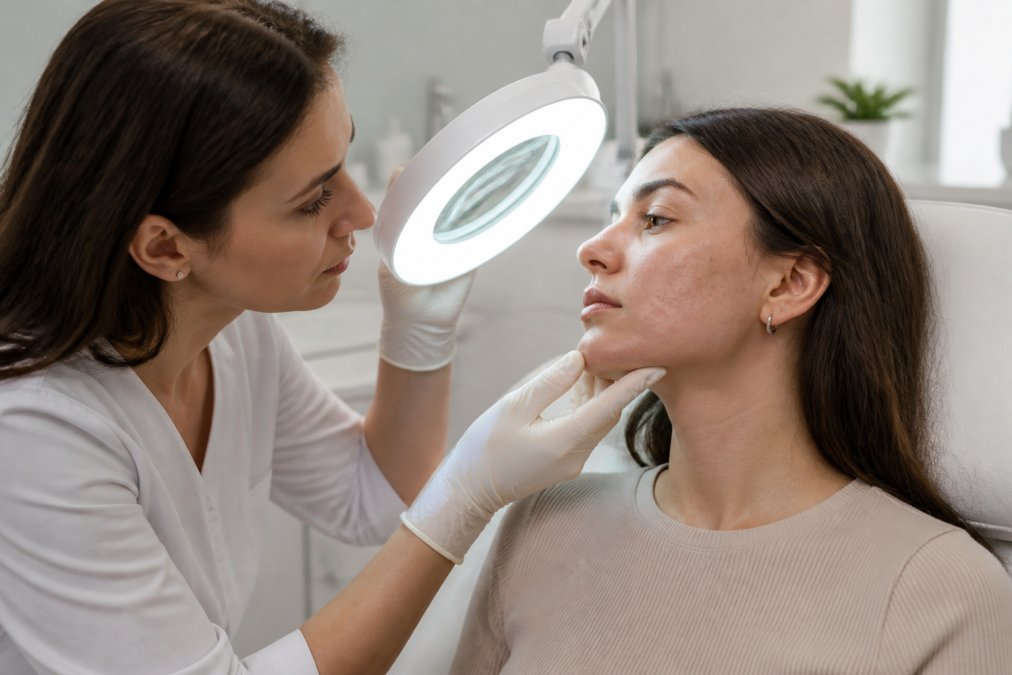
Rolling scars have sloping edges and give skin a wavy texture, caused by fibrous bands pulling the epidermis downward. Boxcar scars are round or oval depressions with sharply defined vertical walls. Icepick scars are narrow, deep punctures that can extend into the deeper dermis.
This distinction matters more than any marketing claim. A treatment that smooths rolling scars may do almost nothing for a narrow icepick scar, and the reverse is equally true.
Laser Resurfacing for Acne Scars: How It Works
Laser resurfacing for acne scars works by removing damaged surface layers and heating the dermis to trigger collagen remodeling. Fractional CO2 lasers create columns of controlled injury that push the skin to rebuild, while non-ablative lasers heat tissue without removing the epidermis, which means less downtime but often more sessions.
Fractional CO2 and Non-Ablative Options
Ablative fractional CO2 tends to deliver more dramatic texture improvement in fewer sessions, but it comes with real erythema and edema afterward. Non-ablative options suit patients who cannot afford a week of visible recovery.
Microneedling for Deep Scars: Collagen Induction Therapy
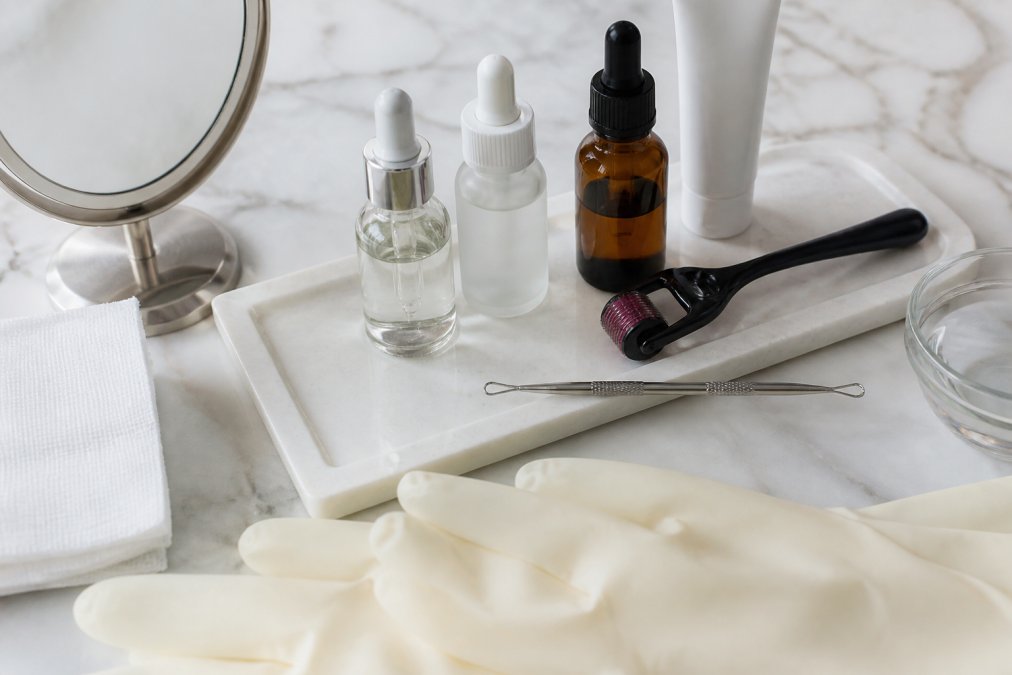
Microneedling for deep scars uses fine needles to create controlled micro-injuries that stimulate fibroblasts and collagen induction therapy. It's minimally invasive, works well across most Fitzpatrick skin types, and pairs naturally with other treatments.
| Treatment | Best For | Typical Downtime | Sessions Needed |
|---|---|---|---|
| Fractional CO2 laser | Rolling and boxcar texture | 5-7 days | 1-3 |
| Non-ablative laser | Mild texture, less downtime | 2-3 days | 3-5 |
| Microneedling | Most scar types, all skin tones | 1-2 days | 3-6 |
| Subcision + filler | Tethered, bound-down scars | 2-4 days | 2-3 |
Subcision and Fillers for Tethered Scars
Subcision is often an important step for deep, bound-down scars. Rolling and tethered scars are anchored to deeper tissue by fibrous bands, and no amount of surface resurfacing will lift a scar that is physically pulled downward. Subcision releases those bands with a small needle or cannula inserted beneath the skin, allowing the scar floor to rise. A common pattern is that subcision is combined with a filler or with a resurfacing treatment in the same session, because releasing the tether alone does not always restore volume.
How Subcision Actually Works
A provider numbs the area, then advances a needle or blunt cannula through a small entry point and sweeps it horizontally to sever the fibrous attachments. You may hear a faint snapping sensation as bands release. Because the technique is blind in some cases, experienced hands matter. Some providers now use a vacuum-assisted or suction-assisted approach to help identify and release tethers more precisely.
Filler Options for Deep Scars
Fillers fall into two broad categories for scar correction:
- Hyaluronic acid fillers, temporary, reversible with hyaluronidase, and typically lasting several months to about a year depending on the product and the area. Popular choices include those formulated for moderate to deep placement.
- Biostimulatory fillers, such as poly-L-lactic acid or calcium hydroxylapatite, which work by prompting the skin to build its own collagen over time. Results develop gradually and can last considerably longer than hyaluronic acid alone.
A key trade-off: hyaluronic acid is forgiving because it can be dissolved if you dislike the result, while biostimulatory fillers are not reversible and require patience as collagen develops.
Punch Excision and Grafting
Punch excision is reserved for isolated icepick or boxcar scars that are too deep to respond to resurfacing. The provider removes the scar with a punch tool sized to the scar and either closes the wound with a fine suture (punch excision with primary closure) or replaces it with a small graft of skin harvested from behind the ear (punch excision with graft).
Who Is a Good Candidate, and Who Is Not
Subcision and fillers are not for everyone. Screening typically includes:
- Active acne, most providers will not treat until breakouts are controlled, because new inflammation can undo the work.
- Isotretinoin history, many practitioners historically asked patients to wait several months after finishing isotretinoin before undergoing certain procedures, though guidance has evolved and some now proceed sooner. This is a conversation to have directly with your provider.
- Blood thinners and bleeding disorders, subcision involves controlled bleeding under the skin, so anticoagulant use and clotting issues need to be reviewed.
- Autoimmune and keloid-forming tendencies, a history of keloids or certain connective tissue conditions may make subcision or grafting a poor fit.
- Pregnancy and breastfeeding, most elective filler and subcision procedures are deferred.
Acne Scar Treatment Recovery Time and Downtime
Downtime depends on how aggressively the provider treats you, your skin tone, and how your body heals. Below is a realistic picture by procedure.
Procedure-by-Procedure Downtime
- Fractional CO2 laser (ablative): Expect roughly 5-7 days of visible redness, swelling, and peeling, with skin looking pink for one to several weeks afterward. Most people take about a week off work or social obligations.
- Non-ablative fractional laser: Typically 2-4 days of redness and mild swelling, with makeup often wearable after a couple of days. Multiple sessions are usually needed.
- Microneedling (with or without radiofrequency): About 1-3 days of redness and mild sensitivity. Many patients return to normal activity the next day.
- Chemical peels (medium depth): Peeling begins around day 2-3 and can last up to a week, depending on strength.
- Subcision: 2-5 days of bruising and swelling are common, sometimes longer. Bruising can be significant and is the main reason patients plan around events.
- Punch excision: Suture removal typically occurs around 5-10 days, with a small wound that continues to mature for weeks.
- Fillers: Minimal downtime, often just a day or two of mild swelling or bruising at injection sites.
What Healing Actually Looks Like
Collagen remodeling continues for months after the visible healing is done. A common pattern is that patients may see early texture improvement within a few weeks, then more meaningful change at the three- and six-month marks. This is why providers space treatment sessions weeks apart rather than stacking them back to back.
Aftercare That Protects Your Results
- Sun protection is non-negotiable. Freshly treated skin is highly vulnerable to post-inflammatory hyperpigmentation, especially in darker skin tones. Daily broad-spectrum sunscreen and physical barriers (hats, shade) are essential.
- Gentle cleansing and moisturizing for the first several days. Avoid exfoliants, retinoids, and active ingredients until your provider clears them.
- Do not pick or peel. Letting skin slough off on its own reduces the risk of scarring and infection.
- Sleep with your head elevated after subcision or filler to reduce swelling.
- Avoid strenuous exercise and saunas for the period your provider specifies, usually a few days, to limit heat, sweat, and blood pressure spikes.
Planning Around Your Life
If you have a work trip, wedding, or photo event, schedule more aggressive treatments when you have genuine recovery time. A fractional CO2 session two days before a big event is a recipe for regret. Conversely, microneedling and non-ablative sessions are far easier to slot into a normal week.
Ask your provider for a written aftercare sheet before treatment day, not after. Knowing exactly which products to pause and when to resume them prevents most of the avoidable complications patients run into.
Downtime is not a side effect to tolerate, it is part of the treatment plan. Choosing a procedure whose recovery fits your calendar is as important as choosing one that fits your scars.
Skin Tone, Ethnicity, and Treatment Safety
Skin tone and ethnicity directly affect treatment safety, and this is where many guides stay silent. Patients with darker Fitzpatrick skin types face a higher risk of post-inflammatory hyperpigmentation after aggressive resurfacing, so conservative settings and non-ablative options often make more sense.
The right device matters, but the right provider reading your skin tone matters. Ask directly about their experience treating skin like yours.
Conclusion: Choosing the Right Path for Your Skin
Choosing among the best treatments for deep acne scars comes down to scar type, skin tone, and how much downtime you can realistically absorb.
Frequently Asked Questions
What are the most effective professional treatments for deep acne scars?
The most effective options for deep acne scars often combine procedures. Laser resurfacing for acne scars, such as fractional CO2, works well for texture. Subcision is effective for tethered scars. Microneedling for deep scars uses collagen induction therapy to build new tissue.
How many treatment sessions are typically required for deep acne scars?
The number of sessions depends on the treatment and scar severity. Laser resurfacing for acne scars often requires 1 to 3 sessions. Microneedling for deep scars usually needs 3 to 6 sessions. Subcision may be done 2 to 3 times.
Can deep acne scars be completely removed?
Deep acne scars cannot be completely removed, but they can be significantly improved. Treatments like subcision, laser resurfacing, and fillers can reduce depth and improve texture. The goal is to make scars less noticeable and blend them with surrounding skin.
What is the recovery time for acne scar treatment?
Acne scar treatment recovery time varies. Non-ablative lasers and microneedling typically have 2 to 4 days of redness. Fractional CO2 laser may require 5 to 7 days of downtime. Subcision can cause bruising for up to a week. Chemical peels may cause peeling for 3 to 5 days.
Deep acne scars rarely resolve with a single session, and the right plan depends on your specific scar types, skin tone, and schedule. Bella MedSpa offers personalized, expert-led care with an MD on the team and a full range of facial rejuvenation services. Get started with Bella MedSpa and book a consultation to build a treatment plan matched to your skin.