 ultimate-guide
Non-Surgical Acne Scar Treatment Options: A 2026 Guide
Table of Contents
- Understanding Your Acne Scar Type
- Best Treatments for Deep Acne Scars
- Laser Resurfacing for Scar Revision
- Microneedling for Acne Scars
- Chemical Peels and Dermal Fillers
- Acne Scar Treatment Recovery Time
- Combination Therapy and Skin Tone Considerations
- Maintenance and Long-Term Care
- Frequently Asked Questions
Last Updated: September 21, 2026
Understanding Your Acne Scar Type
Acne scars fall into two distinct categories, and identifying which type you have is essential for choosing the right treatment, since different scar structures respond to different therapies.
Atrophic Scars: Depressed and Indented
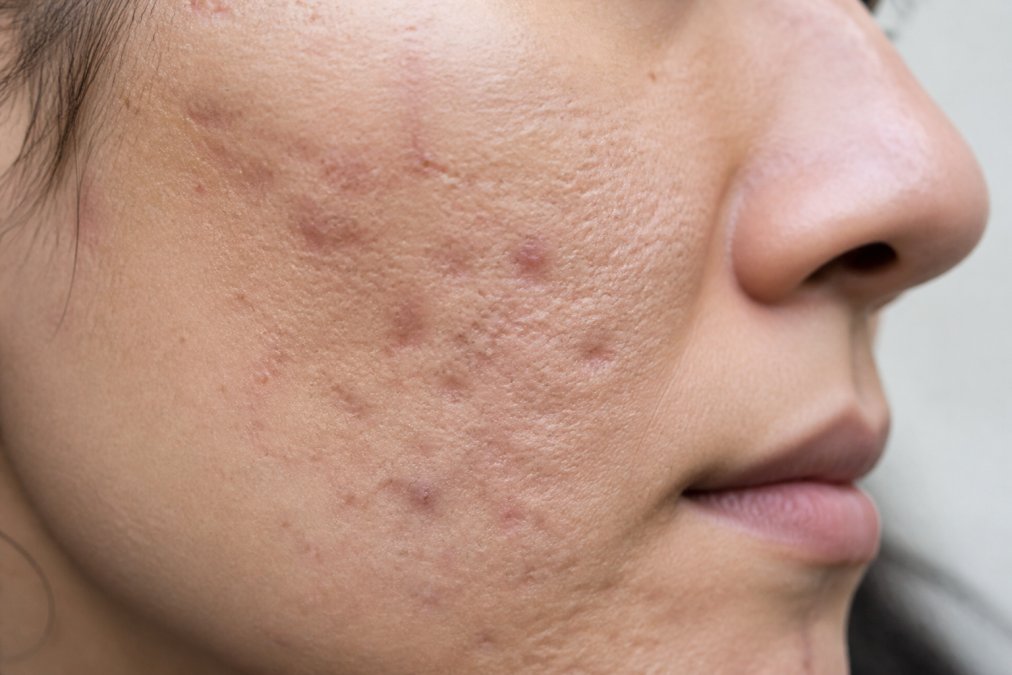
Atrophic scars, which account for most acne scar cases, sit below the surrounding skin surface due to lost collagen and structural support, creating visible indents or pits.
Atrophic scars break into three subtypes: icepick scars (narrow, deep pits), boxcar scars (broader depressions with sharp edges), and rolling scars (sloping edges creating wavy texture). Treatment must match scar geometry, rolling scars need broad collagen remodeling, while icepick scars demand focused deep penetration.
Hypertrophic Scars: Raised and Thickened
Hypertrophic scars rise above the skin surface due to excess collagen buildup, remain within the original wound boundary, and typically appear red or pink, especially when new.
Less common from acne, hypertrophic scars develop when healing overproduces collagen and are more prevalent on the chest and back. Some improve naturally over time, but many remain stable or worsen without treatment.
Best Treatments for Deep Acne Scars
The most effective approach combines multiple modalities strategically, matched to your specific scar subtype, since each responds to different tissue-remodeling depths and techniques.
Scar-Type-Specific Treatment Matching
Icepick scars are narrow, deep pits penetrating to the subcutaneous layer. RF microneedling is the primary choice, as radiofrequency energy reaches deep tethering tissue and needle punctures stimulate collagen at depth. Subcision (surgical separation of scar base) is often paired with RF microneedling to release the tether. Typical protocol: subcision followed by 2-3 RF microneedling sessions spaced 6 weeks apart, with dermal filler for remaining depression.
Boxcar scars are broader depressions with defined edges requiring collagen remodeling across a wider surface. Non-ablative fractional laser resurfacing is highly effective, treating a fraction of skin at a time across the scar width. Microneedling and chemical peels soften edges; dermal filler elevates the depression. Typical protocol: fractional laser for 3-4 sessions, followed by conservative chemical peel, then filler.
Rolling scars have sloping edges creating wavy texture from broad collagen loss. Standard microneedling is often sufficient, as rolling scars need broad collagen stimulation rather than deep focal penetration. RF microneedling accelerates results. Typical protocol: 4-6 standard microneedling sessions spaced 4-6 weeks apart, or 2-3 RF microneedling sessions for faster results.
Combination Therapy Sequencing and Rationale
The strongest results come from layering therapies strategically, spaced weeks apart for tissue healing and collagen remodeling:
-
Subcision first (if applicable). For tethered scars, release the scar base from underlying tissue, allowing subsequent treatments to stimulate collagen fill into released space. Wait 2 weeks for initial healing.
-
RF microneedling or fractional laser. These create the primary collagen stimulus and work for all scar types and skin tones. Space 4-6 weeks apart; most protocols use 2-4 sessions depending on severity.
-
Dermal filler (optional). After collagen remodeling begins, filler elevates remaining depression and provides immediate improvement while collagen builds. Results last 6-12 months.
-
Maintenance microneedling or laser. Annual or biannual sessions sustain collagen production.
Expect 3-6 months for meaningful improvement and 6-12 months for maximal results. Each session incrementally improves scar appearance by building collagen and smoothing edges. The goal is 50-75% improvement, making scars far less noticeable.
Laser Resurfacing for Scar Revision
Laser resurfacing uses concentrated light energy to remove damaged skin layers and trigger collagen remodeling. The laser ablates the epidermis and portions of the dermis, prompting the body to rebuild with new collagen through dermal remodeling.
Laser resurfacing works best on atrophic scars, where heat causes immediate collagen contraction and new collagen gradually replaces ablated tissue, improving scar depth and appearance.
Ablative vs. Non-Ablative Laser Options
Ablative lasers (CO2 and erbium) completely remove the epidermis and portions of dermis, delivering dramatic results in fewer sessions but requiring meaningful downtime. Redness and swelling last 1-2 weeks. They're ideal for severe, deep scars where rapid improvement justifies recovery time.
Non-ablative lasers penetrate the dermis without removing the epidermis (Current Laser Resurfacing Technologies: A Review that Delves Beneath the Surface).
Microneedling for Acne Scars
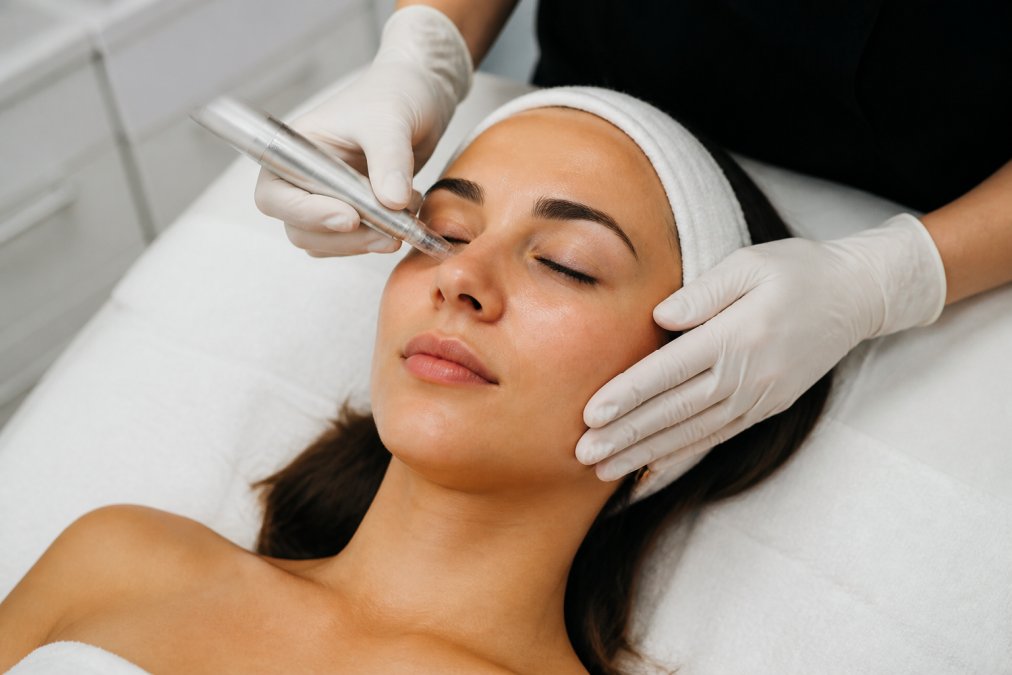
Microneedling creates controlled micro-injuries to trigger collagen induction therapy. A device with fine needles punctures the skin at precise depths, causing the body to initiate a healing response. This response floods the area with growth factors and stimulates fibroblasts, the cells that produce collagen. Over weeks, new collagen fills depressed scars and improves skin texture.
Radiofrequency Microneedling: Enhanced Results
Radiofrequency (RF) microneedling combines needle puncture with RF energy delivered into the dermis, heating deeper tissue layers and intensifying collagen remodeling beyond standard microneedling while maintaining safety for all skin types.
Chemical Peels and Dermal Fillers
Chemical peels and dermal fillers serve distinct but complementary roles in acne scar treatment. Understanding when each is appropriate, and when they should be combined with other modalities, is critical to achieving optimal results.
Chemical Peels: Depth Classification and Scar Application
Chemical peels use acid solutions (glycolic, salicylic, trichloroacetic, or phenol) to dissolve the epidermis and portions of the dermis, promoting collagen remodeling and skin texture improvement. Peel depth determines efficacy and downtime, and depth classification guides scar-type matching.
Dermal Fillers: Immediate Volume Restoration and Scar Elevation
Dermal fillers provide immediate volume restoration by injecting biocompatible material beneath depressed scars. Unlike treatments that remodel collagen over weeks, fillers work instantly, elevating the scar surface to match surrounding skin. While fillers address depth through physical elevation, surface texture improvements often require chemical exfoliation, a process further detailed in our BioRePeel treatment options.
Filler-Plus-Treatment Protocols
Fillers are most effective combined with collagen-remodeling treatments. A typical protocol: RF microneedling or fractional laser for 2-3 sessions, then dermal filler to elevate remaining depression. This combination often achieves 60-75% scar improvement, compared to 40-50% with filler alone.
Acne Scar Treatment Recovery Time
Recovery varies dramatically by treatment type, and understanding realistic timelines helps patients plan appropriately. Non-invasive treatments like topical retinoids have zero downtime. Microneedling causes mild redness for 24-48 hours. Chemical peels range from no downtime for superficial peels to 7-10 days for medium-depth peels. Ablative laser resurfacing requires 1-2 weeks of visible healing, with sensitivity extending 4-6 weeks.
Combination Therapy and Skin Tone Considerations
The most sophisticated approach to acne scar treatment combines multiple modalities strategically. A typical protocol might begin with RF microneedling to stimulate deep collagen production, followed by fractional non-ablative laser to address surface irregularities, then dermal filler to elevate remaining depressions. Spacing treatments 4-6 weeks apart allows tissue to heal and remodel between sessions.
Maintenance and Long-Term Care
Acne scar improvement doesn't end after treatment sessions complete. Long-term care determines whether results stabilize, improve further, or regress. Sun protection is non-negotiable, UV exposure breaks down new collagen and can trigger post-inflammatory hyperpigmentation. Daily sunscreen with SPF 30 or higher, reapplied every two hours outdoors, is essential for at least 6-12 months after treatment.
Frequently Asked Questions
What is the difference between atrophic and hypertrophic acne scars?
Atrophic scars are depressed or indented into the skin, creating icepick, boxcar, or rolling scar patterns. Hypertrophic scars are raised and thickened, extending above the skin surface. Treatment approaches differ: atrophic scars respond well to laser resurfacing, microneedling, and dermal fillers that stimulate collagen or add volume, while hypertrophic scars may benefit from intralesional injections and non-ablative laser therapy to reduce inflammation and flatten the tissue.
What are the most effective non-surgical treatments for deep acne scars?
The best treatments for deep acne scars typically combine multiple approaches. Laser resurfacing (ablative or fractional) removes damaged skin layers and triggers dermal remodeling. Radiofrequency microneedling uses collagen induction therapy to rebuild tissue from within. Dermal fillers provide immediate volume restoration for depressed scars. Chemical peels improve skin texture and reduce post-inflammatory hyperpigmentation. A qualified dermatologist or aesthetician can recommend a customized protocol based on your scar depth, type, and skin tone.
How long does it take to see results from acne scar treatment recovery time?
Results vary by treatment type. Dermal fillers show immediate improvement but fade over 6-12 months. Laser resurfacing and microneedling require 4-12 weeks for initial collagen remodeling, with continued improvement over 6 months as fibroblasts rebuild tissue. Chemical peels show gradual texture improvement over 2-4 weeks. Most patients need multiple sessions spaced 4-6 weeks apart for optimal outcomes. Your provider can outline a realistic timeline during a consultation.
Can acne scars be completely removed without surgery?
Non-surgical treatments can significantly improve the appearance of acne scars, but complete removal depends on scar depth and type. Shallow scars often respond dramatically to laser and microneedling. Deep, tethered scars may improve substantially but may not disappear entirely without surgical excision or grafting. Combination therapy and maintenance treatments offer the best chance of achieving near-complete scar revision. A professional evaluation can determine what results are realistic for your specific scars.
Are non-surgical acne scar treatments safe for all skin types?
Safety depends on skin tone and the chosen treatment. Ablative lasers carry higher risk of post-inflammatory hyperpigmentation and erythema in darker skin types (Fitzpatrick types IV-VI). Non-ablative and fractional lasers, radiofrequency microneedling, and chemical peels can be adjusted for all skin tones with proper settings and expertise. Dermal fillers are safe across skin types. Always consult a provider experienced in treating your specific Fitzpatrick skin type to minimize complications and achieve optimal results.
What does microneedling for acne scars actually do?
Microneedling, or collagen induction therapy, creates controlled micro-injuries in the dermis to trigger fibroblast activity and collagen production. This natural healing response gradually fills in depressed scars and improves skin texture. Radiofrequency microneedling adds heat energy to enhance dermal remodeling. Results build over weeks and months as new collagen reorganizes. Most patients see noticeable improvement after 3-6 sessions, with continued refinement over 6-12 months.
How much downtime is involved with non-surgical scar treatments?
Downtime varies significantly. Dermal fillers have minimal downtime; you can resume normal activities immediately. Chemical peels cause 3-7 days of redness and peeling depending on strength. Microneedling results in 24-48 hours of mild erythema and edema. Laser resurfacing (ablative) requires 1-2 weeks of healing with visible peeling; non-ablative laser has 2-3 days of redness. Most busy professionals can schedule treatments strategically to fit their schedule with proper sun protection during healing.