 comparison
9 Medical Grade Skincare Alternatives for Rosacea
Last Updated: October 30, 2026
Quick Summary
Medical grade skincare alternatives for rosacea are often simpler, fragrance-free products built around barrier-supporting ingredients like ceramides and niacinamide, and many of them are accessible drugstore options. Medical-grade products are not automatically better, so the right choice depends on your rosacea subtype and skin sensitivity.
- A gentle, fragrance-free cleanser used with lukewarm water is a safer starting point than harsh scrubbing or strongly foaming cleansers.
- Look for fragrance-free moisturizers with ceramides, cholesterol and fatty acids to support the skin barrier.
- Divide a product's price by the number of applications to compare its real cost per use.
- Patch-test any new product on the inner arm or behind the ear for three to five nights before using it on your face.
- Add one new product at a time and wait about two weeks before adding another.
Table of Contents
- Why Medical-Grade Skincare Is Not Always the Right Fit for Rosacea
- How to Choose Rosacea Skincare: Criteria We Used
- Gentle Cleansers That Fit a Rosacea Skincare Routine
- Best Moisturizer for Rosacea-Prone Skin: Barrier-Supporting Options
- Skincare Ingredients to Avoid With Rosacea and Why They Trigger Flares
- Rosacea-Friendly Sunscreen and Redness Calming Options
- Building Your Rosacea Skincare Routine: A Patch-Testing and Switching Plan
- Booking a Rosacea Consultation at Bella MedSpa in Westfield
- Frequently Asked Questions
Why Medical-Grade Skincare Is Not Always the Right Fit for Rosacea
Rosacea is a chronic skin condition that often causes persistent redness, flushing, and irritation, and many people with it are searching for medical grade skincare alternatives for rosacea that feel gentler than the products they were first offered. Many people want to understand how medical-grade products compare with accessible alternatives.
Many people with rosacea find that a simpler, gentler routine calms their skin better than a complicated one, and that is often the starting point when comparing medical grade skincare alternatives for rosacea. The goal of this guide is to help you compare options on the criteria that matter most for sensitive skin.
How to Choose Rosacea Skincare: Criteria We Used
Choosing products for rosacea-prone skin starts with a short list of criteria. We looked at fragrance-free formulas, low irritant load, a simple ingredient list, and a clear claim about sensitive-skin suitability. We also considered whether the product is designed to support the skin barrier, since a damaged barrier often makes redness and stinging worse.
Cost matters too. A product that is expensive but used sparingly may cost less per use than a cheaper product you apply heavily. Check the size and frequency of use before deciding. Patch-test any new product on a small area for several days before applying it to your whole face.
Gentle Cleansers That Fit a Rosacea Skincare Routine
A cleanser is the first step in most rosacea routines, and it matters more than many people expect. Harsh scrubbing, hot water, and strongly foaming cleansers can strip the skin and trigger flushing. A gentle, fragrance-free cleanser used with lukewarm water is a safer starting point.
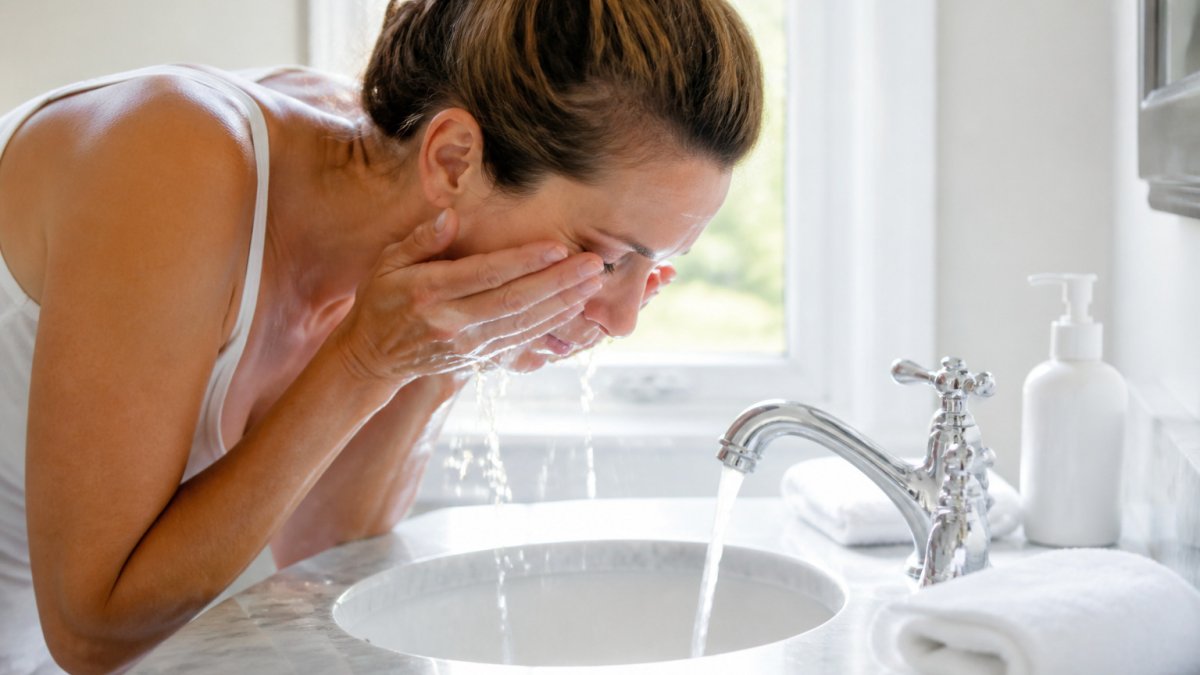
A cleanser works best as part of a simple routine, not as a treatment for redness on its own.
Best Moisturizer for Rosacea-Prone Skin: Barrier-Supporting Options
A moisturizer does more than feel comfortable. It can help support the skin barrier, which many people find makes skin less reactive to heat and friction. For rosacea-prone skin, the goal is a short, fragrance-free formula built around barrier ingredients rather than a long list of botanicals and extracts.
What to look for, ingredient by ingredient
- Ceramides (NP, AP, EOP): the lipids that fill the spaces between skin cells. A cream that lists ceramides near the top of the ingredient list is doing structural work, not just adding surface moisture.
- Cholesterol and fatty acids: ceramides work best in a ratio with cholesterol and fatty acids, which is why barrier creams often list all three together.
- Glycerin and hyaluronic acid: humectants that pull water into the upper skin layers. They help with tightness and flaking but do not repair the barrier on their own.
- Niacinamide: supports the barrier and is often used for visible redness. Some people with highly reactive skin find higher concentrations sting, so start low.
- Panthenol and allantoin: soothing agents common in sensitive-skin formulas.
- Squalane and dimethicone: occlusives that slow water loss without the heaviness of petrolatum.
Matching the cream to the rosacea subtype
Rosacea presents in different patterns, and the right moisturizer depends on which pattern a person has.
- Persistent redness (erythematotelangiectatic pattern): prioritize fragrance-free ceramide creams with niacinamide or azelaic acid support, and avoid anything with menthol, camphor, or high alcohol content.
- Bumps and pustules (papulopustular pattern): a lighter lotion or gel-cream may feel more comfortable than a heavy occlusive; ask a dermatologist before layering it under any prescription product.
- Highly sensitive or stinging skin: start with the shortest ingredient list you can find, a plain ceramide cream with no fragrance, no essential oils, and no exfoliating acids.
- Ocular rosacea: keep eye-area products separate and fragrance-free; a dedicated eye cream is safer than spreading a facial cream close to the lash line.
Medical-grade versus accessible: a function-first comparison
This is where most roundups stop short. Rather than crowning a single "best" cream, compare products by what they actually do.
| Function | Medical-grade example | Accessible alternative | What to compare |
|---|---|---|---|
| Barrier repair | SkinCeuticals Triple Lipid Restore 2:4:2 | CeraVe Moisturizing Cream | Ceramide/cholesterol/fatty-acid ratio, fragrance status, texture |
| Visible redness | SkinCeuticals Redness Neutralizer | La Roche-Posay Toleriane Double Repair Face Moisturizer | Niacinamide and soothing agents, concentration, finish |
| Post-procedure calming | Dermal Repair Cream | Vanicream Moisturizing Cream | Occlusivity, preservative load, suitability for broken skin |
| Very reactive skin | A fragrance-free ceramide balm | Cetaphil Moisturizing Cream | Ingredient count, absence of botanical extracts |
A medical-grade cream is not automatically better for rosacea. What often justifies the higher price is a more concentrated active, a more elegant texture, or a formula tested for post-procedure use. What justifies an accessible cream is a short, well-understood ingredient list at a fraction of the cost. Neither advantage is universal, so match the product to your subtype and your budget rather than to the label.
Cost per use, not sticker price
Divide the purchase price by the number of applications to see the real cost. A premium cream applied sparingly can cost more per use than a drugstore cream applied generously, and for barrier support the amount you apply matters as much as the formula.
Patch-test before you commit
Test any new cream on the inner forearm or behind the ear for three to five nights before using it on your face. Stop if you notice stinging, burning, or new redness. Even a fragrance-free, ceramide-based cream can disagree with individual skin, and testing is the only reliable way to know.
Skincare Ingredients to Avoid With Rosacea and Why They Trigger Flares
Understanding the mechanism helps you judge a new product on your own instead of relying on a blanket "avoid" list.
The irritants that matter most, and why
- Fragrance (including "parfum" and essential-oil blends): fragrance is the most common cause of contact irritation in sensitive skin. It does not always sting on contact; the reaction can build over days, which is why a product can seem fine at first and then cause redness.
- Denatured alcohol and alcohol denat.: these evaporate quickly and can disrupt the barrier, leaving skin tighter and more reactive. Small amounts in a well-formulated product are usually tolerable; a high-alcohol toner or astringent is not.
- Physical scrubs (walnut shell, sugar, salt): friction is a direct trigger for flushing. Any product that asks you to scrub is a poor fit for reactive skin.
- Chemical exfoliants at high strength (glycolic acid, lactic acid, high-percentage salicylic acid): acids can improve texture in some skin types but commonly sting and flush rosacea-prone skin. Lower-strength, less frequent use suits some people; daily high-strength use rarely does.
- Menthol, camphor, and peppermint oil: these create a cooling sensation by stimulating nerve endings, which is exactly the pathway that drives flushing.
- Witch hazel and astringent toners: the tannins and alcohol can be drying and irritating over time.
- Essential oils (eucalyptus, citrus, lavender): natural does not mean gentle. Several essential oils are well-documented irritants, and citrus oils are also photosensitizing.
- Urea at high concentrations: useful in some body creams, but high-percentage urea can sting compromised facial skin.
Evidence versus anecdote
Some warnings are well supported. Others are more individual. Niacinamide, for example, helps many people with redness but stings a minority at higher concentrations. Treat these as "test carefully" rather than "never use."
How to read a label in 60 seconds
- Scan the first five ingredients. These make up most of the formula, so alcohol or fragrance high on the list is a red flag.
- Search the full list for "fragrance," "parfum," "alcohol denat.," "menthol," and "camphor."
- Count the total number of ingredients. A shorter list is easier to troubleshoot when something goes wrong.
- Check for exfoliating acids if your skin flushes easily, and note the percentage if it is disclosed.
- Look for a sensitive-skin or dermatologist-tested claim, but treat it as a starting point, not a guarantee.
Introducing one product at a time
Add a single new product and use it for about two weeks before adding another. If a reaction appears, you will know which product caused it. Keep a simple note of the product name, the date you started, and any stinging, burning, or redness.
If a product stings, burns, or leaves skin hot and red, stop using it rather than pushing through. Persistent or worsening redness deserves a professional evaluation, because skincare can support the skin but cannot treat rosacea on its own.
Rosacea-Friendly Sunscreen and Redness Calming Options
Sun exposure is a well-known trigger for rosacea flares, so daily sun protection is a core part of most routines. Explore the clinic's dedicated rosacea treatment page to see professional options alongside these everyday steps. Choose a mineral or physical sunscreen labeled for sensitive skin and fragrance-free if possible.
Color-correcting products can also help make redness less visible. Some people with rosacea use green-tinted primers or mineral-based foundations for daily coverage. These do not treat the condition, but they can make the skin feel more comfortable on difficult days.
Building Your Rosacea Skincare Routine: A Patch-Testing and Switching Plan
Build your routine slowly. Change one product at a time, and wait about two weeks before adding another so you can see how your skin responds. If you would rather have a guided, professionally managed approach, review the clinic's total skin solutions program.
Patch-test every new product on the inner arm or behind the ear for several days. If you notice stinging, burning, or increased redness, stop using it. Keep notes on what you use and how your skin looks, which makes it easier to bring accurate information to your provider.
Booking a Rosacea Consultation at Bella MedSpa in Westfield
If you want personalized guidance, a consultation with a qualified professional can help you sort through options for your skin type and goals. Bella MedSpa's team includes a medical doctor and clinical advisors who can discuss what is appropriate for your situation. To schedule, contact our Westfield office or learn more about the clinic and its team before you visit.
For a deeper comparison of the topic, you may also want to read Does Medical-Grade Skincare Really Work Better?
Frequently Asked Questions
Can over-the-counter skincare help manage rosacea?
Over-the-counter skincare can support rosacea-prone skin as part of a daily routine. A gentle cleanser, a fragrance-free moisturizer and a broad-spectrum sunscreen address the barrier and sensitivity that make flushing more likely. These products do not replace a prescription treatment plan, and they do not cure rosacea. If redness, bumps or burning persist, a dermatologist can review your routine and any prescription options.
Is medical-grade skincare better for rosacea?
Medical-grade skincare is not automatically better for rosacea. Some products are formulated with strong actives that can irritate reactive skin, while many gentle, fragrance-free over-the-counter options suit sensitive skin well. The better choice depends on your rosacea subtype, your tolerance and what you are treating. Patch-test any new product on a small area before using it on your whole face.
What ingredients should people with rosacea avoid?
Many people with rosacea find that fragrance, denatured alcohol, menthol, harsh physical scrubs and high concentrations of exfoliating acids trigger redness or stinging. Check labels for these ingredients and introduce one new product at a time. Keeping a simple log of what you used and any flares can help you identify your personal triggers and bring useful information to a dermatologist.
Which skincare ingredients are gentle enough for rosacea-prone skin?
Ingredients commonly described as gentle for sensitive skin include ceramides, glycerin, hyaluronic acid and niacinamide in low concentrations. These support hydration and the skin barrier. Suitability varies from person to person, so start with one product, use it for a week or two, and stop if you notice burning or increased redness.