 how-to
Lip Fillers Near Me: How to Choose a Provider in 2026
Table of Contents
- Why Searching Lip Fillers Near Me Is Only Step One
- How to Compare Lip Filler Providers in Your Area
- What Happens During a Lip Filler Consultation
- How Long Do Lip Fillers Last?
- Lip Filler Before and After: Setting Realistic Expectations
- Lip Filler Aftercare: What to Do in the First Two Weeks
- Safety, Side Effects, and Who Should Not Get Lip Fillers
- Frequently Asked Questions
Last Updated: October 14, 2026
Why Searching Lip Fillers Near Me Is Only Step One
Typing lip fillers near me returns a long list of clinics, each claiming to be the best.
Lip fillers use hyaluronic acid gel to add volume, shape, and hydration to the lips.
This guide covers how to compare providers, what a real consultation looks like, and what the first two weeks of recovery involve, so you choose someone who treats your face like a face, not an appointment slot.
How to Compare Lip Filler Providers in Your Area
Start by narrowing the field to licensed medical providers, then verify what you can before you ever sit in a chair. The American Med Spa Association state licensing resources explain how injectable treatments are regulated at the state level, and requirements vary. Ask directly who will perform your injection and what their license is.
Credentials That Actually Matter
A qualified injector is a licensed medical professional, physician, nurse practitioner, physician assistant, or registered nurse, working under appropriate oversight. Ask before booking:
- Who performs the injection, and what is their license?
- How many lip filler treatments do they perform in a typical month?
- What is the medical director's role in the practice?
- What training have they completed specifically for facial injectables?
At Bella MedSpa, our team includes a board-certified physician, Dr. Craig Schacher, MD, FACEP, alongside clinical advisors and senior aestheticians.
Reading Reviews Without Getting Fooled
Reviews help only if you read them right. Look for reviewers who describe the consultation, the injector's name, and how the practice handled a concern. A wall of five-star ratings with no detail tells you nothing; one thoughtful review mentioning a follow-up call tells you plenty.
Watch patterns, not scores. Repeated mentions of rushed appointments, unclear pricing, or pressure to add treatments matter more than an occasional unhappy customer.
| What You See | What It Usually Means | What to Do |
|---|---|---|
| Detailed reviews naming the injector | Real patient experience | Read several for consistency |
| Perfect ratings, no specifics | Possibly filtered or solicited | Ask for before-and-after photos |
| Complaints about aftercare | Weak follow-up process | Ask about their complication plan |
| Reviews mention pricing surprises | Unclear quotes | Request a written estimate |
What Happens During a Lip Filler Consultation
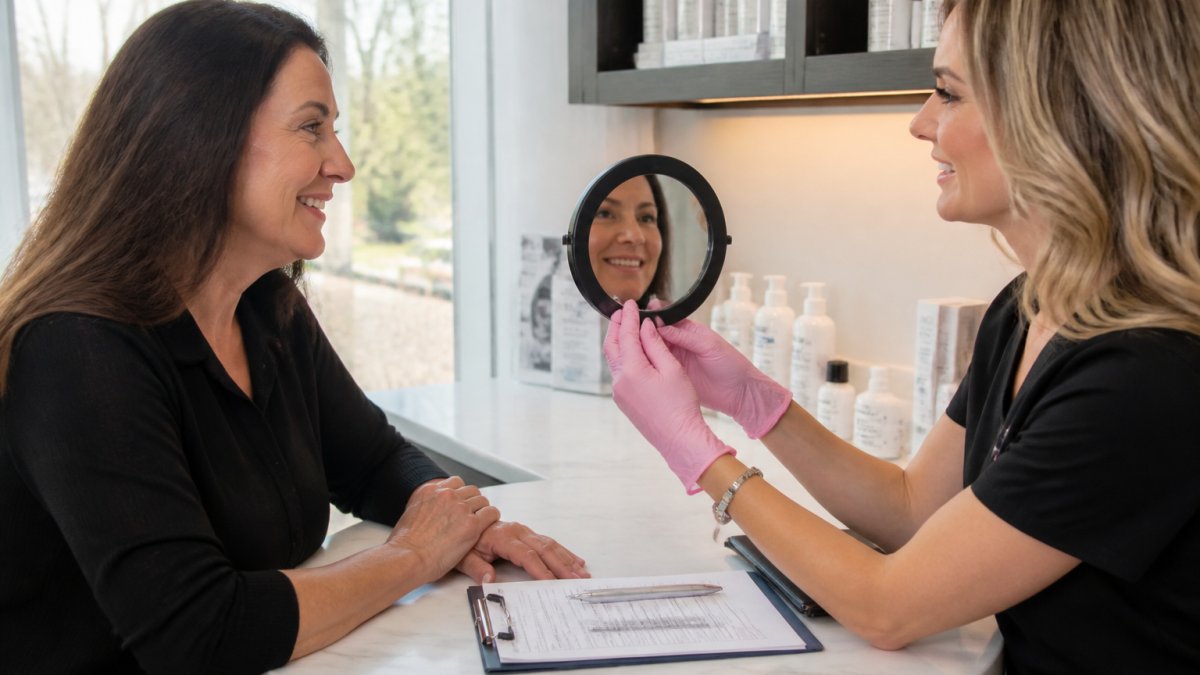
A proper consultation is a medical appointment, not a sales pitch: health history review, facial assessment, goal discussion, and a clear explanation of risks and alternatives before anything is injected.
What a Real Consultation Covers
A thorough consultation follows a predictable sequence. Use it as a checklist:
- Medical history review. Medications, allergies, autoimmune conditions, bleeding disorders, pregnancy or breastfeeding status, and cold sore history. This is not paperwork theater; it changes what can safely be injected.
- Facial assessment at rest and in motion. The provider examines how your lips move when you talk and smile, not just at rest. Best results follow your natural anatomy; a provider who promises a specific look without examining your face is a sign to slow down.
- Goal-setting conversation. You describe what bothers you; the provider translates it into a plan. Good injectors sometimes talk you out of a request that does not suit your anatomy.
- Product and technique discussion. Which hyaluronic acid filler, what volume range, and where it will be placed. Ask whether the product is FDA-approved for lip use.
- Risks, alternatives, and informed consent. You should hear about common side effects, rare complications, and what happens if you do nothing. Consent is a conversation, not a signature.
- Written plan and estimate. You leave knowing what will be done, by whom, and what follow-up is included.
Questions to Ask Before You Book
Bring a written list. These questions separate a medical practice from a storefront:
- Who will perform my injection, and what is their license and training?
- Which product will you use, and is it FDA-approved for lips?
- How much product do you expect to use, and how is that decided?
- Can I see before-and-after photos of patients with features similar to mine?
Pricing depends on the product used and the amount required, so a responsible provider quotes you after assessing your goals rather than over the phone. Ask for the estimate in writing.
Informed Consent: What You Are Actually Agreeing To
Informed consent is the part most patients skim. It should cover the specific product, expected outcome, known risks (including vascular occlusion), alternatives, and the fact that results are temporary. If you are handed a form without a conversation, ask for the conversation, a provider who cannot explain the risks in plain language should not be injecting your face.
How Long Do Lip Fillers Last?
Lip fillers typically last six to twelve months, depending on the product, the amount used, and how quickly your body breaks down hyaluronic acid. Areas that move a lot, like the lips, fade faster.
Several factors shift that timeline:
- Product type and thickness of the gel
- How much volume was placed
- Your metabolism and individual biology
- Lifestyle factors such as smoking
Many people schedule a follow-up within a few weeks to assess how the product settled. That visit is when fine adjustments happen, and it is a good sign when a provider builds it into the plan from the start.
Lip Filler Before and After: Setting Realistic Expectations
Lip filler before and after photos are a useful planning tool, but they mislead when treated as a menu.
Expect swelling in the first few days that makes your lips look larger than the final result; one week is closer to reality than twenty-four hours.
A conservative first session, followed by a touch-up, gives you control over the final look. You can always add more; removing excess takes longer.
Lip Filler Aftercare: What to Do in the First Two Weeks
Lip filler aftercare is straightforward and protects both your result and your comfort. Most people return to normal activities the same day, with some swelling and tenderness expected.
For the first forty-eight hours:
- Apply cold compresses in short intervals to reduce swelling
- Sleep with your head slightly elevated
- Skip strenuous exercise and heavy lifting
- Avoid alcohol, which can increase swelling and bruising
For the first two weeks:
- Stay hydrated and keep the area clean
- Avoid dental work and facial treatments if possible
- Skip saunas, steam rooms, and extreme heat
- Contact the practice if you notice severe pain, blanching, or color changes
Bruising is common and usually fades within a week. Arnica and similar remedies are popular, though evidence varies. The most important aftercare step is knowing how to reach your provider if something feels wrong.
Safety, Side Effects, and Who Should Not Get Lip Fillers
Lip fillers are generally well tolerated when performed by a qualified injector, but they are medical procedures with real risks. The U.S. Food and Drug Administration guidance on dermal fillers notes that approved fillers carry specific labeling, and using unapproved products or unlicensed injectors raises the risk of complications.
Common Side Effects and What They Mean
Common side effects include swelling, redness, bruising, tenderness, and temporary lumps, usually settling within days to a couple of weeks. Bruising can be minimized by avoiding alcohol and blood-thinning medications (with medical clearance) before treatment and applying cold compresses afterward.
Less common but more serious risks include vascular occlusion (filler blocking blood flow), infection, and granuloma formation. Vascular occlusion is rare and treatable when recognized quickly, so choose a provider who can explain their emergency protocol clearly.
A Practical Screening Guide: What to Disclose
Before any injection, disclose the following. This is not a reason to panic; it is a reason to have a conversation.
Medications and supplements:
- Blood thinners (warfarin, apixaban, rivaroxaban, clopidogrel)
- Daily aspirin or NSAIDs
- Fish oil, vitamin E, ginkgo, and other supplements that affect bleeding
- Immunosuppressants
Health conditions:
- Pregnancy or breastfeeding
- Active infection or cold sore outbreak near the treatment area
- Known allergy to the product or its ingredients (including lidocaine)
- Autoimmune or bleeding disorders
- History of keloid scarring
Lifestyle factors:
- Smoking, which can affect healing
- Upcoming important events (swelling may take a week or more to settle)
If you have a history of cold sores, ask about antiviral prevention before treatment, a simple step that prevents a painful setback.
When to Seek Clinician Advice
Contact your provider promptly if you experience:
- Severe pain that is not relieved by over-the-counter pain medication
- Blanching (white patches) or mottled skin near the injection site
- Vision changes, severe headache, or skin changes distant from the treatment area
- Signs of infection: increasing redness, warmth, swelling, or fever
- A lump that is growing or becoming painful
These symptoms are uncommon but warrant immediate evaluation. A provider who welcomes these questions and has a clear after-hours plan is the one you want.
Who Should Not Get Lip Fillers
Skip lip fillers, or discuss them carefully with a physician first, if you:
- Are pregnant or breastfeeding
- Have an active infection or cold sore outbreak near the treatment area
- Have a known allergy to the product or its ingredients
- Have certain autoimmune or bleeding disorders
- Are taking blood-thinning medication without medical clearance
Choosing a provider is where most of the risk lives. Search lip fillers near me, then look past the first result. Verify credentials, read reviews for patterns rather than stars, ask about complications, and insist on a consultation before booking.
Frequently Asked Questions
How do I choose a qualified lip filler provider?
Start by confirming who will actually perform the injections. In many states, physicians, nurse practitioners, and registered nurses work under a supervising physician, while aestheticians cannot inject. Ask about the injector's training, how many lip treatments they perform monthly, and whether a physician is available on site. Request to see unretouched before and after photos of real patients. A provider who welcomes questions and explains risks clearly is a better sign than one who promises perfect results.
What should I ask during a lip filler consultation?
Ask which product they plan to use, how many syringes they expect to need, and what the total cost covers, including any follow-up visit. Confirm the injector's credentials and whether they carry hyaluronic acid filler reversal on site. Discuss your medical history, including cold sores, autoimmune conditions, and current medications or supplements. Bring a photo of the look you want, and ask what results are realistic for your lip anatomy rather than for someone else's face.
How long do lip fillers last?
Most hyaluronic acid lip fillers last roughly six to twelve months, though this varies by product, the amount injected, your metabolism, and lifestyle. Some patients return at six months for a touch-up; others wait closer to a year. Your first treatment may fade faster because your body is adjusting to the product. A provider can tell you what to expect for the specific filler they recommend, and many offer maintenance appointments to keep results consistent.
What should I avoid after getting lip fillers?
For the first 24 to 48 hours, skip strenuous exercise, alcohol, and anything that raises your body temperature, such as saunas or hot yoga, since heat and exertion can increase swelling and bruising. Avoid dental work and facials for about two weeks. Sleep slightly elevated the first night if you can. Cold compresses help with swelling, and arnica may help with bruising. Call your provider if you notice severe pain, blanching, or color changes.